
Global high-mix volume high-speed PCBA manufacturer
9:00 -18:00, Mon. - Fri. (GMT+8)
9:00 -12:00, Sat. (GMT+8)
(Except Chinese public holidays)





HomePage > Blog > Knowledge Base > Furnace Control Board | PCBasic
For a heating system to operate stably for a long time, it can’t just rely on burners or fans. Inside every normally functioning furnace, there is a crucial electronic component - the furnace control board. This seemingly small and simple circuit board is actually responsible for controlling the entire heating process. If there is a problem with the control board, even the most advanced furnace may fail to start, or there may even be safety hazards.
In practical applications, the furnace control board is like the "brain" of the furnace. As a dedicated control board for a furnace, it simultaneously manages the ignition sequencing, heating process, blower operation, as well as multiple safety monitoring functions such as flame detection and temperature protection. Whether it is household users encountering abnormal heating, HVAC technicians troubleshooting, or manufacturers looking for reliable suppliers of furnace control boards, understanding the working logic of this control board is both fundamental and essential.
This article focuses on the furnace control board, systematically introducing what it is, what it can do, how it works, as well as common failure symptoms and basic troubleshooting ideas. Meanwhile, from the perspective of actual manufacturing, it will also demonstrate how PCBasic provides stable and reliable furnace circuit boards manufacturing and assembly services for HVAC systems.
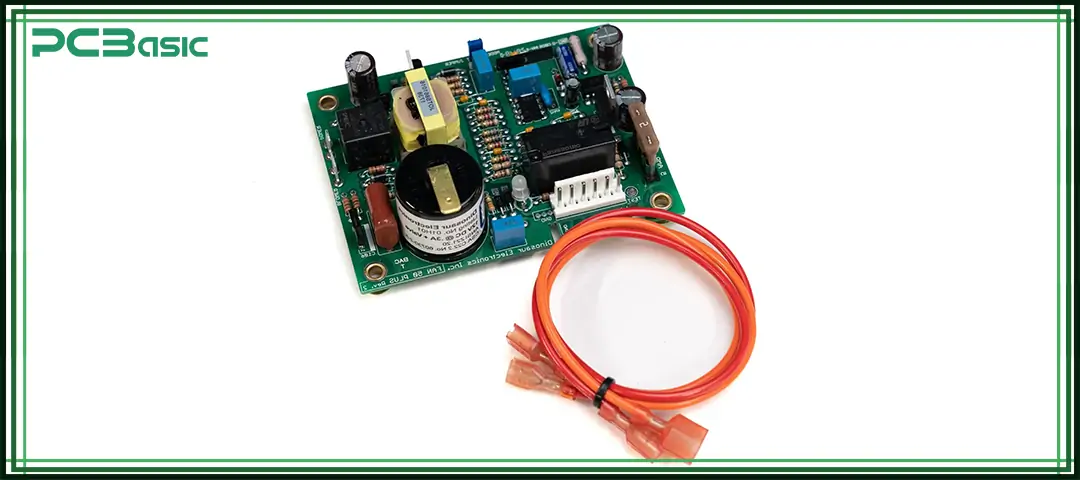
A furnace control board is an electronic furnace circuit board installed inside a furnace, and its main function is to control how the furnace works. It acts as the control center of the furnace, responsible for organizing all the components and ensuring that the entire heating process operates in the correct sequence.
Structurally, a furnace control board is a fully assembled printed circuit board (PCBA). It typically includes control chips, relays, power devices, and indicator LEDs for displaying status or fault conditions. These components together form a complete furnace board.
In actual operation, the furnace control board receives signals from the thermostat and various sensors, such as temperature and flame detection status. According to the pre-set control logic, it sends commands to the igniter, gas valve, blower motor and safety switches, determining when to ignite, when to circulate air and when to shut the system down.
Many common furnaces, such as those using the Goodman furnace control board, adopt an integrated design, with one control board responsible for multiple functions simultaneously. Although different brands have differences in circuit design, the purpose of all furnace control boards is the same: to ensure the stable and safe operation of the furnace and to be able to shut down for protection in time once an abnormality is detected.

The furnace control board is responsible for controlling the entire heating process of the furnace and is the core component for the normal operation of the furnace. Its main functions include:
• Receiving temperature requests from the thermostat
• Controlling the gas valve or electric heating elements
• Managing blower fan operation
• Monitoring safety sensors and fault conditions
• Providing diagnostic feedback through LED codes
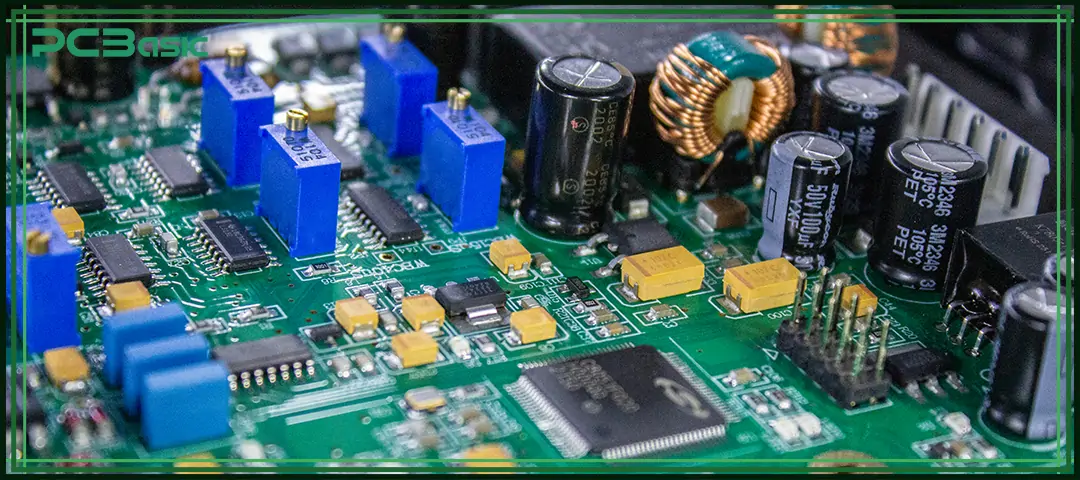
The furnace control board has a fixed control sequence inside, which is usually called the "heating cycle". In simple terms, this furnace circuit board will control the operation of the furnace step by step. Each step must be confirmed as normal before proceeding further.
When the indoor temperature is lower than the thermostat setpoint, the thermostat will send a low-voltage signal to the furnace control board, informing the system that heating is needed.
After receiving the signal, the control board for the furnace will not ignite immediately. Instead, it will first check whether the system is currently in a safe operating condition and confirm that there are no abnormalities before proceeding to the next step.
After confirming that the conditions are normal, the furnace board will activate the ignition system. Different furnaces use different ignition methods; this may involve a hot surface ignitor or a pilot ignition system.
During the ignition process, the furnace control board strictly controls the ignition timing and confirms whether the ignition is successful through the flame sensor. If no flame is detected, the control board will immediately shut off the gas and attempt to reignite according to the program, or directly lock the system to prevent safety risks.
After successful ignition, the control board will open the gas valve or start the electric heating element, and the furnace begins to heat up.
During the heating process, the furnace circuit board continuously reads signals from various sensors to ensure that the combustion and temperature are within the normal range. Once abnormal data is detected, the control board will immediately take protective measures.
When the temperature inside the furnace rises to an appropriate range, the furnace control board will start the blower fan to push warm air into the room.
This step has very high requirements for timing. The furnace board needs to ensure that the fan does not start too early to avoid cold air blowing. It will not be started too late, either, to prevent the internal temperature of the furnace from being too high.
Throughout the entire heating cycle, the furnace control board continuously monitors various safety devices, including flame sensors, limit switches, and pressure switches.
Once an abnormal situation is detected, the control board for the furnace will immediately shut down the combustion system and may allow the fan to continue running for a period of time for heat dissipation protection.
When the indoor temperature reaches the thermostat setting, the thermostat will send a signal to the furnace control board to stop heating.
At this point, the control board will first turn off the burner and allow the blower fan to run briefly to blow out the residual heat in the furnace. After the system temperature stabilizes, the furnace control board will completely shut down the furnace and wait for the next heating demand.
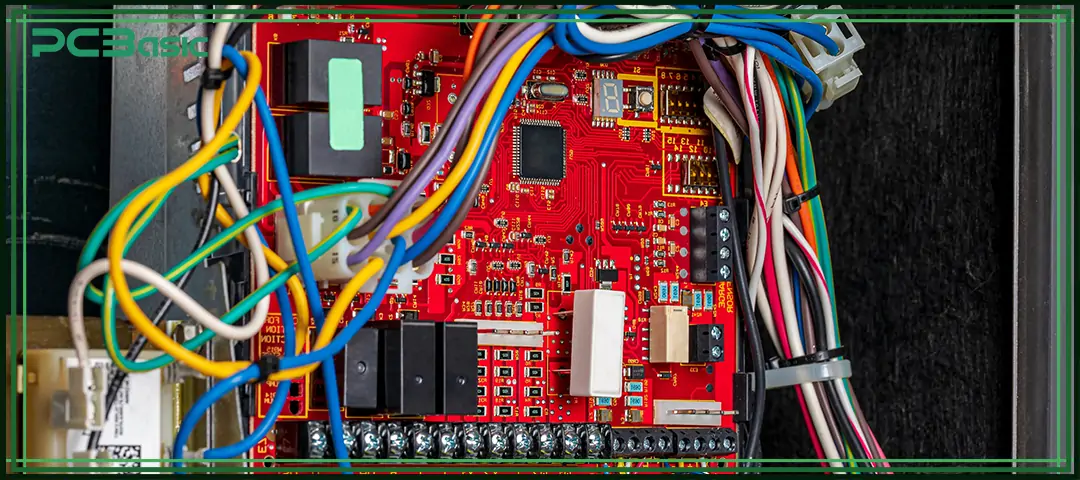
Since the furnace control board is responsible for controlling the core operation process of the furnace, once there is a problem with this control board, the furnace usually shows abnormal behavior immediately, and the problem is relatively easy to detect. Common warning signals include:
• Furnace will not turn on
• Furnace turns on and off repeatedly (short cycling)
• Blower fan runs continuously
• Delayed or failed ignition
• Flashing or solid error codes on the furnace board
• Inconsistent indoor temperature
These symptoms may occur on different furnace brands, including systems that use the Goodman furnace control board. In real-world service situations, the problem is not caused by mechanical components such as burners and blowers, but rather stems from abnormalities or failures of the furnace circuit board itself.
Time is money in your projects – and PCBasic gets it. PCBasic is a PCB assembly company that delivers fast, flawless results every time. Our comprehensive PCB assembly services include expert engineering support at every step, ensuring top quality in every board. As a leading PCB assembly manufacturer, we provide a one-stop solution that streamlines your supply chain. Partner with our advanced PCB prototype factory for quick turnarounds and superior results you can trust.
Although it is more recommended to have professionals conduct inspections in actual maintenance, through some basic and safe inspection steps, it is also possible to initially determine whether there is a problem with the control board for the furnace.
Before starting the inspection, prepare the tools you need first.
• Control board manual
• Screwdriver
• Voltage meter (multimeter)
Before performing any operation, be sure to cut off the power supply to the furnace first to avoid electric shock or damage to the equipment. After confirming the power failure, remove the inspection panel of the furnace.
Without power on, first conduct a visual inspection of the furnace board, with a focus on:
• Burn marks
• Damaged components
• Loose or corroded connections
Most furnace control boards will have one or more diagnostic LED indicator lights. After power-on, observe the status of the indicator light:
• Flashing: The number of flashes can be used to identify specific fault codes
• Solid on: May indicate an abnormal operating condition
• Off: May mean the control board is not receiving power or the control board itself has failed
Use a voltmeter or multimeter to check whether the power supply is normally delivered to the furnace control board. It is important to confirm whether the input voltage meets the requirements of the manual.
Under the premise of ensuring operational safety, it is possible to short-circuit the terminals of the temperature controller to check whether the furnace board can respond correctly.
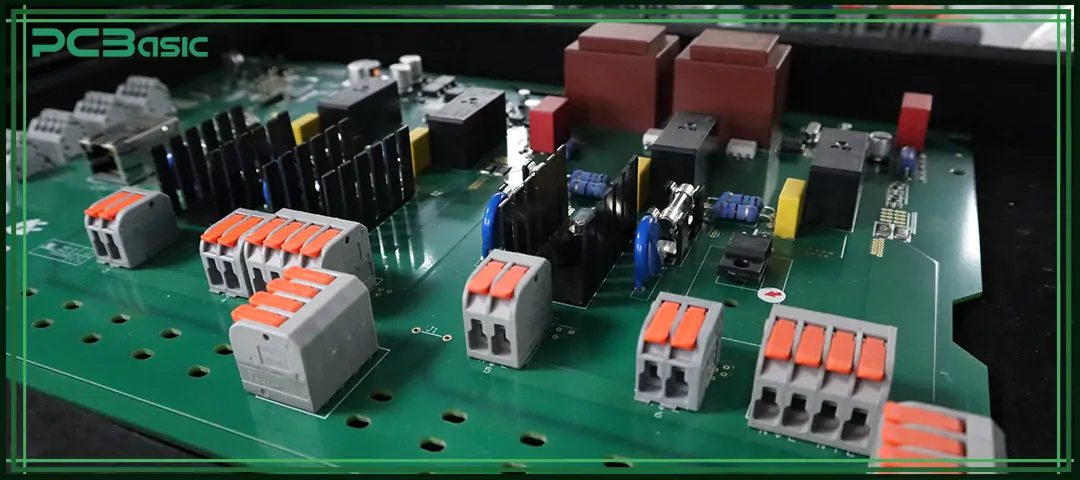
Several factors contribute to furnace control board failure:
• Power surges damaging sensitive components
• Moisture or condensation causing corrosion
• Excessive heat exposure
• Aging solder joints
• Improper wiring
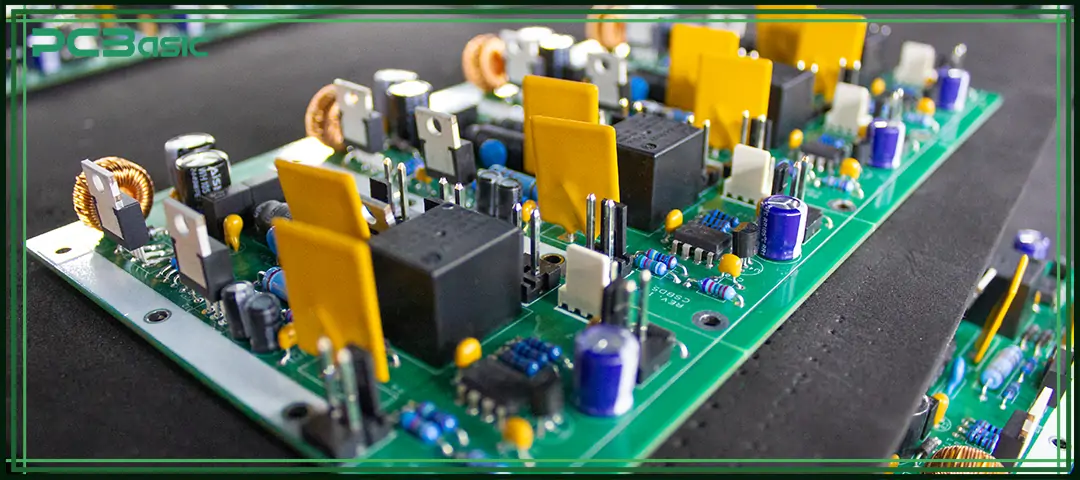
PCBasic has long been dedicated to the manufacturing and assembly of circuit boards of multiple varieties and small batches, including various types of furnace control boards. This type of control board often features complex circuit structures and high functional integration, and has high requirements for both the stability of the manufacturing process and the flexibility of delivery.
As a professional PCB and PCBA manufacturer, PCBasic is not merely about completing the production of boards. Instead, it is more adept at cooperating with HVAC customers throughout the entire process, from sample verification, function adjustment, engineering trial production to small-batch delivery. It is particularly suitable for application scenarios with numerous product models, frequent version updates, and unstable batch sizes.
Based on the practical requirements of furnace circuit boards, PCBasic provides:
• Multi-layer PCB fabrication to support complex control logic and signal routing
• Safe layout and manufacturing for mixed high-voltage and low-voltage circuits
• Thick copper trace design for high-current paths used by relays, blowers, and actuators
• Combined SMT and through-hole assembly to match typical furnace control board structures
In high-mix, low-volume production, consistency is just as important as flexibility. Every furnace board produced by PCBasic follows standardized quality procedures, including AOI inspection, functional testing, and in-process control. This ensures that control boards across different models and production batches maintain stable and reliable performance.
PCBasic supports parallel production of multiple control boards and can integrate them into larger system-level HVAC control panel assemblies based on customer requirements.
Whether replacing legacy furnace control boards or introducing new designs in small production runs, PCBasic delivers manufacturing solutions that are stable, flexible, and designed for long-term reliability.

The furnace control board is the most core component in modern heating systems. From ignition control, airflow control to safety monitoring and fault diagnostics, this seemingly insignificant furnace circuit board directly determines whether the furnace operates stably and efficiently.
A thorough understanding of the working principle of furnace control boards and the early identification of potential fault signals can help avoid high maintenance costs and the risk of system downtime. Equally important is to select the furnace control boards with a reasonable structure and reliable process for the furnace, which is the basis for ensuring long-term stable operation.
Relying on mature PCB and PCBA manufacturing experience, PCBasic provides high-quality furnace boards and control boards solutions for HVAC applications, helping heating systems achieve safer, more stable and more durable operation performance.

Assembly Enquiry
Instant Quote

Phone contact

+86-755-27218592
In addition, we've prepared a Help Center. We recommend checking it before reaching out, as your question and its answer may already be clearly explained there.
Wechat Support

In addition, we've prepared a Help Center. We recommend checking it before reaching out, as your question and its answer may already be clearly explained there.
WhatsApp Support

In addition, we've prepared a Help Center. We recommend checking it before reaching out, as your question and its answer may already be clearly explained there.
