The
update speed of modern electronic products is continuously accelerating.
Product designs tend to be smaller in size and have higher functional
integration. Meanwhile, the market's requirements for product delivery cycles
are also constantly shortening. In this case, if PCB fabrication, component
sourcing, assembly, testing and logistics are independently managed by
different suppliers respectively, it often increases communication costs and
brings about schedule uncertainty and quality risks. Therefore, turnkey
assembly has gradually become the mainstream manufacturing choice for global
startups, OEMs and product-focused companies.
This
article will focus on the explanation of turnkey PCB assembly, systematically
introducing its basic operation process, key benefits, and explaining how to
select the appropriate turnkey manufacturing partner for real-world projects.
Meanwhile, the article will also combine specific practices to explain how PCBasic
can provide stable and reliable printed circuit board assembly services in the
actual production process.
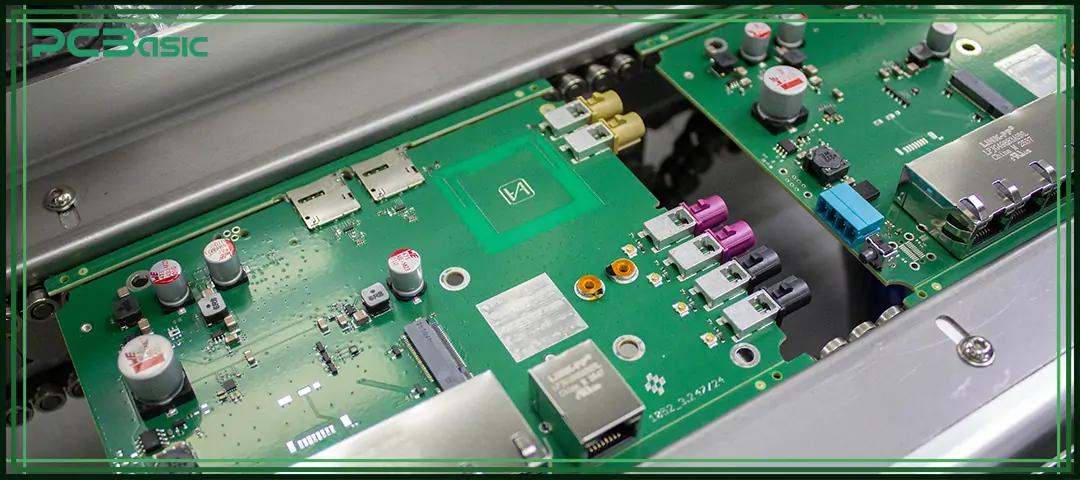
What Is
Turnkey PCB Assembly?
Turnkey
PCB assembly is essentially a complete one-stop manufacturing service. The
customer only needs to provide design materials, such as Gerber files, the BOM
and assembly requirements, while the rest of the work will be completed by the
manufacturer. These tasks include PCB fabrication and assembly, component sourcing,
SMT and THT mounting, inspection, testing and final delivery.
Different
from the traditional outsourcing method, turnkey assembly services are the
responsibility of the manufacturer for the entire production process, avoiding
the problems of complex communication and workflow fragmentation caused by PCB
manufacturing, component procurement and assembly being completed by different
suppliers. Under the turnkey manufacturing model, all production processes are
carried out collaboratively within the same system, thereby effectively
reducing the risk of errors and production delays.
For
many companies, turnkey electronics manufacturing is not merely for convenience
but a more efficient manufacturing option. By entrusting manufacturing and
supply chain management to professional manufacturers, they can focus their
energy on product design, engineering development and market execution, without
having to invest too many resources in handling manufacturing details.

The
Meaning of “Turnkey” in PCB Manufacturing
The
term "turnkey" was originally used in construction and industrial
projects, meaning that a project can be put into use directly after its
completion. In PCB manufacturing, turnkey assembly follows the same idea: at
the end of the project, what the customer receives is the finished product that
has been assembled and passed the test, rather than the semi-finished product
that requires further coordination of multiple stages.
Integrating
PCB fabrication and assembly within the same production system, turnkey
assembly services can better control the process and ensure the traceability of
production data, and respond quickly when the design is adjusted. Therefore,
this mode has become a common choice for quick-turn PCB assembly and subsequent
large-scale mass production projects.
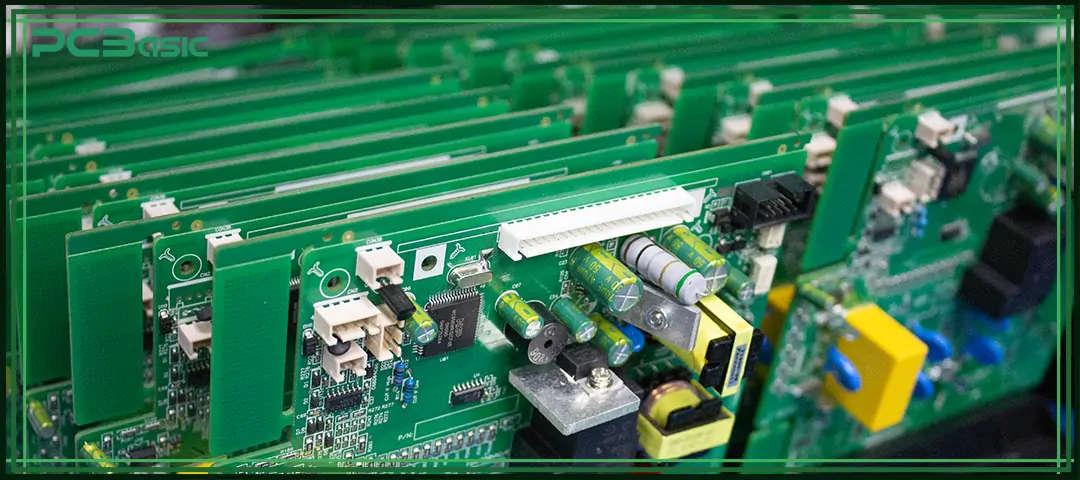
The
Complete Turnkey PCB Assembly Process (Step by Step)
Turnkey
PCB assembly is usually carried out following
a fixed and repeatable process, with the aim of identifying potential issues
before production, reducing errors during the production process, and ensuring
the stability of the final product quality.
1. Engineering Review (DFM / DFA)
Before
starting production, engineers will check whether the design files are suitable
for manufacturing and assembly to avoid rework in subsequent production. The
review mainly focuses on package dimensions, pad design, component spacing, and
the appropriateness of component selection.
2. Component Sourcing and BOM Management
Components
are procured by the manufacturer from reliable suppliers. In the full turnkey
assembly model, all components are purchased, inspected upon receipt, and
managed by the factory to ensure reliable component sourcing, stable supply and
consistent quality.
3. PCB Fabrication
Bare
PCBs are produced in accordance with the design requirements. When PCB
fabrication and assembly are completed in the same factory or within the same
system, handoff steps can be reduced, thereby shortening the delivery time and
lowering the risk of quality fluctuations.
4. SMT and THT Assembly
Surface
mount technology (SMT) is completed using automated pick-and-place equipment,
and through-hole components are installed either by equipment or manually.
5. Soldering Processes
According
to the structure of the circuit board and the type of components, you can
choose reflow soldering, wave soldering or selective soldering.
6. Inspection and Testing
Through
AOI, X-ray inspection and functional testing, the quality of solder joints, the
installation of components and the circuit functions are confirmed to ensure
that each circuit board meets the performance and reliability requirements of
turnkey assembly services.
7. Packaging and Delivery
Finished
products that pass tests are packaged as per the customer's requirements and
directly sent to the designated location. At this point, the entire turnkey PCB
assembly process is completed.
Key
Benefits of Turnkey PCB Assembly
The
growing adoption of turnkey assembly is driven by clear, measurable advantages.
Cost Efficiency
By
consolidating processes, turnkey manufacturing reduces logistics costs,
minimizes rework, and leverages bulk purchasing. A turnkey electronic
manufacturer can often secure better component pricing than individual buyers.
Faster Time-to-Market
Integrated
workflows enable quick-turn PCB assembly, allowing prototypes and production
runs to move faster without sacrificing quality.
Reduced Risk and Errors
Single-vendor
accountability eliminates miscommunication between suppliers. Engineering
reviews and controlled processes improve first-pass success rates in printed
circuit board assembly services.
Simplified Project Management
With
full turnkey, customers interact with one partner, one schedule, and one
quality system. This is especially valuable for teams with limited
manufacturing resources.
About PCBasic
Time is money in your projects – and PCBasic gets it. PCBasic is a PCB assembly company that delivers fast, flawless results every time. Our comprehensive PCB assembly services include expert engineering support at every step, ensuring top quality in every board. As a leading PCB assembly manufacturer, we provide a one-stop solution that streamlines your supply chain. Partner with our advanced PCB prototype factory for quick turnarounds and superior results you can trust.
Beyond PCBA:
Box Build and System Integration
Modern
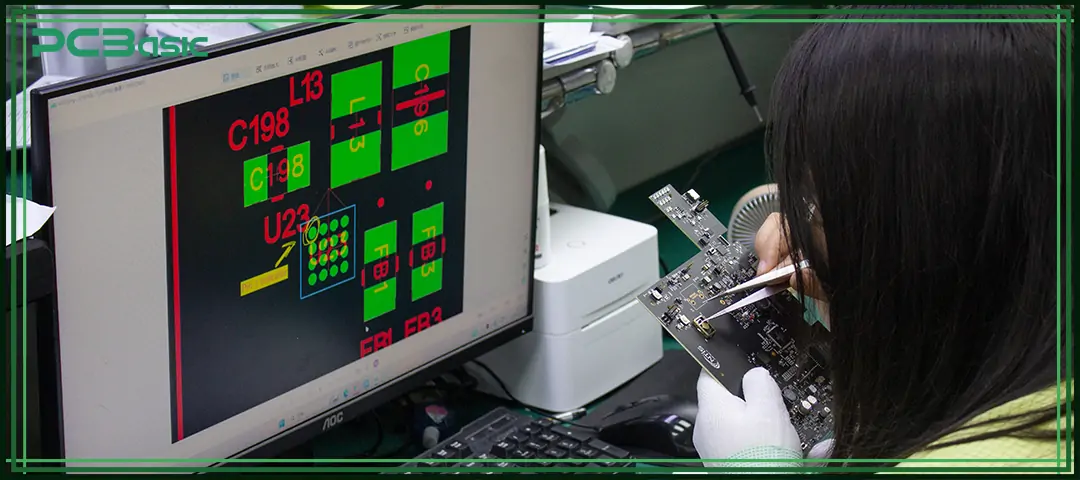
products often require more than just PCB assembly. Box build assembly extends
turnkey PCB assembly beyond the board level to include complete product
integration.
Box
build assembly may include:
• Enclosure
installation
• Cable
and harness assembly
• Connector
integration
• Software
loading and configuration
• Final
system testing and packaging
For
customers seeking complete turnkey electronics manufacturing, box build
assembly eliminates the need for additional suppliers and ensures consistency
from PCB to finished product.
Common
Challenges in Turnkey PCB Assembly
Despite
its advantages, turnkey assembly is not without challenges.
Component Availability
Global
supply chain volatility can impact lead times. Experienced turnkey assembly
services mitigate this risk through strong supplier networks and alternative
sourcing strategies.
Design Complexity
High-density
and advanced designs require deep engineering expertise. A capable turnkey
electronic manufacturer invests in advanced equipment and skilled engineers to
handle complex assemblies.
Communication Expectations
While
full turnkey simplifies management, clear documentation and communication
remain essential. The best turnkey manufacturing partners act as extensions of
the customer’s engineering team.
Full
Turnkey vs. Partial Turnkey vs. Consigned Assembly
Understanding
service models helps customers choose the right approach.
Full Turnkey Assembly
In
a full turnkey assembly, the manufacturer handles everything—components, PCB
fabrication and assembly, testing, and delivery. This model offers maximum
simplicity and speed.
Partial Turnkey
Component
sourcing is shared between the customer and the manufacturer. This approach
provides flexibility but requires more coordination.
Consigned Assembly
The
customer supplies all components, and the manufacturer performs only assembly
labor. While offering control, this model lacks the efficiency of turnkey
assembly services.
For
most businesses, full turnkey delivers the best balance of cost, speed, and
reliability.
PCBasic’s
Turnkey PCB Assembly Services
PCBasic
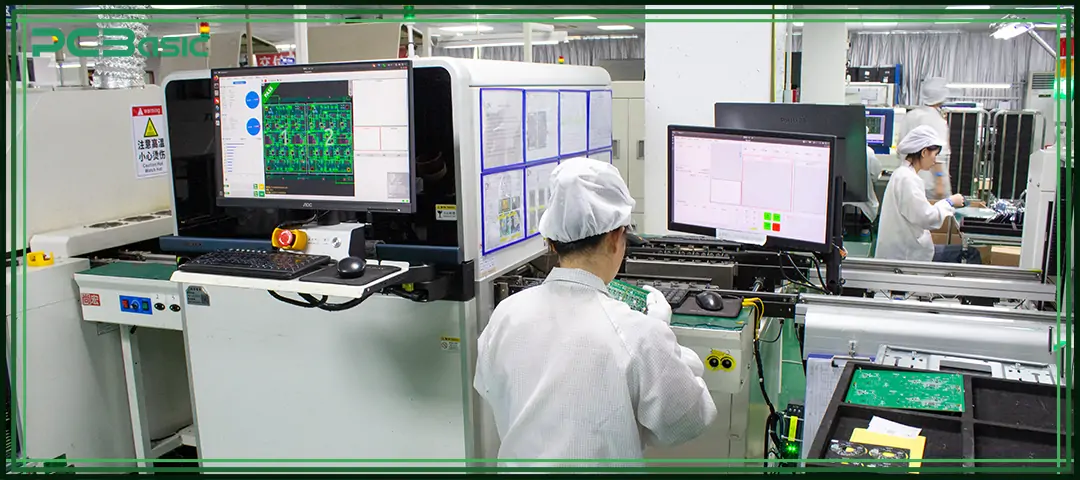
provides comprehensive turnkey PCB assembly solutions designed for reliability,
scalability, and transparency. As a specialized turnkey electronic
manufacturer, PCBasic integrates PCB fabrication and assembly, component
sourcing, testing, and logistics into a unified manufacturing system.
PCBasic’s
turnkey assembly services include:
• Engineering-driven
DFM/DFA review
• Verified
component sourcing and BOM management
• Advanced
SMT and mixed-technology assembly
• AOI,
X-ray, and functional testing
• Quick
turn PCB assembly for prototypes
• Scalable
full turnkey assembly for production
• Optional
box build assembly and system integration
By
combining digital traceability with disciplined manufacturing processes, PCBasic
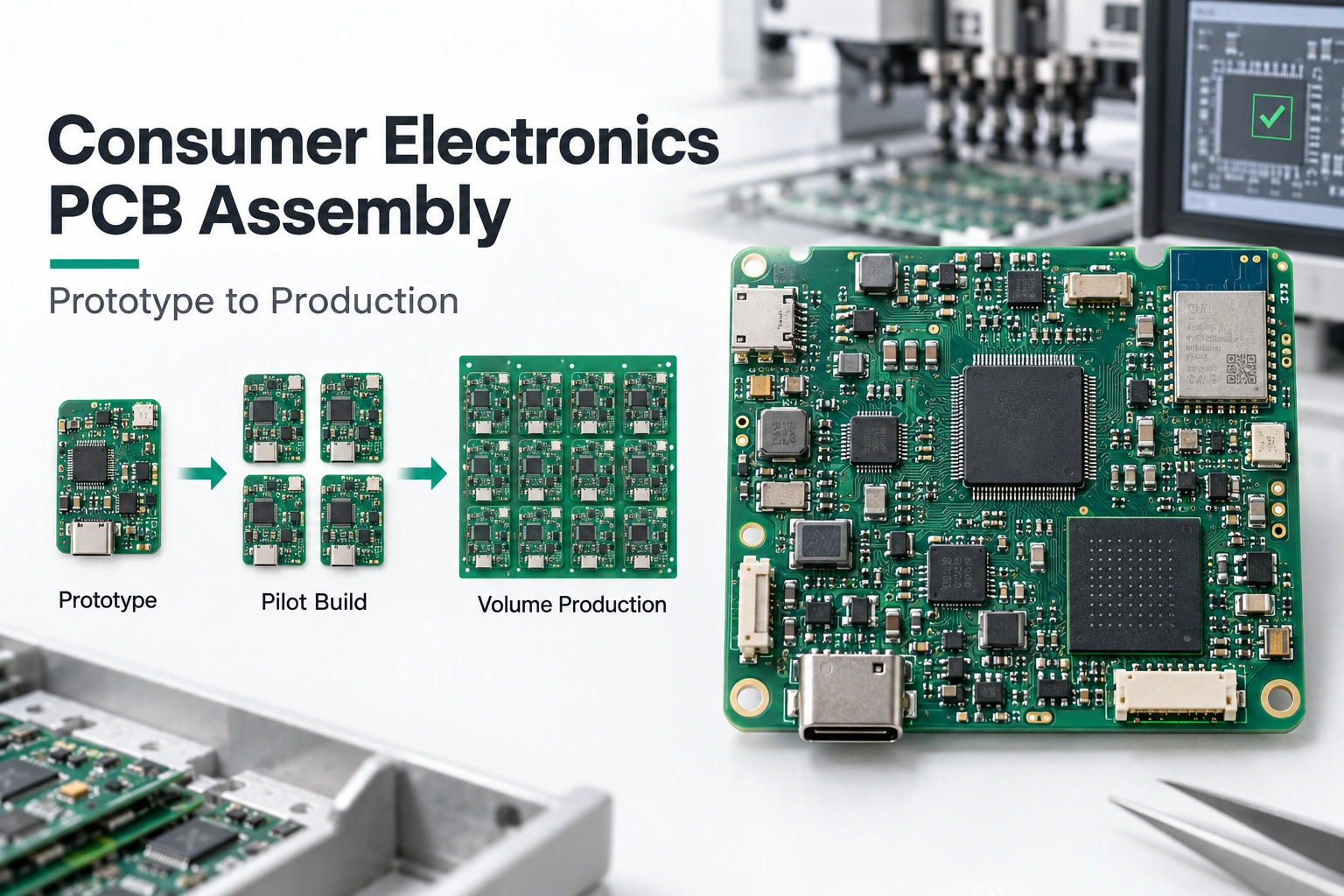
supports customers across the entire product lifecycle—from early prototypes to
volume turnkey electronics production.

Conclusion
In
today’s fast-paced electronics industry, turnkey PCB assembly is no longer just
an option—it is a competitive advantage. By consolidating PCB fabrication and
assembly, sourcing, testing, and integration into a single workflow, turnkey
manufacturing reduces complexity while improving quality and speed.
Whether
you are developing a prototype, launching a new product, or scaling production,
the right turnkey assembly partner makes the difference. With robust processes,
advanced equipment, and end-to-end accountability, turnkey assembly services
enable teams to focus on innovation instead of operations.
PCBasic’s
approach to turnkey PCB assembly demonstrates how disciplined engineering,
transparent sourcing, and scalable production can turn complex designs into
reliable, market-ready products—efficiently, predictably, and with confidence.
FAQs
1.
What information is required to start a turnkey PCB assembly project?
Gerber
files, a BOM, and basic assembly requirements are typically required.
Pick-and-place files and testing requirements are recommended but not
mandatory.
2.
What is the difference between PCB fabrication and assembly, and turnkey PCB
assembly?
PCB
fabrication and assembly cover board manufacturing and component mounting,
while turnkey PCB assembly also includes component sourcing, testing, and
delivery under one responsibility.
3.
When should I choose full turnkey assembly instead of partial or consigned
assembly?
Full
turnkey assembly is suitable when you want to reduce coordination effort,
shorten lead time, and lower supply chain risk.
4.
How do turnkey assembly services reduce manufacturing risk?
By
assigning full responsibility to one manufacturer, communication errors are
reduced, and quality control is more consistent.
5.
Is quick-turn PCB assembly possible under a turnkey model?
Yes.
Integrated sourcing, fabrication, and assembly enable faster turnaround times.
6.
How is quality controlled in turnkey electronics manufacturing?
Through
design review, incoming inspection, AOI, X-ray inspection, and functional
testing.
7.
Can box build assembly be included in a turnkey PCB assembly project?
Yes.
Box build assembly can be added to deliver fully assembled and tested products.