In modern electronic manufacturing process, PCB assembly is a core process that transforms a PCB board without components into a circuit board assembly capable of performing specific functions. The stable operation of various electronic products, such as smartphones, automotive control units, medical devices, and industrial automation systems, all rely on the support of circuit board assembly technology.
Today, as electronic products are trending towards miniaturization and integration, the difficulty of PCB fabrication and assembly is constantly increasing. It is no longer a simple soldering or assembly process but a rigorous manufacturing process that requires mature engineering experience, clear process control, and highly automated production equipment. Especially in high-density SMT assembly and mixed process designs, even small process deviations can impact yield and long-term reliability.
Below is a practical overview of PCB assembly, covering core concepts, process flows, and typical applications. It also explains how professional PCB assembly services ensure stable product quality, consistent production, and smooth large-scale delivery in the PCBA manufacturing process.
What Is PCB Assembly?
What Is a PCB Board?
A PCB board (Printed Circuit Board) is the most fundamental component in electronic products. It holds and connects all electronic components together—giving them a stable place to mount, and linking them via copper foil circuits for smooth electrical and signal transmission. Through reasonable insulation and spacing designs, it ensures electrical safety and reduces signal interference.
The quality of PCB assembly depends on the PCB materials used. Common PCB materials include FR-4 epoxy boards, high TG materials, metal substrates, and Rogers high-frequency copper clad boards. Each material has its own advantages: some materials perform better in dissipating heat when dealing with high-power, heat-generating equipment; some excel in signal control and are suitable for fast data transmission; and some are more durable and can be used for a long time. These differences directly affect the final effect of circuit board assembly.
A Meaning and Definition
PCBA stands for Printed Circuit Board Assembly, which is the finished board with components already installed on the circuit board.
PCB Board is just a bare board without any components installed, consisting only of lines and the base material. When the components are completed with mounting and welding, this board is then called PCBA. Therefore, a simple initial understanding of PCB = a bare board with lines.
PCBA=installed, completed and tested board
When communicating with PCB assembly manufacturers, it is very important to clarify the meaning of PCBA, because the actual quotations, delivery schedules, and tests to be conducted are all calculated based on PCBA manufacturing, rather than just the bare board.
PCB Assembly vs PCB Manufacturing
PCB Assembly and PCB Manufacturing are often mentioned together, but they are actually two different production processes. PCB Manufacturing refers to making the bare board first, with main processes including lamination, drilling, electroplating, etching, and surface finish. At the same time, PCB Assembly refers to installing components on the bare board, completing welding, and conducting inspection and functional tests.
Because these two processes are closely linked, many customers choose to have integrated services of PCB fabrication and assembly. This can reduce intermediate connection links, shorten the overall delivery time, and make it more convenient to unify quality standards and process control.
PCB Assembly Process Explained
To make electronic products stable and user-friendly, every step of the PCB assembly process must be clear, controllable, and have clear standards. Below, in a more intuitive way, we will briefly introduce several common PCB assembly processes used in modern PCBA manufacturing.
SMT Assembly Process
SMT assembly is the most commonly used PCB assembly process nowadays. Components are directly attached to the surface of the PCB board, allowing more components to be placed within a limited area and improving overall performance.
Using SMT assembly can make the component arrangement denser, the PCB volume smaller, and the electrical performance more stable.
A common SMT assembly process usually includes: printing solder paste on the PCB, automatic placement of components by a soldering machine, completing the welding through reflow soldering, and conducting automated testing.
Due to the high degree of automation in SMT assembly, it is very suitable for large-scale PCB assembly services, ensuring efficient operation and high-quality product delivery.
Through-Hole Assembly
When components require stronger fixation strength or need to carry larger currents, through-hole assembly is adopted. This method involves inserting the component pins into the holes on the PCB board and then completing the welding on the other side.
Although the efficiency of through-hole assembly is lower than SMT assembly, it is still commonly used in power products, industrial control equipment, and environments with vibration or mechanical stress.
However, in actual PCB assembly services, the through-hole process is often used in combination with the SMT process to meet more complex design requirements.
Mixed Technology Assembly
Mixed technology PCB assembly refers to the practice of using both surface mount technology (SMT) components and through-hole components on the same board. This is very common in PCBA manufacturing for industrial equipment and automotive electronics, as these products have complex functions and require sturdy and durable structures.
To successfully carry out mixed technology circuit board assembly, it is necessary to properly arrange the process sequence, control the welding temperature, and have experienced engineers oversee the entire process.
Inspection, Testing, and Quality Control
Throughout the PCB assembly process, inspection and testing are indispensable steps. Common methods of inspection and testing include SPI (checking if the solder paste is properly applied), AOI (automated inspection of components and solder joints), X-Ray (examining the conditions of solder joints that are not visible to the naked eye), ICT (testing if the circuit is connected and if there are any short circuits), and FCT (powering up the circuit board to verify its actual functionality).
A professional PCB assembly manufacturer will incorporate these inspection and testing steps into the PCB assembly service, ensuring high-quality guarantees for the delivered boards.
In practice, not every project requires all testing methods. For many consumer electronics boards, AOI combined with functional testing is sufficient, while X-ray inspection is mainly applied to designs with BGA or QFN packages.
Why PCBasic is a reliable PCB assembly manufacturer
As electronic products continue to evolve towards miniaturization, high integration, and high reliability, choosing the right PCB assembly manufacturer is no longer just a procurement decision; it becomes a critical decision that directly affects product quality, delivery stability, and overall manufacturing risks.
How to evaluate a PCBA manufacturing partner
When assessing a PCBA manufacturing partner, the key consideration is whether they have a long-term and stable delivery capability. This can usually be determined from the following aspects:
• Whether they have practical experience in complex PCB assembly
• Whether they have mature and stable SMT assembly and mixed process capabilities
• Whether they have reliable component procurement capabilities and a standardized BOM management system
• Whether they have established a complete quality management system
• Whether they can provide timely engineering support and efficient communication
PCBasic's PCB assembly capabilities and quality certification
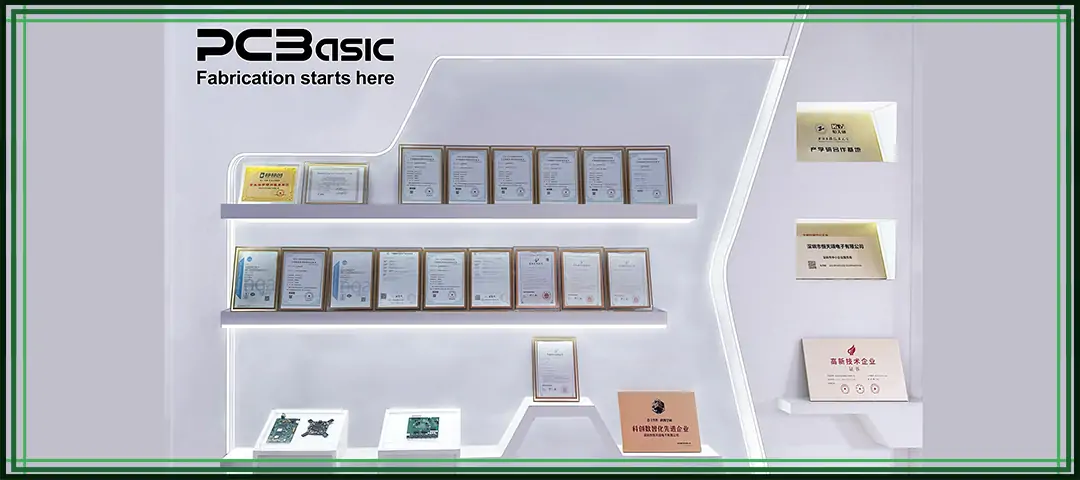
PCBasic has established a complete PCB assembly service system centred around integrated manufacturing, quality control and digital management, to ensure the stability and consistency of PCBA manufacturing.
Quality is at the core of PCBasic's turnkey manufacturing services. It has obtained multiple international authoritative certifications, including:
• ISO 9001 Quality Management System
• IATF 16949 Automotive Quality Standard
• ISO 13485 Medical Device Quality Management
• ISO 14001 Environmental Management
• ISO 45001 Occupational Health & Safety
• RoHS, CE, FCC, and CCC product compliance certifications
Testing is a key stage in PCBasic's turnkey contract manufacturing. All PCBA undergo multi-level inspection and testing before shipment, including:
• Visual inspection after SMT
• Automated Optical Inspection (AOI)
• X-Ray inspection (optional or required based on design)
• In-Circuit Testing (ICT)
• Functional Testing (FCT)
• Final quality and shipment inspection
PCB Assembly Applications
PCB assembly is widely used in various industries, and different products have different requirements for materials, processes, and quality control. The environment in which the product operates, the requirement for reliability, the production quantity, and the service life all affect PCBA manufacturing. Based on these differences, PCB assembly applications can generally be categorized into the following areas:
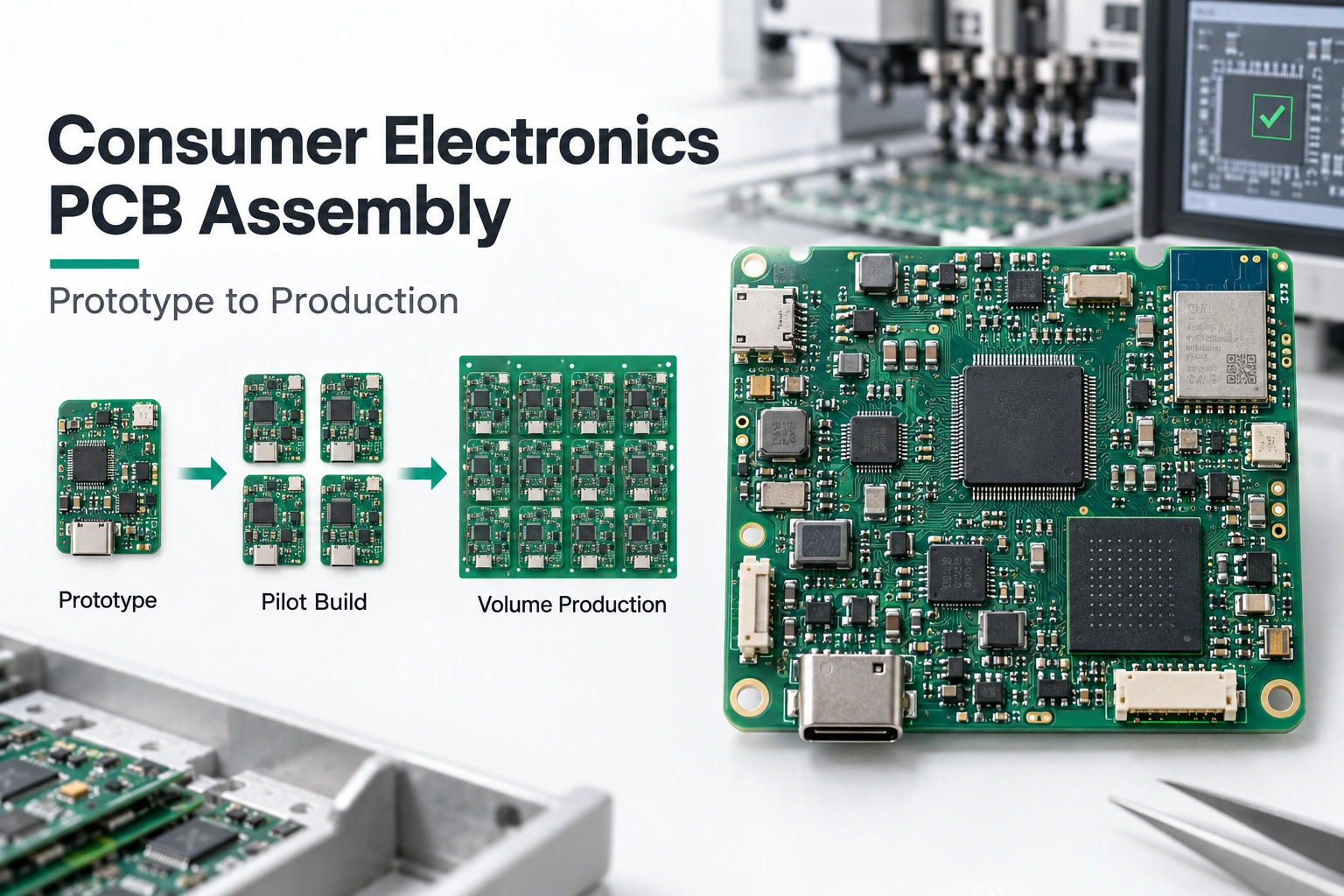
• Consumer Electronics PCB Assembly
• Automotive and Industrial PCB Assembly
• Medical and High-Reliability PCBA Manufacturing
• Industrial Control and Embedded Systems PCB Assembly
Conclusion
PCB assembly is not merely a small step in production; it is the crucial link that transforms electronic design into a usable product. From understanding the PCB meaning to perfecting the PCB assembly process, there is a lot of knowledge involved. The success of electronic manufacturing depends on whether the process is precise, whether the experience is sufficient, and whether reliable partners have been selected.
Nowadays, the requirements for products are constantly increasing, and choosing the appropriate PCB assembly manufacturer has become increasingly important. A qualified manufacturer should have mature PCB assembly services, stable SMT assembly capabilities, and extensive PCBA manufacturing experience. Under a unified and controlled PCB fabrication and assembly framework, by closely integrating design, materials, and production processes, enterprises can steadily deliver reliable and scalable electronic products to the market.