In recent years, LED PCB technology has become the core of modern lighting. From consumer electronics to automotive lighting, industrial equipment, and even plant growth lights and medical lighting, none can do without it.
An LED PCB board, also known as an LED light circuit board, is the core component of the LED lighting system. It can provide structural support, achieve electrical connection and also help with heat dissipation. Because LEDs generate a lot of heat during operation, it is necessary to rely on good LED PCB board design and LED PCB assembly to improve energy efficiency, extend lifespan and ensure stable light output. At the same time, meet the needs of different product designs at the same time.
This article will systematically introduce the core materials, advantages, applications and assembly methods of LED light circuit boards, helping you understand them more clearly and make appropriate choices for your next LED project.
What is an LED PCB?
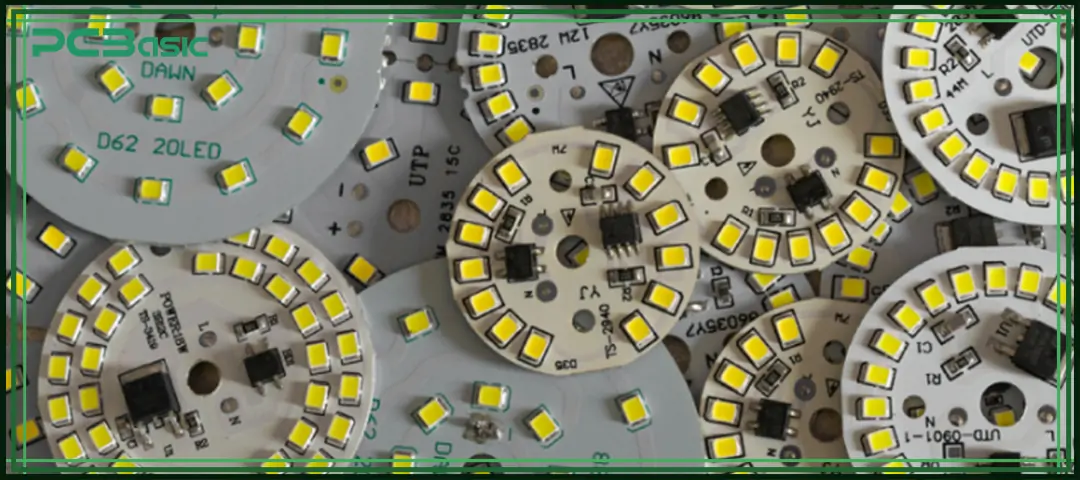
An LED PCB is a type of printed circuit board specifically designed to install light-emitting diodes (LEDs) and connect circuits. In any LED light design, it is a key component because it not only supports LEDs but also allows the current to flow and helps dissipate heat at the same time. The LED PCB board combines LED components together to form a functioning LED light board, converting electrical energy into light.
By soldering the LED chips onto the LED PCB board, a complete LED light circuit board can be obtained. These boards are specially designed to deal with the heat generated by LEDs during operation, ensuring a long lifespan and high energy efficiency of the lights.

What does an LED Board do?
As we have mentioned earlier, the LED board is the core component of the lighting system. It is responsible for connecting, supporting and supplying power to the LEDs. It not only fixes the position of the LEDs but also provides an electrical pathway for the current. In addition to the connection function, the LED PCB or LED light circuit board can also help dissipate heat, enabling the LEDs to work safely and efficiently.
Through a reasonably well-designed LED PCB board and LED PCB assembly, the circuit board can withstand high temperatures, maintain stable light output, and extend the lifespan of the LED at the same time. In simple terms, an LED PCB board combines multiple LED chips into a reliable and efficient LED light board circuit, suitable for various lighting scenarios.
LED PCB Core Materials
The performance of LED PCBs mainly depends on the materials they use. Different materials have their own characteristics in terms of thermal conductivity, durability and cost. The following are some common LED PCB board materials:
FR4 PCB
The FR4 PCB is a kind of glass-epoxy substrate, which is often used in low-power LED circuit boards. It has a low cost but poor heat conduction, so it is suitable for low-power LEDs or applications with low heat.
Aluminum PCB
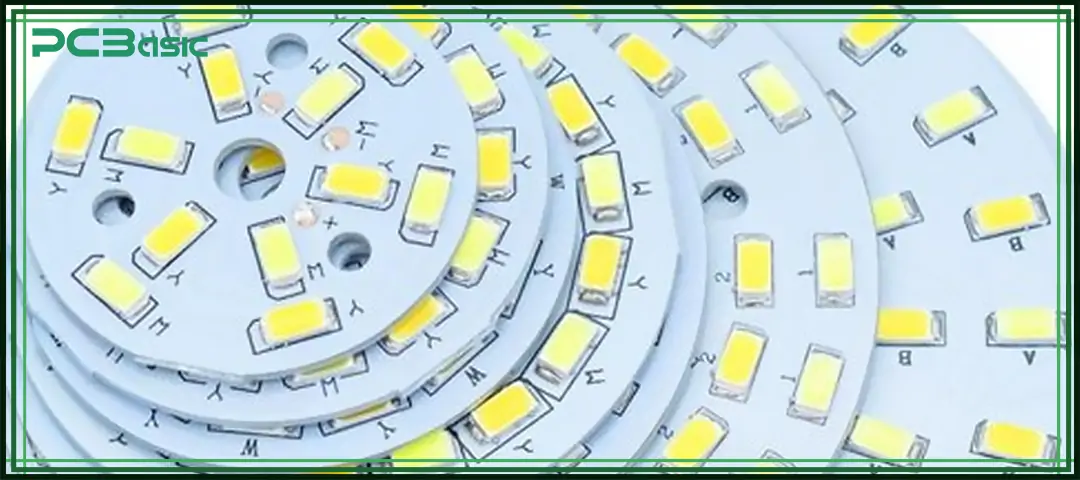
Aluminum is the most commonly used material for LED PCBs because of its excellent thermal conductivity. Aluminum PCBs usually come with a thin layer of thermally conductive dielectric material, which can quickly dissipate the heat generated by the P-N junction of the LED. These LED PCB boards are lightweight, cost-effective and durable, and are highly suitable for LED light circuit board design in automotive, industrial and consumer electronics products.
Copper-base PCB
Copper-based PCBs are suitable for high-power LED lighting. Compared with aluminum, copper has stronger thermal conductivity and can accommodate more LED arrays on a single LED PCB board. Some copper-based PCBs use direct-touch technology, allowing LED pads to directly contact the copper substrate to achieve more efficient heat dissipation.
Ceramic PCB
Ceramic LED PCBs are mainly used in high-power applications, such as underwater lights, photography lights or industrial lighting. Commonly used substrates include aluminum nitride (AlN), alumina and silicon nitride. Ceramic LED circuit boards have good thermal conductivity and strong durability. However, large-sized boards need to be carefully manufactured to prevent breakage.
About PCBasic
Time is money in your projects – and PCBasic gets it. PCBasic is a PCB assembly company that delivers fast, flawless results every time. Our comprehensive PCB assembly services include expert engineering support at every step, ensuring top quality in every board. As a leading PCB assembly manufacturer, we provide a one-stop solution that streamlines your supply chain. Partner with our advanced PCB prototype factory for quick turnarounds and superior results you can trust.
Types of LED PCBs
LED PCB technology has developed into various types to meet different design requirements. When conducting LED PCB board design or LED PCB assembly, it is very important to understand these types.
|
Type
|
Description
|
Applications / Features
|
|
Single-layer Aluminum PCB
|
Simplest form of aluminum PCB
|
Suitable for low to moderate power LEDs, simple structure, and cost-effective
|
|
Double-layer Aluminum PCB
|
Two-layer design
|
Allows higher component density and slightly improved heat dissipation
|
|
Multilayer Aluminum PCB
|
Multilayer design
|
High-performance applications, supports complex LED layouts, better thermal management
|
|
Rigid PCB
|
Traditional rigid board
|
Strong stability and durability, suitable for standard installations
|
|
Flexible PCB
|
Polyimide or polyester substrate
|
Can bend and fold, ideal for LED strips or irregular installations
|
|
Surface-mount PCB
|
Components mounted directly on the PCB surface
|
High component density, supports automated assembly
|
|
Thru-hole PCB
|
Components inserted into holes and soldered
|
More robust connections, suitable for harsh environments or heavy-duty applications
|
|
Hybrid PCB
|
Combines two or more substrate materials
|
Optimized thermal management and structural strength, ideal for high-power LED systems
|
|
Ceramic PCB
|
Ceramic substrate
|
High thermal conductivity and reliability, suitable for high-power or extreme environments
|
LED PCB Applications
LED PCBs play a critical role in a wide range of applications. But what does an LED board do exactly?
• Consumer Lighting: LED circuit boards power everyday lights such as lamps, flashlights, and solar-powered lights.
• Automotive: In cars and trucks, LED PCB boards are used in headlights, brake lights, indicators, and interior lighting.
• Consumer Electronics: PCBs for LEDs are integrated into displays, indicator lights, smartphones, televisions, and laptops.
• Telecommunications: LED light circuit boards are used for signaling and indicator lights in equipment, thanks to their heat tolerance and long lifespan.
• Medical Devices: High-powered surgical and diagnostic lighting often relies on LED PCB assembly for durability and efficient thermal management.
• Industrial and Specialty Lighting: LED grow lights, underwater lighting, and tunnel lighting utilize metal core PCBs for effective heat dissipation.
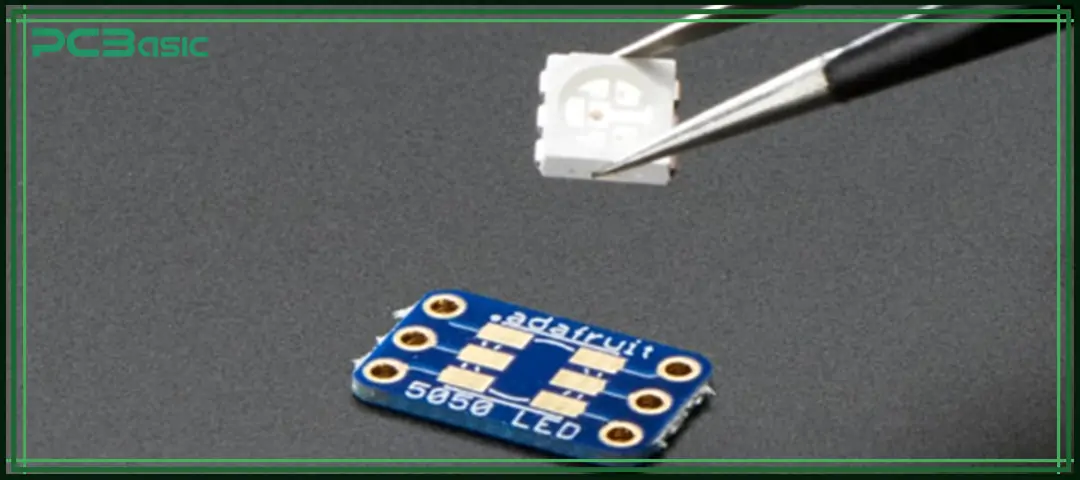
LED PCB Design and Assembly
When designing the PCBs for LEDs, heat dissipation, electrical connection, and mechanical support need to be considered simultaneously to ensure the safe and efficient operation of the LED light boards:
Circuit Layout
Depending on the number and power of the LEDs, single-sided, double-sided or multilayer circuit boards can be selected. Single-sided boards are suitable for low power and simple layouts, double-sided boards can increase component density, and multilayer boards are suitable for high power or complex LED array designs.
Material Selection
LED PCB boards of different materials have different thermal conductivity, durability and cost. FR4 is commonly used for low-power or portable LED boards. LED light circuit boards that require better heat dissipation usually use aluminum-based PCBs. High-power LED lights can use copper-based PCBs. Ceramic PCBs may be used in special applications such as underwater lamps or industrial lamps.
Surface Treatment
Common treatments include OSP, LF-HASL, ENIG, and milky white solder masks. The milky white solder pad can increase the reflectivity, improve the light output, and at the same time be more stable at high temperatures and less prone to discoloration.
Assembly Methods
The compact-designed LED PCB board can adopt surface mount technology (SMT), which is suitable for small LEDs and automated production. Through-hole assembly is more robust and is suitable for high-power or environmentally demanding applications.
Thermal Vias and Heat Sinks
The design of high-power LED PCB boards usually requires thermal vias and heat sinks to quickly conduct the heat generated by the LED away, avoiding overheating that affects performance and lifespan.
Custom LED Boards
Through custom LED light circuit board design, the light color temperature can be adjusted, the special shape of the lamp can be designed, and the light intensity and lumen output can be controlled to meet different application requirements.
A top LED PCB manufacturer like PCBasic, combining rich experience, advanced equipment and quality certifications (ISO 9001, IPC, RoHS), can produce high-quality LED circuit boards. It meets the application requirements of various scenarios such as families, industries, and automobiles, while ensuring product reliability and long service life.

Conclusion
The LED PCB is the core of modern lighting, featuring high energy efficiency, long lifespan and diverse design options. By choosing the appropriate LED PCB board materials, assembly methods and design techniques, Manufacturers and engineers can optimize LED light circuit boards to meet various application requirements - from household lighting to automotive and industrial projects.
Whether exploring custom LED boards, metal core PCBs, or conducting LED PCB assembly, understanding the details of LED PCB board design and LED PCBs can ensure high-quality, reliable and energy-efficient lighting solutions.
Choosing an experienced LED PCB manufacturer like PCBasic and leveraging the latest LED light circuit board design strategies will help maximize the performance, durability and cost-effectiveness of LED projects.