Understanding the temperature resistance of materials is a crucial step when choosing materials for functional 3D printed parts. This article will mainly introduce a 3D printing material - PETG. PETG combines good strength, toughness and stable printing performance, and is one of the most widely used 3D printing consumables at present.
This article will introduce the main thermal performance parameters of PETG and explain its temperature range in practical use. At the same time, it will compare PETG with common materials such as PLA and ABS. In addition, typical application fields suitable for PETG will also be introduced in the article. Without further ado, let's get straight to the point!
What Is PETG?
PETG (Polyethylene Terephthalate Glycol-modified) is a thermoplastic material modified with ethylene glycol. This material is widely used in various 3D printing materials. It is modified from the common PET material, which is usually used for beverage bottles. (Modification: Based on the original material, by adding other components or changing the structure, the material's performance becomes better or more suitable for a certain purpose.) Then, by adding ethylene glycol, the brittleness of the material is reduced and the printing quality is improved, enabling PETG to maintain stable mechanical properties while having better flexibility and impact resistance.
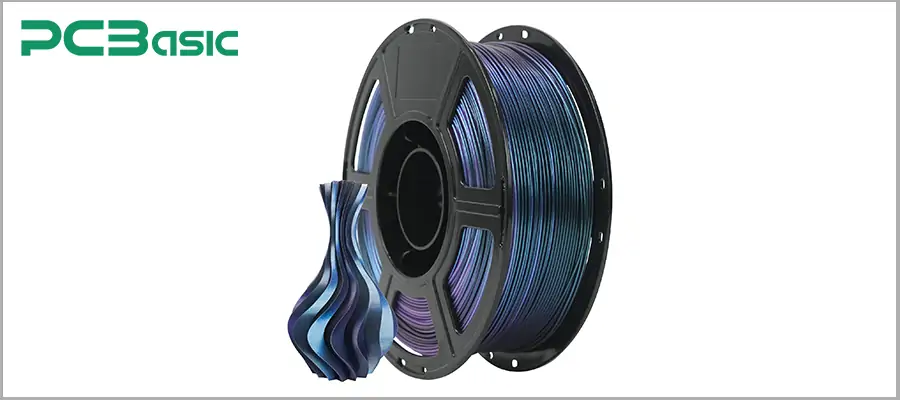
One of the major advantages of PETG material lies in its excellent balance between strength and printability. Even under certain conditions such as heat, humidity or ultraviolet radiation, PETG can still maintain stable performance. Although it is not a high-temperature resistant engineering plastic, the printed parts produced from it are sufficient to maintain shape and function stability in daily use environments. Now, moving on, we will introduce the thermal properties of PETG.
Key Thermal Properties of PETG
When evaluating the PETG temperature resistance, there are three important thermal indicators: glass transition temperature (Tg), heat distortion temperature (HDT), and melting temperature (Tm). These parameters respectively reflect the material behavior of PETG when exposed to heat from different perspectives and jointly determine the safe usage range of PETG in practical applications. Next, we will explain each of these three indicators one by one.
Glass transition temperature (Tg)
Tg refers to the temperature point at which PETG gradually changes from a hard "glassy state" to a softer "rubbery state". Within this temperature range, the material does not melt, but its rigidity and dimensional stability will significantly decrease.
The typical Tg range of PETG: 75–85°C (167–185°F)
When the temperature approaches or exceeds this range, even without external force, 3D printed parts may exhibit bending or warping phenomena. Therefore, Tg is often regarded as an important reference indicator for measuring the actual usable temperature range of PETG. If the working temperature is close to Tg, the part may gradually deform, thereby affecting its structural and functional stability.
Heat Distortion Temperature (HDT)
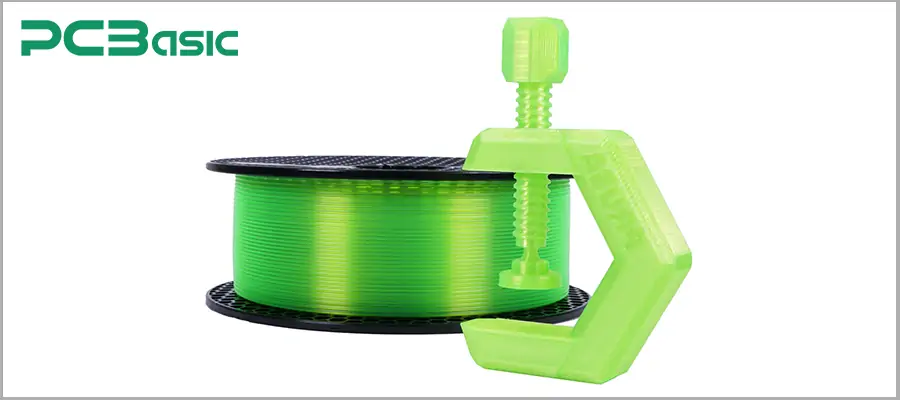
HDT is a measurement used to determine the temperature at which a material begins to undergo significant deformation when subjected to certain mechanical loads.
The typical HDT range of PETG: 60–70°C (140–158°F)
This value represents the maximum temperature limit of PETG under load or stress conditions. When the part is subjected to both mechanical stress and this temperature range, it is prone to bending, sagging or slow creep. Therefore, for applications such as supports, enclosures, and mounting bases that are both heated and subjected to force, HDT is a very crucial reference indicator. Even if the environmental temperature has not yet reached Tg, as long as there is a continuous load, PETG parts may deform due to approaching the HDT.
Melt temperature (Tm)
Tm refers to the temperature at which PETG completely transforms from a solid state to a molten state.
The typical Tm range of PETG: 220–260°C (428–500°F)
This temperature range is mainly related to the 3D printing process rather than the actual usage environment of the parts. In practical applications, PETG parts begin to lose their strength and shape stability at temperatures far below their melting point. Therefore, the melting temperature is not the main criterion for evaluating the temperature resistance capability of PETG.
Overall, Tg and HDT are the two key indicators that need to be focused on when determining the temperature resistance limit of PETG. Tm is mainly used to guide the processing and printing process of the material.

Practical Temperature Limits of PETG
The temperature resistance of PETG is not only determined by the material itself, but also closely related to specific working conditions (such as usage time, mechanical load, and surrounding environmental conditions, etc.). Understanding these limitations in advance can help avoid deformation or premature failure of printed parts. Below, we will mainly explain from three aspects: working temperature, mechanical load and stress, as well as environmental thermal factors.
Operating Temperature Range
PETG can be used down to around -10°C to -20°C in non-impact applications, but brittleness increases at low temperatures. Within this range, PETG retains its basic mechanical strength and dimensional stability. In some cases, PETG can withstand temperatures up to approximately 80°C (176°F) for short periods, but as the temperature approaches this level, the risk of material softening and warping increases significantly. If exposed to temperatures above 60°C for extended periods, it is not suitable for parts that require maintaining precision and structural stability. Therefore, the temperature range of -20°C to 60°C (-4°F to 140°F) can be regarded as the practical upper limit for PETG in daily engineering and 3D printing applications.
Mechanical Load and Stress
Mechanical stress significantly reduces the heat resistance of PETG. Even under the same conditions, parts subjected to loads will deform earlier than those without loads, and structures with thinner walls will soften more quickly. When subjected to continuous force at around 60°C, creep occurs, and the shape gradually changes.
Therefore, for structural components that need to withstand weight or external forces in high-temperature environments, PETG is not a good choice.
Environmental Heat Factors
Apart from the inherent properties of the material, the external environmental conditions also have a significant impact on the actual temperature resistance performance of PETG. Common heat sources include:
Direct sunlight (such as in a vehicle or enclosed space)
Heat generated by motors, power supplies or electronic components
Hot water or steam environment
Under these conditions, even if the air temperature does not seem high, the PETG parts may exceed their safe operating temperature. Once they exceed their safe operating temperature, the printed pieces are prone to problems such as softening, warping, and even losing mechanical strength.
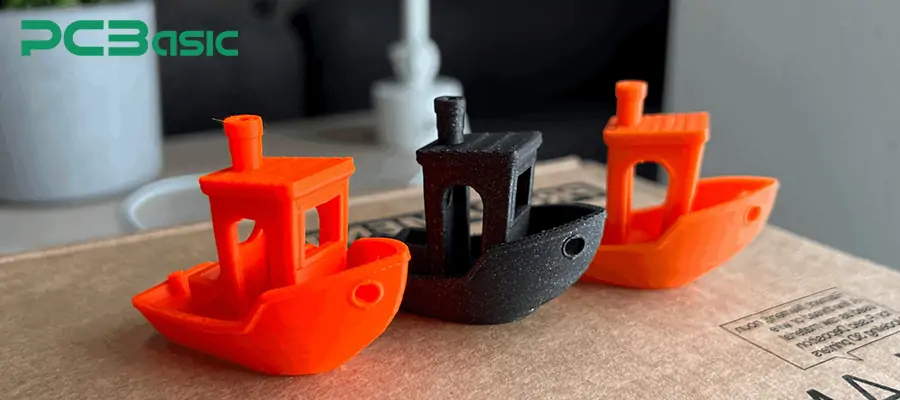
Therefore, in scenarios where multiple heat sources are combined or in enclosed environments, we should carefully assess the suitability of PETG.
PETG vs. Other Common Plastics
In order to better understand the temperature resistance performance of PETG, it is necessary for us to familiarize ourselves with and understand the differences between it and common 3D printing materials (such as PLA, ABS and polycarbonate PC). Below is a general comparison table of temperature resistance performance.
PLA vs PETG vs ABS vs PC – Temperature Resistance Comparison
|
3D Print Material
|
Tg (°C)
|
HDT (°C)
|
Recommended Operating Temperature
|
Relative Heat Resistance
|
|
PLA
|
55–60
|
50–55
|
≤ 50
|
Low
|
|
PETG
|
75–85
|
60–70
|
≤ 60
|
Medium
|
|
ABS
|
~105
|
90–100
|
85–95
|
High
|
|
PC (Polycarbonate)
|
~145
|
130+
|
120+
|
Very High
|
From the table, we can see that the temperature resistance of PETG lies between that of PLA and engineering plastics (such as ABS and PC). It achieves a good balance between heat resistance and printability. Next, we will compare them one by one with PETG.
PETG vs PLA Temperature Resistance
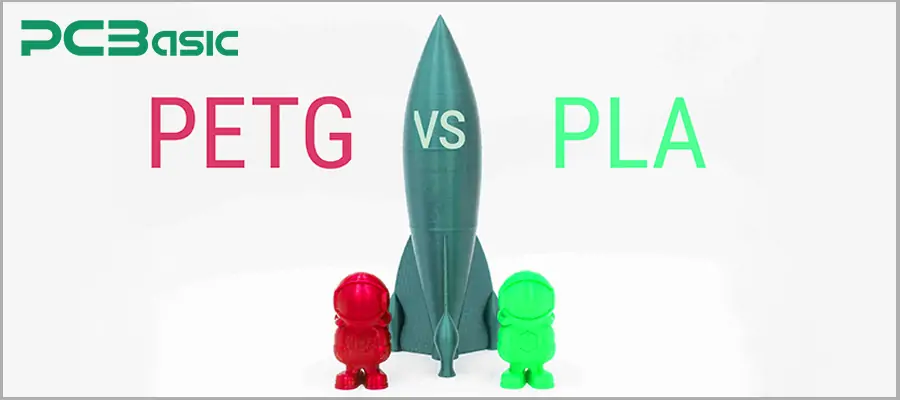
When comparing the temperature resistance of PETG and PLA, the advantages of PETG are very obvious. PLA begins to soften at around 55 ℃ and is not suitable for use in high-temperature or direct sunlight environments, such as car interiors. In contrast, PETG has a higher glass transition temperature and can still maintain good dimensional stability at moderate temperatures.
Therefore, when the application scenario has certain temperature requirements and one also hopes that the material is easy to print, PETG is more suitable than PLA.
PETG vs ABS Temperature Resistance
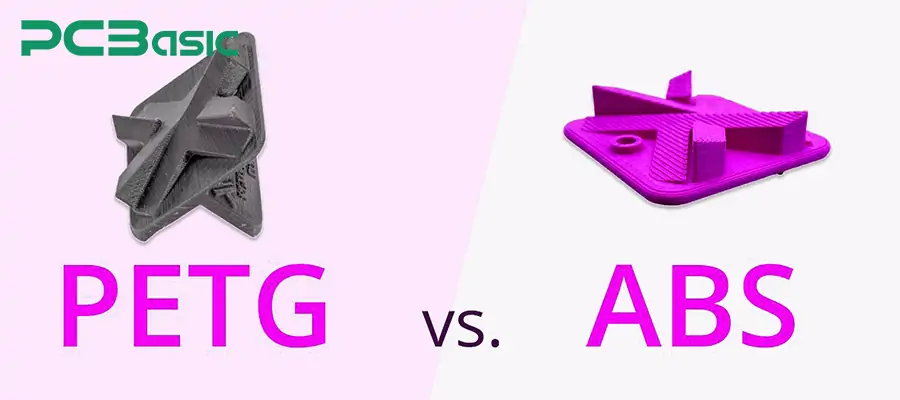
The heat resistance of ABS is stronger than that of PETG. ABS is suitable for parts that need to withstand high working temperatures and mechanical loads, such as functional structural components and some automotive parts. In comparison, the advantage of PETG lies in a more stable printing process, less warping, and fewer odors and harmful gases.
Therefore, if the application environment temperature is high, ABS should be the preferred choice. If more emphasis is placed on printing stability and the accuracy of the finished product, PETG has the advantage.
PETG vs PC Temperature Resistance
PC is among the materials with the highest temperature resistance among the common 3D printing materials. PC can be used for a long time in an environment above 120 ℃. However, this material requires higher standards for the printing equipment, including high-temperature nozzles, enclosed printing chambers, and strict process control. In comparison, PETG is cheaper and has less process difficulty, but its temperature resistance is inferior.
Overall, the heat resistance of PETG is significantly better than that of PLA, but it is inferior to ABS and PC. However, its printing difficulty is lower than that of ABS and PC. It is a very practical material choice.

Common Applications Suitable for PETG
Based on the above points, PETG has a wide range of applications and is highly suitable for scenarios that require moderate heat resistance, good mechanical strength, and certain chemical stability:
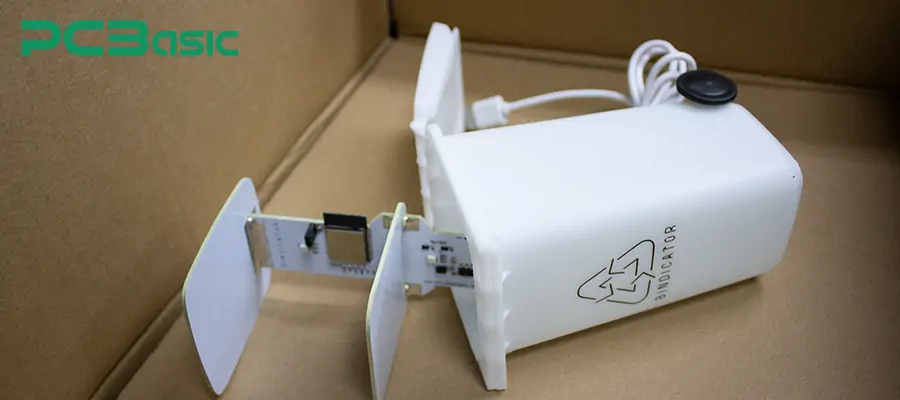
1. Electronic product shells
PETG is commonly used for the shells and protective covers of electronic devices. It can maintain its shape stability at approximately 60–70 ℃, and also has good electrical insulation properties and chemical resistance. Common examples include control boxes, sensor shells, and small equipment protective parts, etc.
2. Outdoor fasteners (in mild climate environments)
PETG performs stably in outdoor high-temperature and humid environments, and has strong resistance to heat, moisture, and ultraviolet rays. Common examples include supports, cable clamps, and identification components, etc.
3. Food containers (for certified materials only)
Food-grade PETG filaments that have passed food safety certification can be used to make reusable containers, kitchen tools, and packaging components. It has good thermal stability and low hygroscopicity, and is more suitable for contact with warm water or cleaning environments compared to PLA.
4. Mechanical supports and fixed structural components
PETG can remain stable at higher environmental temperatures. Commonly used for making supports, clasps, and lightweight structural components, etc.
When PETG Is Not the Right Material
Although PETG achieves a good balance between strength and temperature resistance, it is not suitable for all application scenarios. The following situations do not recommend the use of PETG:
1. High-temperature environment
The suitable temperature for long-term use of PETG is typically 60–70 ℃. If the application environment temperature exceeds this range, problems such as softening and unstable dimensions will occur. In this case, PETG material is not suitable for use. In contrast, ABS or PC (with higher heat resistance) are more suitable for use.
2. High mechanical load or structural applications
PETG is not suitable for components that need to withstand large loads or long-term mechanical stress. Under the condition of simultaneous temperature and stress, PETG is prone to creep or gradual deformation. Therefore, for structural parts, load-bearing supports, and critical mechanical components, ABS, nylon, or reinforced materials should be preferred.
3. High requirements for working temperature or mechanical properties
When the product project has high requirements for working temperature or mechanical properties, ABS, PC and nylon would be better choices:
ABS has higher heat resistance and rigidity, suitable for functional parts;
PC is suitable for applications with high temperature and high impact strength;
Nylon stands out in terms of toughness and fatigue resistance, suitable for moving parts or load-bearing parts.
Under the circumstances mentioned above, if PETG is still chosen, it often leads to premature deformation or failure of the parts.
Conclusion
Among the common 3D printing materials, PETG is a well-balanced option. It outperforms PLA in terms of temperature resistance, although it cannot match the performance of materials like ABS, PC or nylon. Moreover, it does not have the high requirements for printing equipment and process conditions like those materials. In summary, its practical value in real applications is very high.
About PCBasic
Time is money in your projects – and PCBasic gets it. PCBasic is a PCB assembly company that delivers fast, flawless results every time. Our comprehensive PCB assembly services include expert engineering support at every step, ensuring top quality in every board. As a leading PCB assembly manufacturer, we provide a one-stop solution that streamlines your supply chain. Partner with our advanced PCB prototype factory for quick turnarounds and superior results you can trust.
FAQs
1. Does the filling density affect the heat resistance of PETG?
Yes. The higher the filling density, the stronger the part's ability to resist deformation when heated. Therefore, for functional parts that need to withstand certain temperatures, we recommend increasing the filling ratio or using a solid structure in key areas.
2. Will the printing direction affect the performance of PETG at high temperatures?
There will be a significant impact. In applications involving heat and mechanical stress, a proper printing direction is extremely important.
3. Can annealing treatment enhance the temperature resistance of PETG?
The improvement effect is limited. Unlike PLA, the increase in heat resistance obtained by annealing PETG is not significant. Moreover, improper operation may lead to warping or surface deformation. Therefore, annealing is generally not recommended as the main method to enhance the temperature resistance of PETG.
4. Can PETG be used in positions close to electronic components or power sources?
It can be used under low heat conditions, but careful evaluation is required. If the power supply, transformer, or poor heat dissipation leads to local temperatures potentially exceeding 60°C for a long time, PETG parts are likely to gradually deform. In such cases, PETG is not a reliable choice.