In
modern electronic manufacturing, wave soldering is a very mature and reliable
technology. Although most high-density SMT products now use reflow soldering,
wave soldering is still indispensable in through-hole component and hybrid
technology PCB assembly.
If
you want to know what wave soldering is, or how the wave soldering process is
carried out, or when to choose it as your soldering process in actual
production, this article will explain it step by step. From the equipment
principle, to key parameters, and then to how to control defects and improve
yield rates, all will be covered.
To
truly understand wave soldering, it is not only about knowing how it works, but
more importantly, learning to control the process and reduce various types of
soldering defects, making mass production more stable and reliable.
What is
Wave Soldering?
In
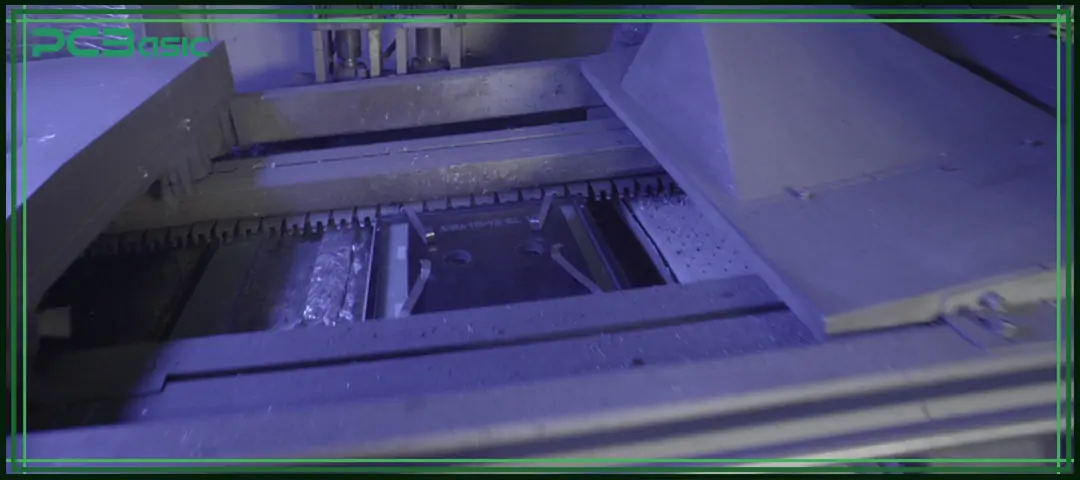
simple terms, wave soldering is a mass soldering process. In the wave soldering
process, the PCB passes over a "wave" formed by a molten solder. The
solder contacts the underside of the circuit board, firmly soldering the leads of
the through-hole components to the pads together to form an electrical
connection and mechanical strength.
Compared
with manual soldering, wave soldering is automated, making it faster and more
stable. As long as the parameters are set properly, when the PCB passes through
the solder wave, all the metal positions not covered by the solder mask will be
wetted by the solder and form solid solder joints.
Wave
soldering is mainly used for through-hole components and is also suitable for mixed-technology
PCBs (combined with SMT technology). It is suitable for mass production and is
a stable and repeatable soldering process.

Wave
Soldering vs. Reflow Soldering
What
is Reflow Soldering?
Reflow
soldering is a common SMT surface-mount soldering method. The method is
actually very simple: first, print a layer of solder paste on the PCB pads, and
then place the components in the corresponding positions. The entire board
enters the reflow oven for heating. After the solder paste melts, the component
leads and pads are soldered together. Finally, it cools and solidify to form a
firm connection.
In
simple terms, reflow soldering works by heating the entire board together to
melt the solder paste and complete the soldering. It is mainly used for
surface-mount components and is particularly suitable for high-density,
fine-pitch PCBs.
Wave Soldering vs. Reflow Soldering
When
discussing wave soldering, a comparison with reflow soldering is inevitable.
|
Category
|
Wave Soldering
|
Reflow Soldering
|
|
Primary Application
|
Best for through-hole components
|
Mainly used for SMT surface-mount
components
|
|
Joint
Strength
|
Strong
joints, suitable for high-current applications
|
Suitable
for precision SMT solder joints
|
|
Suitable PCB Type
|
Mixed-technology PCBs
|
Fine-pitch and high-density PCBs
|
|
Production
Efficiency
|
Fast
and cost-effective for high-volume production
|
Highly
automated for SMT production
|
|
Typical Industries
|
Industrial, automotive, power systems
|
Consumer electronics, compact digital
devices
|
|
Soldering
Method
|
PCB
passes over a molten solder wave
|
Uses
solder paste and a reflow oven heating
|
|
Mixed Assembly Workflow
|
After reflow soldering of SMT
components
|
SMT components soldered first via
reflow
|
|
Role
in Mixed Assembly
|
Solder
through-hole components after SMT reflow
|
Handles
precision SMT components
|
|
Optional Alternative
|
Selective wave soldering for specific
through-hole areas
|
Not applicable
|
Key
Equipment in Wave Soldering
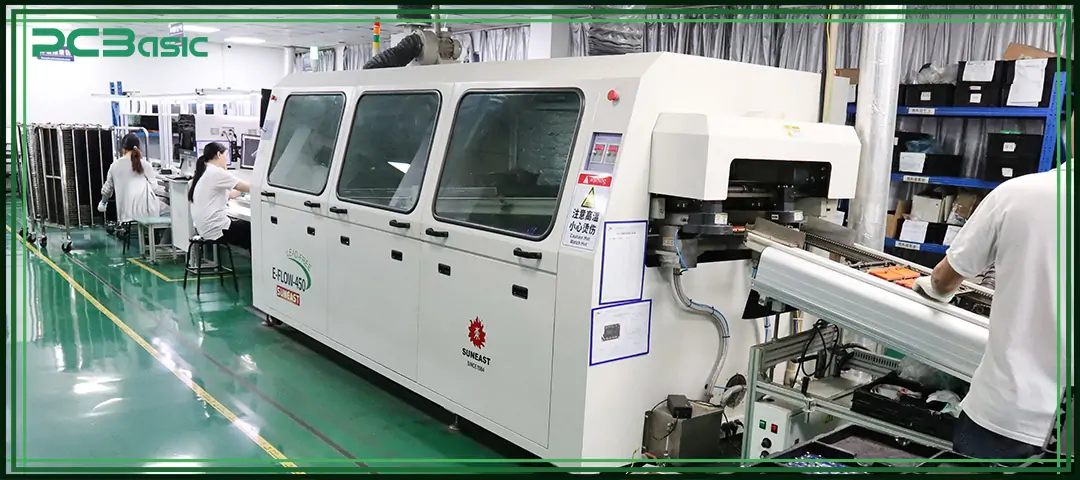
A
standard wave soldering process typically includes the following equipment:
• Solder pot (molten solder bath)
• Pump system to create solder wave
• Conveyor system
• Fluxing unit
• Preheat zone
• Cooling section
Modern
wave soldering equipment may adopt a double-wave peak structure or an
electromagnetic pump system to ensure that the solder wave is more stable. In
high-precision applications, selective wave soldering systems are also used,
where only specific areas are soldered instead of allowing the entire circuit
board to pass through a complete wave.
About PCBasic
Time is money in your projects – and PCBasic gets it. PCBasic is a PCB assembly company that delivers fast, flawless results every time. Our comprehensive PCB assembly services include expert engineering support at every step, ensuring top quality in every board. As a leading PCB assembly manufacturer, we provide a one-stop solution that streamlines your supply chain. Partner with our advanced PCB prototype factory for quick turnarounds and superior results you can trust.
Wave
Soldering Process Flow
The
entire wave soldering process can actually be divided into four steps:
• Flux Application
• Preheating
• Solder Wave Contact
• Cooling
These
four steps are all indispensable. If any step is not well controlled, it may
produce different types of soldering defects.
1. Flux Application
Before
wave soldering, flux must be applied to remove oxidation from the metal surface
and help the solder adhere better. The common methods include spray fluxing and
foam fluxing.
The
amount of flux must be carefully controlled. If it is too little, it may cause poor
solder wetting, while if it is too much, there will be residues on the board. Both
situations belong to the common types of soldering defects.
The
uneven spraying of flux directly affects the stability of the entire wave
soldering process.
2. Preheating Stage
After
the flux is applied, the PCB will enter the preheating zone. Preheating allows
the board to gradually warm up, activate the flux at the same time, and reduce
thermal shock.
Common
temperature ranges in the preheating zone
• 90–110°C for standard boards
• 115–125°C for multilayer boards
If
the board is not preheated or the temperature is insufficient, sudden contact
with the high-temperature solder wave may cause cracks or cold solder joints.
These also belong to types of soldering defects.
3. Solder Wave Contact Stage
This
is the most crucial step in wave soldering.
The
PCB passes over the molten solder wave. For lead-free solder, the temperature
is usually between 245 and 260°C. The contact time is generally controlled
within 2-4 seconds.
The
key parameters to be controlled at this step include conveyor speed, wave height,
solder composition, and the direction in which the PCB travels. If the wave
height is too high, solder bridging can easily occur, which is one of the most
common types of soldering defects.
4. Cooling Stage
After
the solder wave passes through, the PCB needs to cool down slowly. If the
cooling is too fast, the PCB board may warp or develop stress fractures; if the
cooling is too slow, the solder joint structure may be unstable. An appropriate
cooling rate can improve the reliability of solder joints and reduce soldering
defects.
In
short, the wave soldering process is not complicated, but each step must be
controlled well; otherwise, various problems will arise.
Wave
Soldering Process Control in Mass Production
In
mass production, if you want wave soldering to remain stable and maintain a
high yield rate, every parameter must be well-controlled. As long as there are
any fluctuations in the process, it is very easy to produce various types of soldering
defects.
Conveyor Speed Control
• Typical
speed → 1.0–1.5 m/min.
• Too fast → the solder does not fully
wet the joints
• Too slow → solder bridging can occur
Flux Density Management
The
specific gravity of the flux needs to be kept consistent, and the spray system
also needs to be calibrated regularly. If the flux is too weak or too
concentrated, it will affect the wetting performance. This is one of the most
common types of soldering defects.
Solder Bath Composition Monitoring
The
composition of the solder pot must be inspected regularly, especially for
contaminants such as copper and iron. If the solder is contaminated, it will
accelerate oxidation, thereby causing various types of soldering defects.
Wave Height and Contact Length Optimization
The
wave height will directly affect the quality of the solder joint.
• Immersion depth is typically
controlled at 1–2 mm.
• Contact length is usually 20–40 mm.
By
adjusting the pump speed, an ideal shape can be maintained throughout the wave
soldering process.
Temperature Control in Wave Soldering
Temperature
control is critical in wave soldering.
• Lead-free solder is typically
maintained at 250–260°C.
• Try not to exceed 260°C.
• The preheat zone is usually set
between 100–120°C.
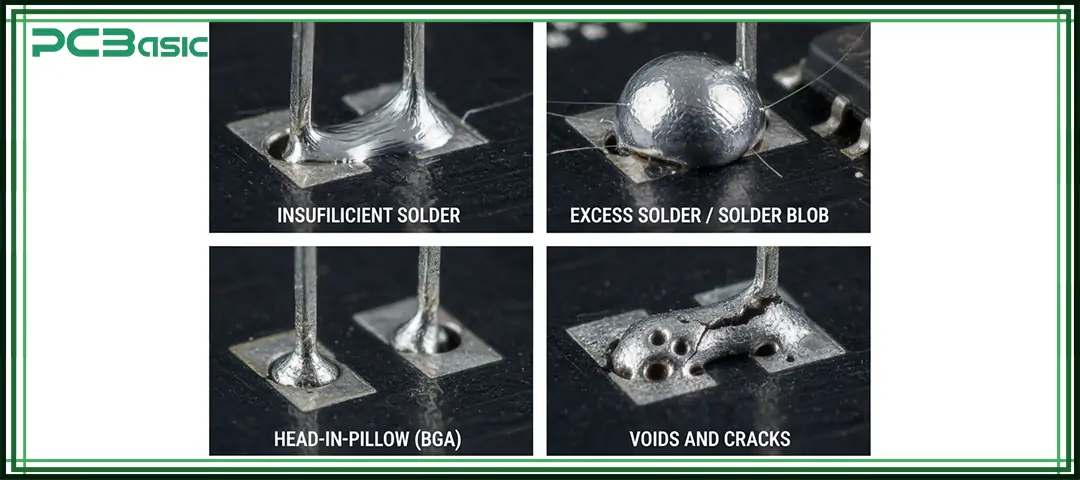
Poor
temperature control can result in cold joints, cracked joints and
excessive oxidation. These are all common types of soldering defects in mass
production.
In
short, wave soldering itself is not complicated, but the process must remain
stable to ensure consistent quality.
Common
Wave Soldering Defects and Prevention
|
Item
|
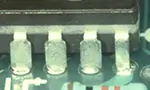
Solder Bridges / Shorts
|
Poor Hole Fill
|
Pin / Blow Holes
|
Cold Solder Joint
|
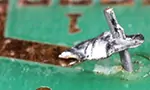
Lifted Pads
|
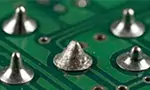
Solder Balls
|
|
Pictures
|
|
|

|
|
|

|
|
Description
|
Excess solder connects adjacent pins
|
Through-hole not fully filled with solder
|
Small holes or voids visible in solder joints
|
Dull surface with weak mechanical strength
|
Copper pad separates from PCB substrate
|
Small solder spheres scattered on PCB surface
|
|
Main Causes
|
Excessive wave height, slow conveyor speed, small pin spacing, poor flux control
|
Low solder temperature, insufficient contact time, improper hole-to-lead ratio
|
Moisture in PCB, excessive flux, insufficient preheating
|
Low solder temperature, insufficient contact time, oxidized pads
|
Overheating, mechanical stress, poor PCB quality
|
Excess flux, rapid heating, contamination
|
|
Solutions
|
Adjust wave height, optimize conveyor angle, improve pad design
|
Increase solder pot temperature, adjust conveyor speed, improve PCB design
|
Bake PCB before soldering, optimize preheat profile, control flux quantity
|
Increase solder temperature, improve flux activation, clean PCB surfaces
|
Reduce dwell time, improve PCB material grade
|
Optimize flux density, improve preheat ramp
|
|
Impact
|
Severe solder joint defects, may cause electrical shorts
|
Typical solder defects, affects mechanical strength
|
Common types of soldering defects
|
Common solder joint defects, often seen in bad soldering examples
|
Serious solder defects, affects long-term reliability
|
Common soldering mistakes, often caused by unstable wave soldering conditions
|
Quality
Inspection After Wave Soldering
The
purpose of quality inspection is very simple: to ensure that the circuit boards
received by customers have no quality problems at all.
After
the wave soldering is completed, a variety of inspection methods are usually
required to verify whether the soldering quality, electrical connections and
product functionality are normal.
Visual Inspection
The
most fundamental inspection method is manual visual inspection.
The
operator will directly observe the solder joints on the PCB to check for
obvious types of soldering defects, such as
• Solder bridging
• Missing solder joints
• Incomplete solder joints
This
method is simple, but it can quickly identify many visible problems.
Automated Optical Inspection, AOI
AOI
uses cameras and image recognition systems to inspect the surface of PCBs. It
can detect:
• Whether the solder joint shape is
normal
• Whether component placement is correct
• Whether there are soldering
abnormalities
Compared
with manual inspection, AOI is faster and more consistent.
X-ray Inspection
For
multilayer boards or complex PCBs, surface inspection alone is not sufficient.
At this point, X-ray inspection will be used. It can reveal the internal
conditions of the solder joint, such as:
• Voids inside solder joints
• Insufficient solder
• Hidden soldering defects.
Advantages
and Limitations of Wave Soldering
Advantages
• High efficiency
• Scalable mass production
• Strong mechanical joints
• Cost-effective for large volumes
• Reliable for high-power assemblies
Limitations
• Not suitable for fine-pitch SMT
• Design constraints
• Component height restrictions
• Shadowing issues
In
cases where localized soldering is required, selective wave soldering can be
used as a more precise alternative to traditional wave soldering.

Conclusion
Understanding
wave soldering is not just about knowing the definition, but more importantly,
understanding how to control the entire soldering process well.
In
the wave soldering process, every step from flux application to final cooling
affects the yield and reliability of the product. If parameters such as temperature,
wave height, conveyor speed and solder composition are properly controlled,
many types of soldering defects can be reduced, making production more stable.
Although
many SMT products now use reflow soldering, wave soldering is still very
important for mixed-technology PCBs and through-hole assemblies. In some cases,
selective wave soldering is also used, soldering only to the designated
position, which is more flexible and more precise.
Wave
soldering remains a key process in PCB assembly for industries that require
high reliability and high-strength connections.
If
you want to stably manufacture electronic products reliably at scale, mastering
wave soldering is a very fundamental and very important capability.