In modern electronic manufacturing, reflow soldering is the main soldering method for mounting surface-mount components to PCBs. Whether for prototyping or mass production, the quality of reflow soldering will directly affect the reliability, performance and service life of the product.
In simple terms, the process of reflow soldering is as follows: first, solder paste is printed onto the PCB pads; then components are placed onto the solder paste; after that, the circuit board passes through a heated reflow oven. When the temperature rises, the solder paste will melt and firmly bond the components onto the PCB to form stable electrical and mechanical connections.
Although the working principle of reflow soldering is not complicated, there are many factors that influence the results of reflow soldering in real production, such as the type of solder paste, stencil design, pad structure, and the very crucial control of the reflow profile and reflow temperature.
This article combines the contents of multiple technical resources and explains what reflow soldering is in a simpler and clearer way, and how the reflow soldering process is completed step by step, how to select the appropriate reflow soldering machine, how to set up a stable reflow profile, and how to reduce common soldering defects in production.
What Is Reflow Soldering?
What is reflow soldering? In simple terms, reflow soldering is a method of soldering SMT components onto a PCB by heating.
The basic process is as follows: first, print solder paste (solder paste is composed of solder powder and flux) on the PCB pads, and then place the components in the corresponding positions. After that, the circuit board enters the heated reflow oven. When the temperature rises, the solder paste will melt and flow, covering the pads and component leads. When the temperature drops, the solder cools and solidifies, forming a strong solder joint.
There are several reasons why reflow soldering is widely used:
• It can solder many components at the same time, with high efficiency and stable production results.
• It is suitable for high-density PCBs, such as those for mobile phones, computers, automotive electronics and IoT devices.
• It is very easy to be used with automated SMT production lines, such as stencil printing, pick-and-place and reflow oven.
It should also be noted that reflow soldering and wave soldering are not the same process. Generally speaking, wave soldering is mainly used for the soldering of through-hole (THT) components, while reflow soldering is typically used for SMT components.

Reflow Soldering Process Overview
A stable reflow soldering process cannot do without the consistent control of each previous step. A good solder reflow effect is achieved through standardized production procedures and process control.
On a typical SMT production line, reflow soldering is usually carried out in the following steps:
• PCB preparation and cleaning
• Solder paste printing (usually stencil printing)
• Component placement (pick-and-place)
• Heating in a reflow oven
• Cooling, where the solder solidifies and forms solder joints
• Inspection and quality control
PCB Preparation and Cleaning
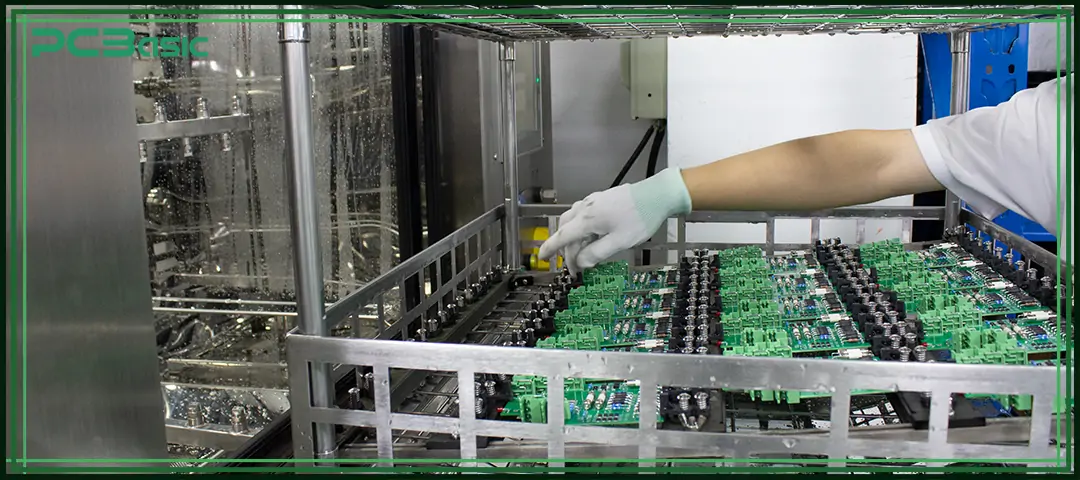
Before reflow soldering, the PCB surface must be clean. If there is contamination on the PCB, problems such as cold joints, open circuits, or incomplete solder joints may occur after solder reflow.
Common PCB cleaning methods include:
• Ultrasonic cleaning – suitable for removing stubborn contamination
• Aqueous cleaning – uses water-based cleaning solutions
• Solvent cleaning – uses chemical solvents to remove oil or residue
The choice of cleaning method depends on the type of contamination, PCB materials, and environmental requirements.
Solder Paste Application
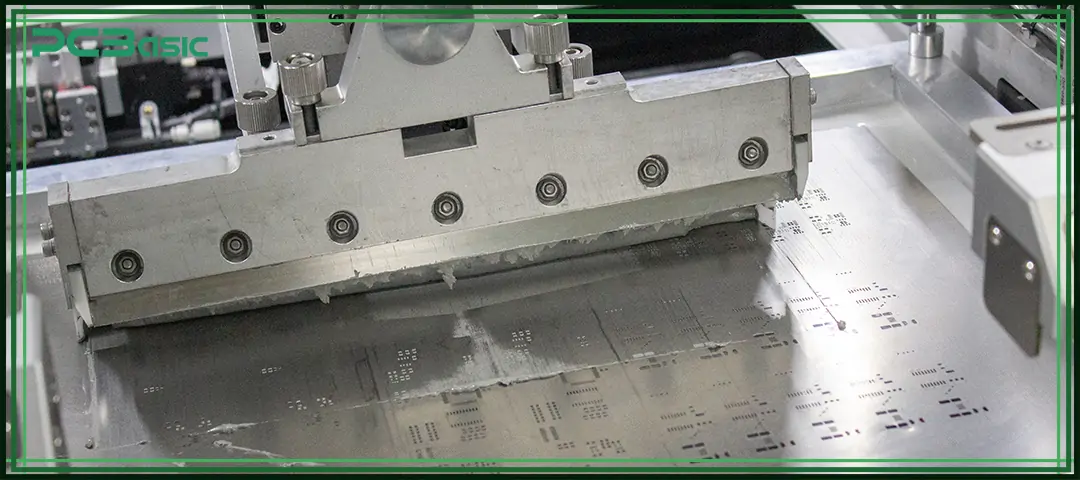
In most reflow soldering production lines, solder paste is printed onto PCB pads using a stencil. A well-designed stencil can effectively control the volume of solder paste, thereby reducing the problem of solder bridging or insufficient solder.
The main factors affecting the quality of solder paste printing include the following three major ones:
• Stencil thickness and aperture design, which determine the amount of solder paste printed onto the pads.
• Squeegee pressure, speed, and angle, which affect whether the solder paste can be evenly transferred onto the PCB.
• Solder paste properties (such as viscosity and flow behavior) and storage conditions will affect the printing stability.
Component Placement / Pick-and-Place
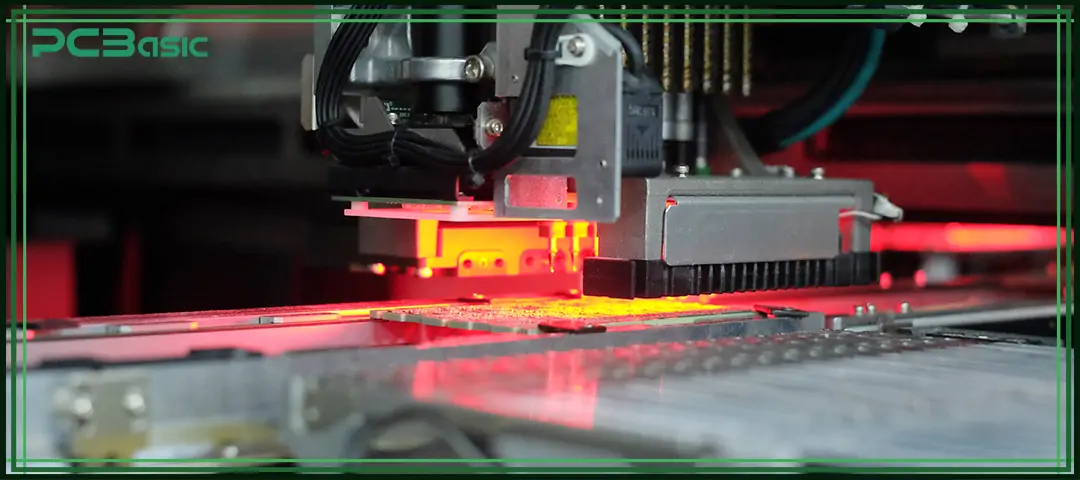
During the placement stage, components must be accurately placed on the solder paste. If the component is not placed correctly, the solder distribution will be uneven during the solder reflow, which can affect the soldering quality.
If there are problems with the placement, defects such as tombstoning, component shifting or misalignment, open circuits, and solder bridges usually occur after reflow soldering.
Solder Reflow Oven
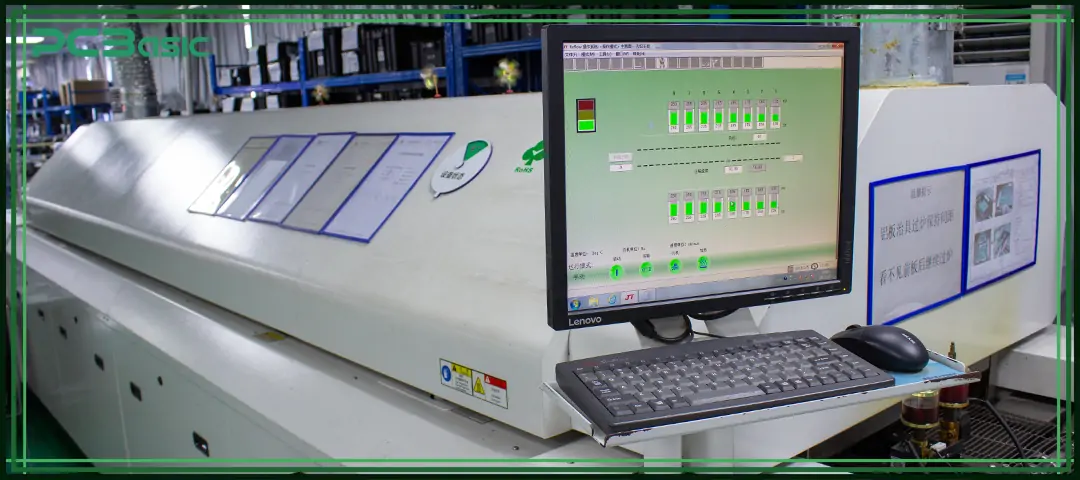
The reflow oven is the most important equipment in the reflow soldering process. Its work is to heat the PCB, allowing the solder paste to melt at an appropriate temperature and then cool to form solid solder joints.
A good reflow oven should not only be capable of heating but also heat the PCB at the right temperature, at the right time, and in a controlled way across the entire board.
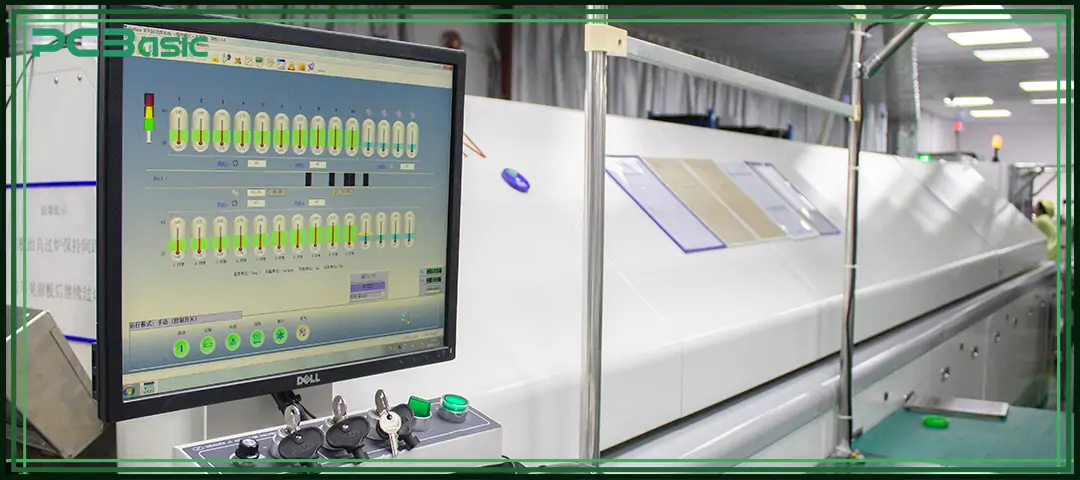
Types of Reflow Ovens
When choosing a reflow soldering machine, the heating method is an important factor. The two common types are infrared heating and hot-air convection heating.
|
Item
|
Infrared (IR) Ovens
|
Convection Ovens
|
|
Heating Method
|
Infrared radiation heats the PCB
|
Circulating hot air heats the PCB
|
|
Heating Speed
|
Fast heating
|
Stable and controlled heating
|
|
Temperature Uniformity
|
May be uneven due to different material absorption
|
More uniform heating across the PCB
|
|
Reflow Temperature Control
|
Harder to control precisely
|
Easier and more stable to control
|
|
Reflow Profile Stability
|
May vary with component materials
|
More stable reflow profile
|
|
Equipment Cost
|
Lower
|
Higher
|
|
Typical Use
|
Simpler PCB assemblies
|
Most modern SMT production lines
|
|
Special Option
|
—
|
Can use vapor phase heating
|
|
Suitable Boards
|
Standard assemblies
|
High thermal mass or temperature-sensitive boards
|
Reflow Oven Zones
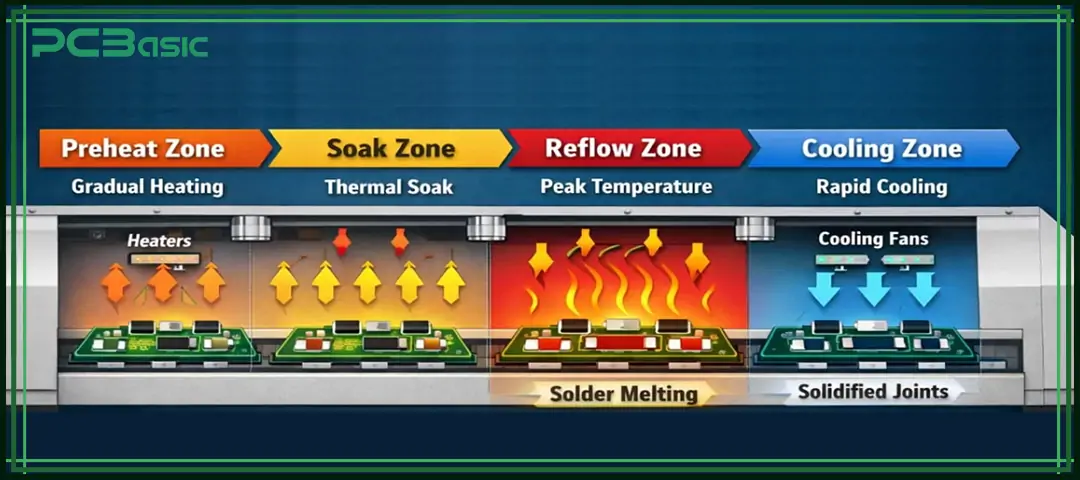
Most reflow ovens are divided into multiple temperature zones, and each zone can be controlled independently.
These temperature zones together form the overall reflow profile that the PCB experiences during the reflow soldering process.
It can usually be divided into the following 4 stages:
Preheating Zone
During the preheating stage, the PCB temperature will increase gradually to prevent thermal shock to the components.
Soaking Zone
The soaking stage will keep the PCB in a medium temperature range for a period of time, which can make the temperature of the entire PCB more uniform and activate the flux in the solder paste at the same time.
Reflow Zone
In the reflow zone, the temperature rises above the melting point of the solder, and the solder paste melts and wets the pads and component leads.
Cooling Zone
During the cooling stage, the solder solidifies and forms the final solder joint.
Temperature Profiles / Reflow Profile
The reflow profile is the temperature change curve that a PCB experiences inside a reflow oven. It is an important factor affecting reflow soldering quality and production yield.
Common reflow profiles include:
• Ramp-Soak-Spike (RSS)
The temperature first increases, then stays at a stable level for a period, and finally reaches the peak reflow temperature.
• Ramp-to-Spike (RTS)
The temperature continuously rises until it reaches the peak, with little or no soaking stage.
• Custom Profile
The profile is adjusted according to PCB structure, component types, and solder paste characteristics.
It is very important to regularly check the reflow profile because the condition of the reflow soldering machine changes over time. For example, fan performance may vary, heaters may age, and conveyor belts may wear out.
If you want to maintain stable reflow quality, you need to check and adjust the reflow profile regularly.
Common Reflow Soldering Problems and Solutions
Even in a mature production line, various soldering defects may occur during the reflow soldering process. An excellent production line can quickly identify the root cause of the problem and make improvements across multiple stages, such as solder paste printing, component placement, and the reflow oven.
The following are some common defects and their corresponding solutions.
Tombstoning
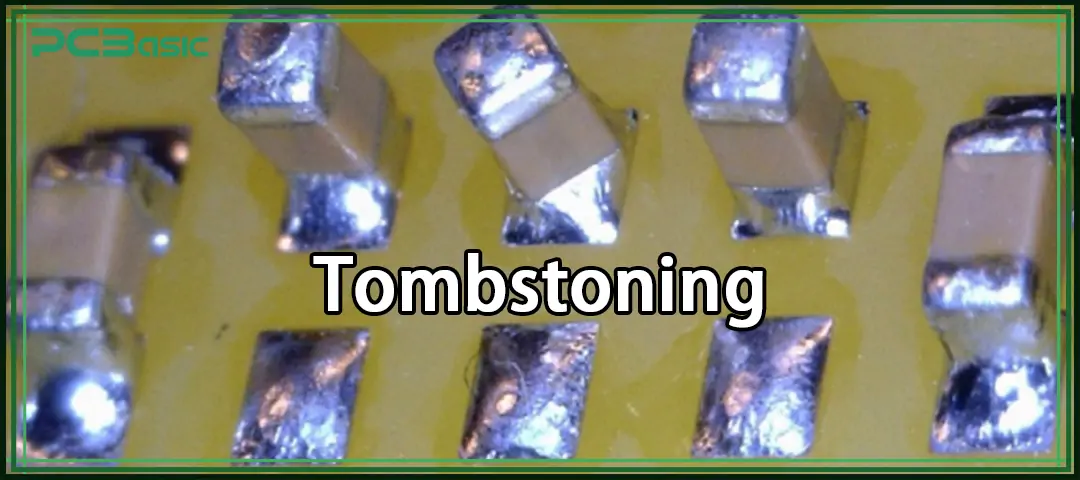
Tombstoning, also known as the "Manhattan effect", refers to the situation where one end of a chip component lifts and stands upright during the reflow soldering, resulting in an open circuit. This is a typical defect caused by an imbalance during the soldering process.
Common Causes
• Uneven heating between the two pads
• Different solder paste volumes on each pad
• Misaligned component placement
• Thermal imbalance caused by uneven copper distribution on the PCB
Solutions
• Optimize stencil apertures to balance solder paste volume
• Check placement accuracy
• Adjust the reflow profile
• Improve pad design and copper balancing
Voids
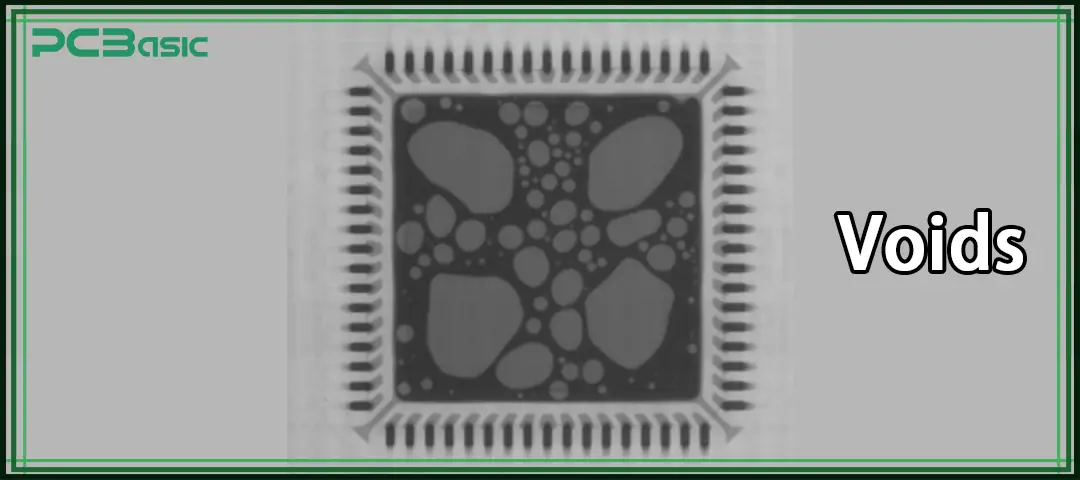
Voids refer to gas pockets trapped inside the solder joint. This phenomenon is more common in BGA, QFN or large thermal pads. Voids can reduce the thermal conductivity of the solder joints and affect their reliability.
Common Causes
• Gas trapped during reflow soldering
• Oxidation affecting solder wetting
• Improper solder paste storage or handling
• An unsuitable reflow profile
Solutions
• Optimize the reflow profile
• Use low-void solder paste
• Improve stencil design
• Keep PCB surfaces clean
Cold Solder Joints
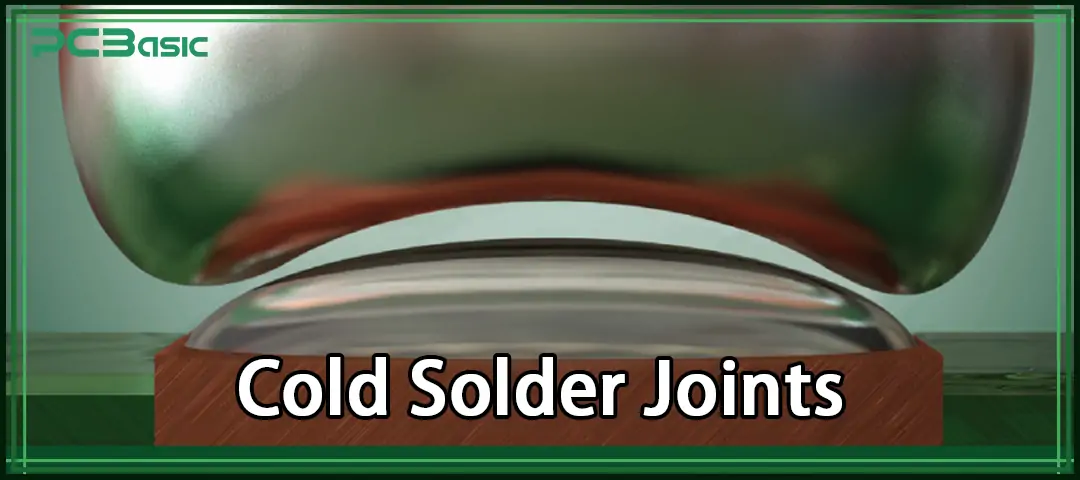
Cold solder joints usually appear dull or cracked on the surface of the solder joint, which typically indicates that the solder has not been completely melted or has poor wetting.
Common Causes
• Reflow temperature too low
• Time above liquidus too short
• Poor heat transfer to certain areas of the PCB
• Flux degradation or oxidation
Solutions
• Increase the peak reflow temperature
• Slightly extend the time above the liquidus
• Improve heating uniformity
• Ensure fresh solder paste is used
Solder Bridges
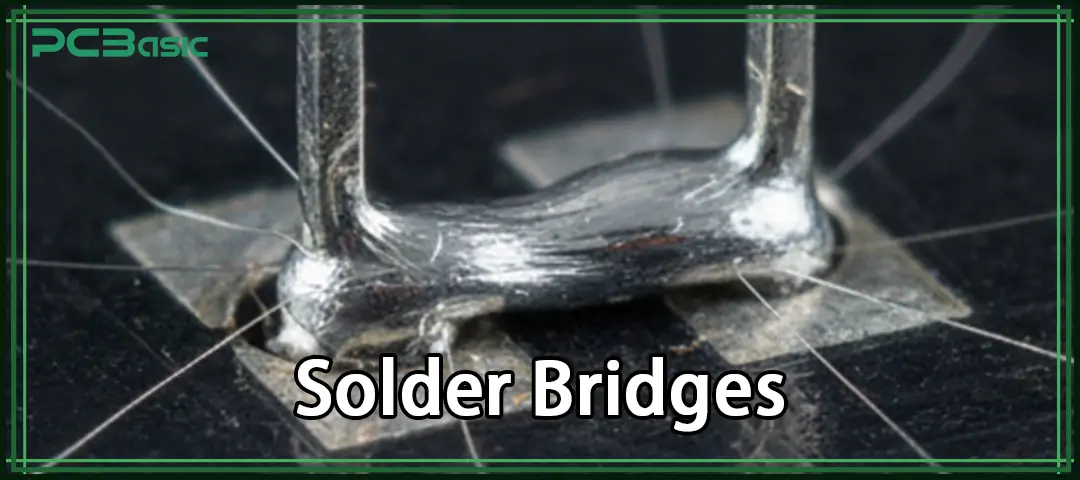
Solder bridges refer to the situation where solder connects adjacent pads, causing a short circuit. This kind of problem is relatively common on fine-pitch devices or high-density PCBs.
Common Causes
• Excess solder paste
• Poor stencil printing
• Component misalignment
• An unstable reflow profile
Solutions
• Reduce solder paste volume
• Improve stencil printing quality
• Check placement accuracy
• Adjust the reflow profile
Solder Balling
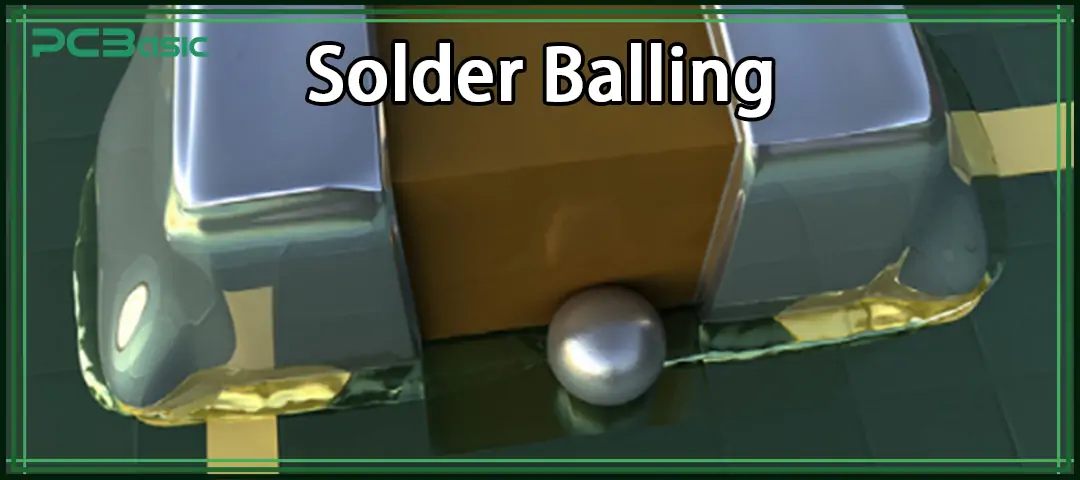
Solder balling refers to the formation of many small solder balls around the solder joints after reflow soldering. These solder balls may cause short circuits and also affect the reliability of the product.
Common Causes
• Too rapid heating during the preheat stage
• Poor solder paste condition
• Inconsistent printing
• Improper reflow profile
Solutions
• Slow down the preheat ramp
• Improve solder paste storage and handling
• Optimize stencil design
• Ensure PCB surfaces are clean
These soldering defects highlight one point: reflow soldering is a complete systems process. Solder paste printing, component placement and reflow temperature control must all work together to ensure stable soldering quality.
Inspection and Quality Control
The role of inspection is to transform process knowledge into quantifiable and measurable quality control. A perfect quality system usually does not rely on just one testing method but combines multiple methods.
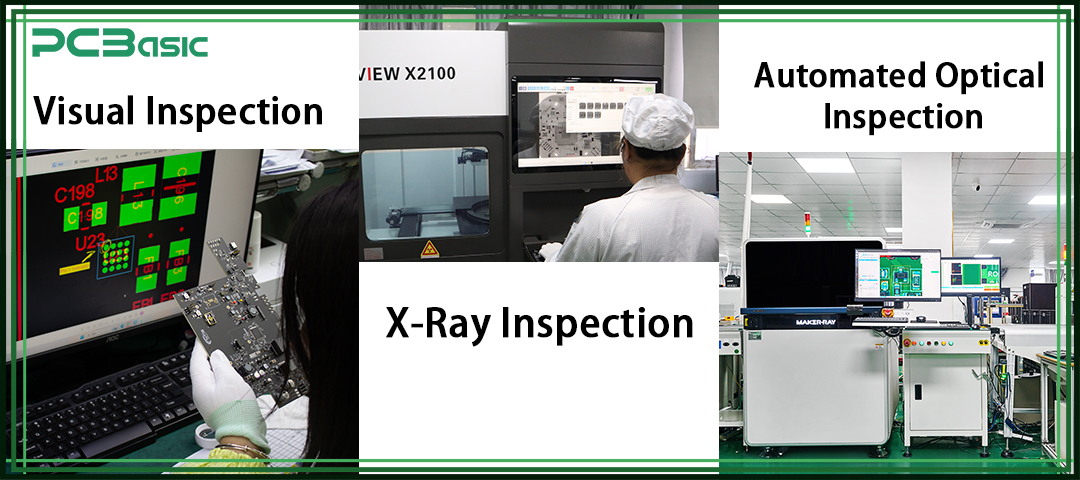
Visual Inspection
The most fundamental inspection method is manual visual inspection.
The operator will directly observe the solder joints on the PCB to check for obvious types of soldering defects, such as
• Solder bridging
• Missing solder joints
• Incomplete solder joints
This method is simple, but it can quickly identify many visible problems.
Automated Optical Inspection, AOI
AOI uses cameras and image recognition systems to inspect the surface of PCBs. It can detect:
• Whether the solder joint shape is normal
• Whether component placement is correct
• Whether there are soldering abnormalities
Compared with manual inspection, AOI is faster and more consistent.
X-ray Inspection
For multilayer boards or complex PCBs, surface inspection alone is not sufficient. At this point, X-ray inspection will be used. It can reveal the internal conditions of the solder joint, such as:
• Voids inside solder joints
• Insufficient solder
• Hidden soldering defects

Conclusion
Reliable electronics products cannot do without reliable solder joints, and reflow soldering has become the most common soldering method in SMT production. Understanding reflow soldering is not just knowing that the solder melts when heated. More importantly, it is necessary to understand how the design of the SMT stencil, the performance of the solder paste, the placement accuracy and the parameters of the reflow oven together affect the stability of the entire reflow soldering process.
At the same time, it is also necessary to look at the entire electronics manufacturing process. Many products have both SMT components and through-hole components. Therefore, understanding the differences between wave soldering and reflow soldering can help make a more appropriate choice among cost, efficiency and reliability.
FAQs
1. What is reflow soldering?
Reflow soldering is a method used to attach SMT components to a PCB. Solder paste is printed on the pads, components are placed, and the board passes through a reflow oven where the solder melts and forms solder joints.
2. What is the difference between wave soldering and reflow soldering?
Reflow soldering is mainly used for SMT components, while wave soldering is used for through-hole components. Many PCB assemblies use both processes.
3. What is a reflow profile?
A reflow profile is the temperature curve a PCB follows inside the reflow oven during the reflow soldering process. It typically includes preheat, soak, reflow, and cooling stages.
4. What is the typical reflow temperature?
For most lead-free solder pastes, the peak reflow temperature is usually between 235°C and 250°C, depending on the solder paste and components.
5. What defects can occur during reflow soldering?
Common reflow soldering defects include tombstoning, solder bridges, cold solder joints, voids, and solder balling.
6. Why is the reflow oven important?
The reflow oven controls heating during the reflow soldering process, ensuring the correct reflow temperature and consistent solder joint quality.