In
the increasingly competitive manufacturing industry, companies are constantly
thinking about three things every day: how to reduce costs, how to improve
quality, and how to bring products to the market faster. Whether you are an
original equipment manufacturer (OEM) of industrial equipment, a start-up
company just starting out in the electronics industry, or a brand managing
seasonal demand fluctuations, it is no easy task to increase and stabilize
production capacity.
At
this time, contract assembly services can play a significant role. By
entrusting part of the assembly work to professional contract assembly
companies, businesses can focus their time and energy on product research and
development, market expansion and business planning. The specific production
and assembly are carried out by more experienced assembly manufacturers.
This
article will explain in a clearer way what contract assembly services are, how
they operate, which industries they are suitable for, and what to pay attention
to when choosing partners, helping you better understand this manufacturing
outsourcing model.
What
Are Contract Assembly Services?
Contract
assembly services, simply put, mean outsourcing the assembly work of the
product to a third party. Enterprises do not need to build assembly production
lines, purchase equipment, hire and train staff, or set up quality systems by
themselves. Instead, they cooperate with a professional contract assembly
company, which is responsible for the entire assembly process.
A
complete contract manufacturing process may involve de-sourcing raw materials,
producing components, and completing final assembly. Some part contract assemblies
are generally only responsible for the "assembly" part in assembly
manufacturing. In many cases, the customer provides the components by
themselves (consigned model), and then the contract assembly service is
responsible for assembling, testing and completing the packaging of the
products.
By
using contract production services, enterprises can reduce internal management
pressure, lower fixed costs, and, at the same time, make production more
efficient and product quality more stable.

Types
of Contract Assembly Services
Sub-Assembly
Sub-assembly
refers to the process of assembling two or more components into a small module,
which will later be installed in a larger finished machine product. Many
product assembly companies specialize in this sub-assembly, such as control
modules, mechanical linkages, and wiring harness assemblies.
If
the sub-assembly is entrusted to experienced assembly manufacturers, the OEM's
own production line can run more smoothly, reducing problems such as bottlenecks
and material waiting time, and the overall efficiency will be higher.
Product Assembly
Product
assembly involves combining multiple sub-modules and components into the final
marketable finished product. This is one of the most common types of contract
assembly services.
A
professional contract assembly company will be responsible for the alignment, fastening,
wiring, calibration and inspection of the products to ensure that the finished
products meet the design requirements and industry standards, and avoid
affecting the product quality due to assembly problems.
Mechanical Assembly
Mechanical
contract assembly mainly involves fastening metal or plastic components
together by means of screws, rivets, welding, adhesives,
or press-fit methods. Common applications include hydraulic systems, pressed
parts assembly, structural frames and mechanical housings.
Assembly
manufacturing in the mechanical field has relatively high requirements for
precision and needs appropriate tooling and equipment; otherwise, problems such
as dimensional deviations or unstable structures are likely to occur.
Electrical & Electromechanical Assembly
Electrical
and electromechanical contract assembly services combine mechanical structures
with electrical systems, such as wiring harness assemblies, control panels,
PCBA integration, and motor assemblies.
This
type of contract production services usually requires experienced technicians
to operate and cooperate with the testing process to ensure that the products
have no problems in terms of safety, durability and performance.
Kitting, Packaging & Fulfillment
Many
contract assembly companies, in addition to doing assembly, also provide some
additional services, such as:
• Parts kitting
• Retail-ready packaging
• Labeling and barcoding
• Crating and shipment preparation
Integrating
packaging and fulfillment together into contract assembly services can make the
entire process simpler, fewer intermediaries are involved, and delivery times
can be shortened.
About PCBasic
Time is money in your projects – and PCBasic gets it. PCBasic is a PCB assembly company that delivers fast, flawless results every time. Our comprehensive PCB assembly services include expert engineering support at every step, ensuring top quality in every board. As a leading PCB assembly manufacturer, we provide a one-stop solution that streamlines your supply chain. Partner with our advanced PCB prototype factory for quick turnarounds and superior results you can trust.
How
Contract Assembly Services Work (Step-by-Step Process)
Requirements & Specification Review
The
process begins with confirming product documentation, including drawings, BOM
lists, quality requirements, and production schedules. A professional contract
assembly service will work with the client to confirm the details clearly to
avoid misunderstandings in the later stage.
Engineering & Assembly Planning
The
engineering team will develop the assembly workflow based on the product’s
characteristics, determine the tools and equipment needed, and set up key
quality checkpoints. Nowadays, many assembly manufacturing processes adopt lean
production methods to minimize waste and enhance efficiency.
Material Procurement or Consignment
The
material sourcing usually has two models: materials supplied by the customer
(consigned model) or materials procured by the contract assembly company. No
matter which model it is, proper documentation and inventory control must be
done well to ensure that the quantity and batch are clear and traceable.
Assembly Execution
Assembly
is carried out by experienced technicians or automated systems. Mature contract
assembly services typically utilize automation equipment, torque-controlled
tools and high-precision calibration instruments to ensure consistent assembly
for each product.
Quality Control & Testing
Quality
is a very important aspect in contract production services. Common inspections include:
• Visual inspection
• Functional testing
• Electrical testing
• Reliability testing
Many
reputable assembly manufacturers will carry out production and inspection in
accordance with the ISO 9001 quality management system.
Packaging & Logistics
After
the product is assembled and inspected, it will be packaged and arranged for
shipment. Some contract assembly companies can also deliver the products
directly to the end customers, reducing the intermediate links.
Benefits
of Outsourcing Businesses to Contract Assembly Providers
Cost Reduction & Capital Savings
Building
your own assembly manufacturing operation requires significant investment in
equipment, facilities, training, and maintenance. By using contract assembly
services, these fixed costs can be reduced, and the cost becomes calculated
based on production volume, making expenses more flexible and manageable.
Access to Skilled Labor & Advanced Equipment
Mature
contract assembly companies have professional technicians and complete
equipment.
Improved Quality & Compliance
Professional
contract assembly services have standardized quality processes. The product
quality is more stable, and there will be fewer returns and after-sales
problems.
Scalability & Flexibility
Contract
assembly can increase or decrease production volume according to orders.
Faster Time-to-Market
Entrusting
the assembly to professional product assembly companies can save preparation
time.
Contract
Assembly vs. In-House Assembly
In-house
assembly refers to the situation where an enterprise completes the assembly of
products within its own factory or production site. All equipment, production
lines, personnel recruitment and training, quality management and daily
operations are the responsibility of the enterprise itself.
The
advantage of this approach is that enterprises can directly control the
production process and quality standards. But at the same time, it also means
that one needs to bear relatively high fixed costs, such as equipment
investment, factory leasing or construction, personnel wages and maintenance
expenses. Once the output changes, enterprises also need to adjust their
resources and production capacity on their own.
|
Comparison Item
|
In-House Assembly
|
Contract Assembly
|
|
Production Control
|
Fully controlled by the company
|
Executed by a contract assembly
company, monitored by the client
|
|
Equipment
Investment
|
The
company must purchase its own equipment
|
No
need to invest in equipment
|
|
Facility Costs
|
Requires building or leasing factory
space
|
Facilities provided by contract
assembly services
|
|
Workforce
Management
|
The
company hires, trains, and manages staff
|
Workforce
managed by the contract assembly provider
|
|
Fixed Costs
|
High (equipment, labor, maintenance)
|
Lower, typically volume-based pricing
|
|
Scalability
|
Expansion
requires new equipment and space
|
Contract
assembly can quickly adjust production volume
|
|
Technical Expertise
|
Depends on internal team capabilities
|
Immediate access to specialized
expertise
|
|
Best
For
|
Stable,
long-term high-volume production
|
Fluctuating
demand, rapid scaling, or new product launches
|
Industries
That Rely on Contract Assembly Services
Electronics & PCBA
The
electronics industry relies heavily on contract assembly services, such as PCB
assembly and box build assembly. Many EMS enterprises themselves are
professional contract assembly companies.
Automotive & Aerospace
The
automotive and aerospace industries have very high requirements for precision
and compliance. Many enterprises will complete the assembly work of wiring
harnesses, control systems and mechanical modules through contract assembly.
Medical Devices
Medical
devices have strict requirements for safety and compliance, so certified
contract production services are usually chosen to ensure product traceability
and compliance with standards.
Industrial Equipment
Many
industrial OEMs will turn to assembly manufacturers to complete the assembly of
hydraulic systems, structural components and custom equipment.
Consumer Products
Whether
it is sporting goods or electronics, product assembly companies can help brands
complete mass production.
Furniture & Packaging
Contract
assembly services are also commonly used in the furniture and packaging
industries for kitting, labeling, and shipment preparation, enabling products
to enter the market more quickly.
PCBasic:
Your Contract PCB Assembly Service Provider
Specialized in Electronics Contract Assembly
• Professional
contract assembly company
• Provides
comprehensive contract assembly services
• Covers
PCB and PCBA projects
• Supports
both prototyping and mass production
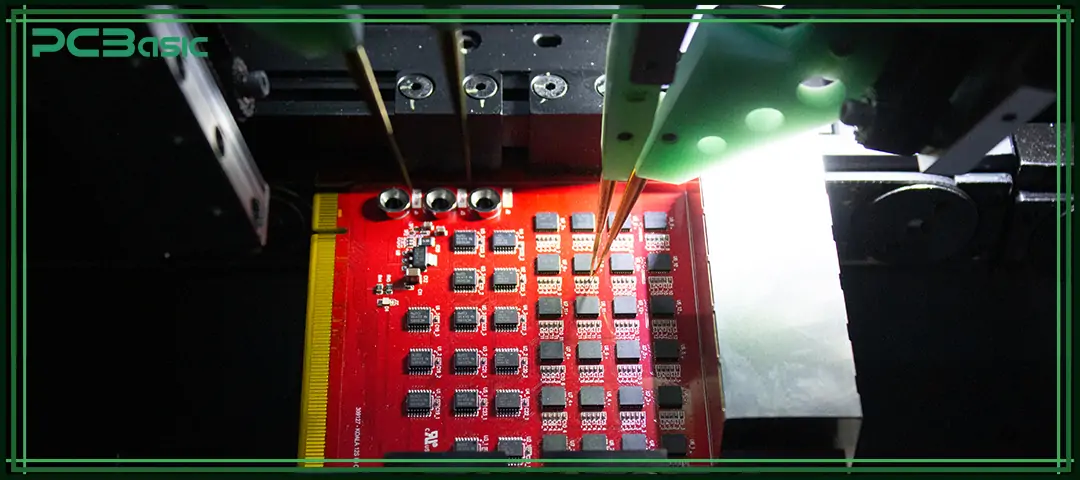
Advanced Production Lines & Quality Control
• Multiple
SMT production lines
• Supports
high-precision component placement
• Equipped
with AOI, X-Ray, and functional testing
• Operates
under ISO 9001 standards
• Ensures
stable and controlled assembly manufacturing
Flexible Cooperation & Production Capacity
• Supports
turnkey and consigned contract assembly
• Handles
both low and high-volume production
• Delivers
reliable contract production services
Digital Management Advantages
• MES
system management
• Full
production traceability
• Transparent
supply chain
• Ideal
for long-term partnerships

Conclusion
In
a highly competitive market environment, enterprises must not only control
costs and ensure quality, but also have the ability to expand or reduce
production capacity at any time. Contract assembly services can help
enterprises solve these problems by entrusting professional assembly work to
experienced assembly manufacturers.
By
cooperating with reliable contract assembly companies, enterprises can directly
obtain professional technology, mature equipment and stable production
capacity, and at the same time, production arrangements are more flexible.
Whether in the electronics, automotive, medical or industrial sectors, contract
assembly can help enterprises enhance efficiency and support the continuous
development of their business.
Common
FAQs About Contract Assembly Services
What
is the difference between contract manufacturing and contract assembly?
Contract
manufacturing covers the entire production process, including component
sourcing and fabrication. Contract assembly services focus specifically on
assembling components into sub-assemblies or finished products.
How
much does contract assembly cost?
Costs
vary depending on complexity, volume, materials, and quality requirements.
However, contract production services often reduce total operational costs
compared to in-house assembly manufacturing.
What
information do I need to provide?
To
begin working with a contract assembly service, you typically need to provide:
• Product
drawings
• BOM
• Production
forecast
• Quality
standards
• Testing
requirements
Can
contract assemblers handle both low and high volume?
Yes.
Most professional contract assembly companies are equipped to manage both
prototype runs and large-scale production.
What
certifications should I look for?
Reputable
contract assembly services should operate under recognized quality systems such
as ISO 9001. Industry-specific certifications may also apply depending on your
sector.