
Global high-mix volume high-speed PCBA manufacturer
9:00 -18:00, Mon. - Fri. (GMT+8)
9:00 -12:00, Sat. (GMT+8)
(Except Chinese public holidays)




HomePage > Blog > Knowledge Base > 60/40 Solder Guide for Beginners
The most common solder is 60/40 solder, which is used in electronics and hobby work. It is made of 60% tin and 40% lead. This article explains why this alloy is special, its behavior under heat, and why proper flux is needed for repair and assembly.
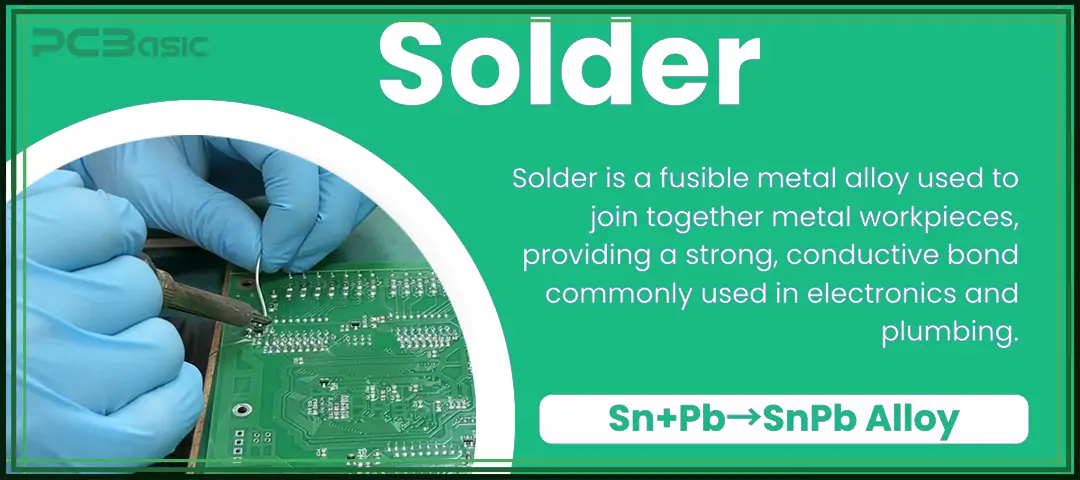
Solder is a metal mixture that is melted to connect two metal surfaces. It forms a metallurgical bond, as compared to glue. A soldering iron is used to heat the parts and the solder. After the solder has melted, it will spill over the parts. It becomes rather hard and conductive as it cools.
Solder is the connector in electronics, where electrical current can flow between components and a circuit board. It should be robust enough to retain components but be low electrically resistant. Most solder is composed of tin and lead, with newer formulations made of different metals.
The decision on the material to use depends on your project. Not every solder is the same. The composition of the metal, the inner core, and its purpose differ a lot.
Solder based on lead is normally composed of tin and lead. This was the norm in all electronics for decades. It melts at a lower temperature than lead-free. It will be easier to work with because you do not require much heat, which can destroy sensitive chips. The most common types are 60/40 and 63/37.
Due to the toxic effects of lead, most industries have adopted lead-free solder. They are usually composed of tin and copper, silver, or bismuth. To melt, they need higher temperatures. They are more environmentally and health conscious, but may be more difficult to use by beginners. They also occasionally form tin whiskers, little outgrowths which may short in the long run.
The solder wires have a hollow center filled with flux inside them. This is flux-core solder. Flux is a cleaning solution. The flux melts at first when you heat the solder. It eliminates oxidation of the metal surfaces to allow the solder to wet or adhere. In the absence of flux, the solder would simply bead and roll away on the metal.
Rosin-core solder is a certain flux-core solder. The sap of pine is refined into the flux. It is corrosion-free and non-conductive, thus the most suitable to use with sensitive electronics. When you leave rosin on a circuit board, it will not tend to damage the traces. It is the typical solder used in electronics that is commonly available in repair shops.
Silver solder has a low level of silver. It is frequently employed in jewelry or expensive-sounding audio devices. It is more difficult to melt and offers a very strong joint. Silver is occasionally added in electronics to eliminate silver leaching of components with silver-plated pads.
Aluminum can hardly be soldered since it oxidizes almost immediately when it is exposed to air. Solder with aluminum uses an extremely aggressive flux and a specific alloy to penetrate the oxide coating. This is not commonly applied in ordinary electronics, but is crucial to special industrial repairs.

60/40 solder is an alloy made of 60% tin and 40% lead. This particular ratio is a near eutectic alloy. It is preferred due to its reasonable price and performance. The wetting ability is provided by the tin, and the reduction in the melting point and flow of the metal is given by the lead.
The 60/40 solder melting point starts at 183°C and becomes fully liquid at 190°C. Since there is a temperature range of 7 °C between the solid and liquid stages of the solder, it has a plastic range, as well. The solder is soft clay during this period.
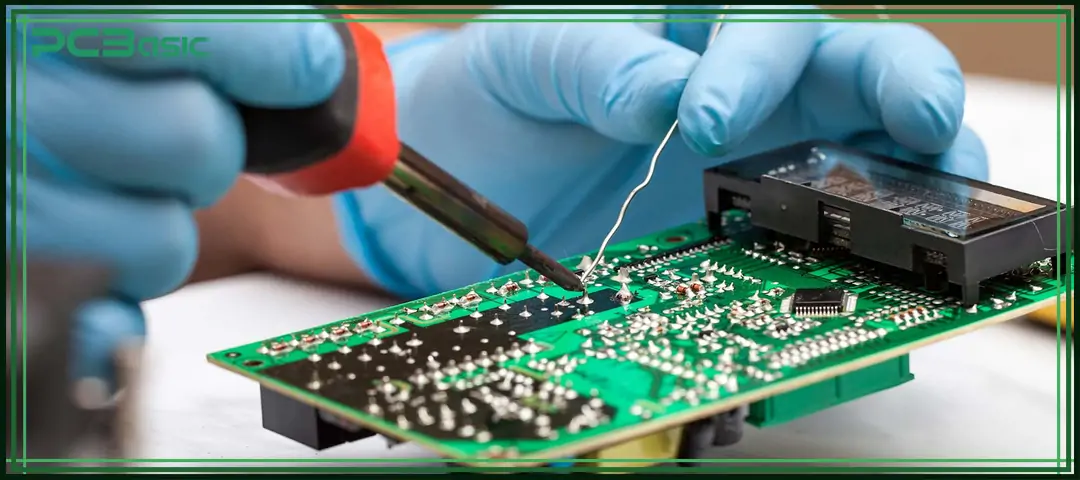
This alloy is incredibly versatile. You will find it in workshops ranging from high-tech labs to artist studios.
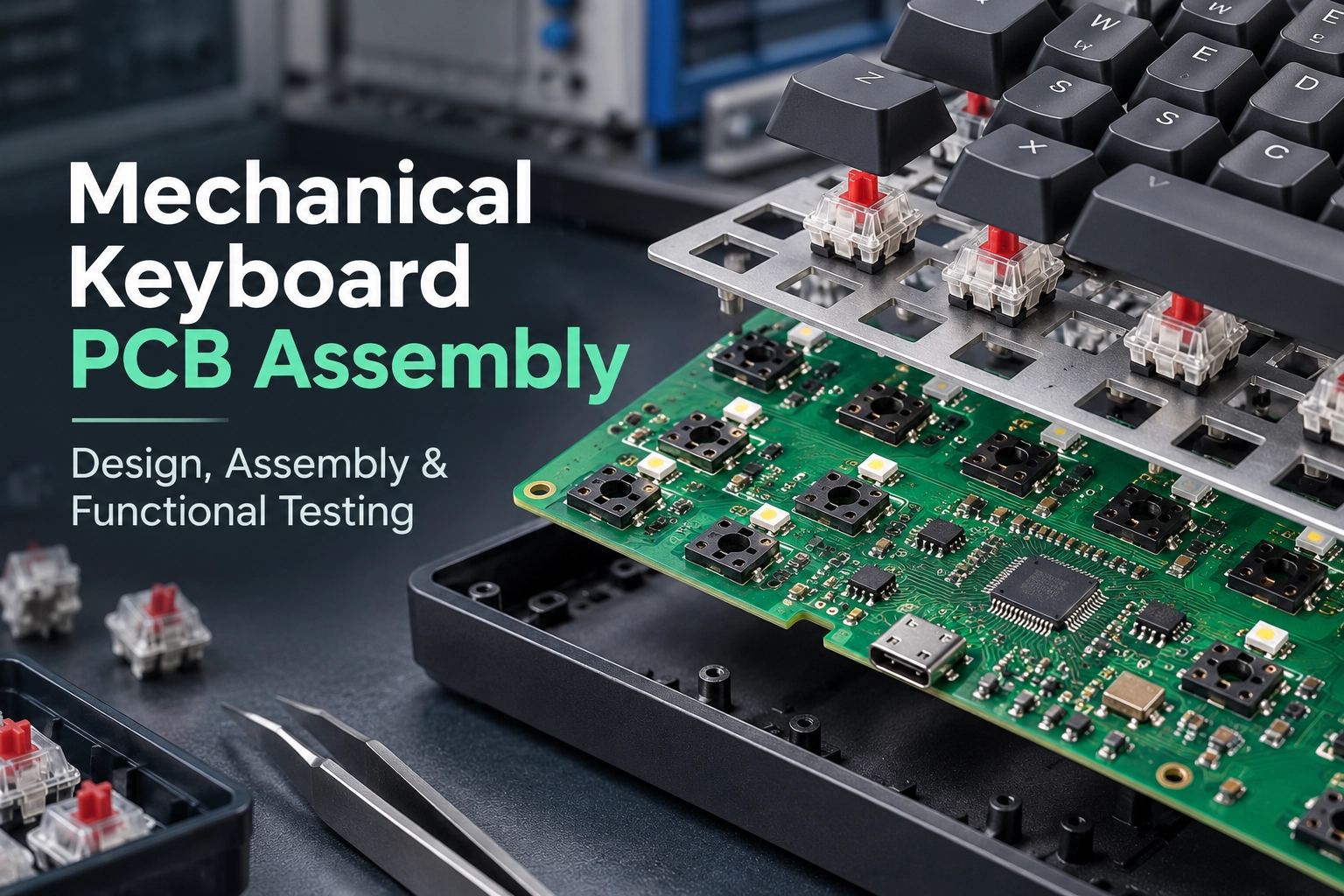
If you are building a drone, fixing a game console, or assembling a keyboard, 60/40 rosin core solder for electronics is a good option. It has a lower melting temperature, so you can work with a simple soldering iron without concern of burning the plastic parts or detaching copper traces from the board. It runs smoothly into tiny holes and around tiny pins.
Artists use 60/40 solder to join pieces of colored glass. The plastic range is a positive thing in this sphere. It enables the artist to mold the bead of solder in its cooling state to form a seam, raised and smooth, which is beautiful. Lead-free solders tend to cool too fast and appear dim, but 60/40 is shiny and can be handled.
In older machinery or automotive electrical systems, 60/40 tin lead solder is often used for heavy-duty wiring. It can deal with vibration. Although new consumer products are lead-free (RoHS compliant), the numerous industrial and aerospace uses continue to use leaded solder due to its higher reliability in physical use.
Because 60/40 solder wire is so forgiving, it is perfect for students. When the joint appears dull or grainy, the wire probably slipped during that phase of plastic cooling at 7 ℃. This teachable moment is useful in teaching the students to maintain a still hand until the joint is completely seated.
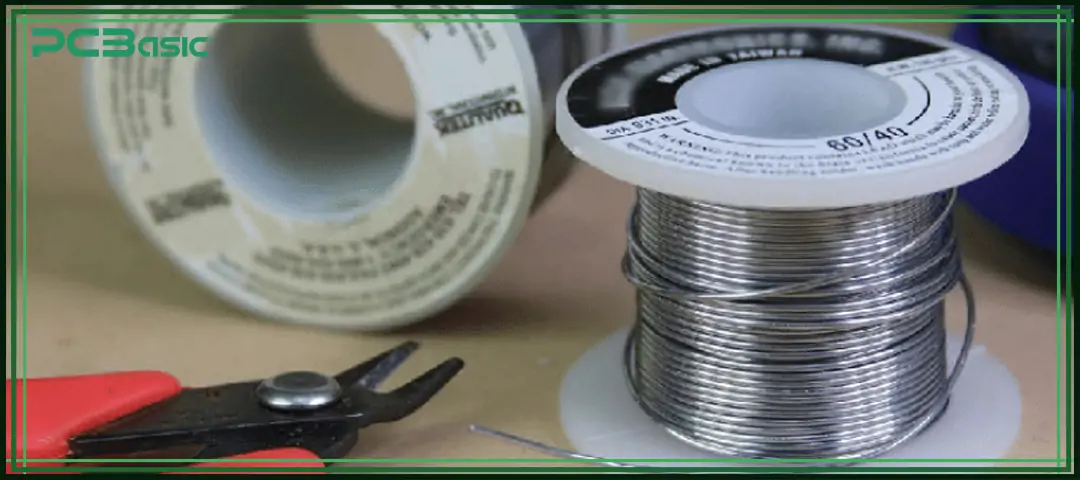
You can't just grab any roll of wire. You must match the solder to the scale of your work.
Solder comes in different shapes depending on how you apply it.
Solder wire
The most common form. You feed it by hand onto the heated joint.
Solder paste
A mixture of tiny solder balls and flux. You apply it with a syringe or stencil, usually for surface-mount components. Then, you heat the whole board in an oven or with a hot-air tool.
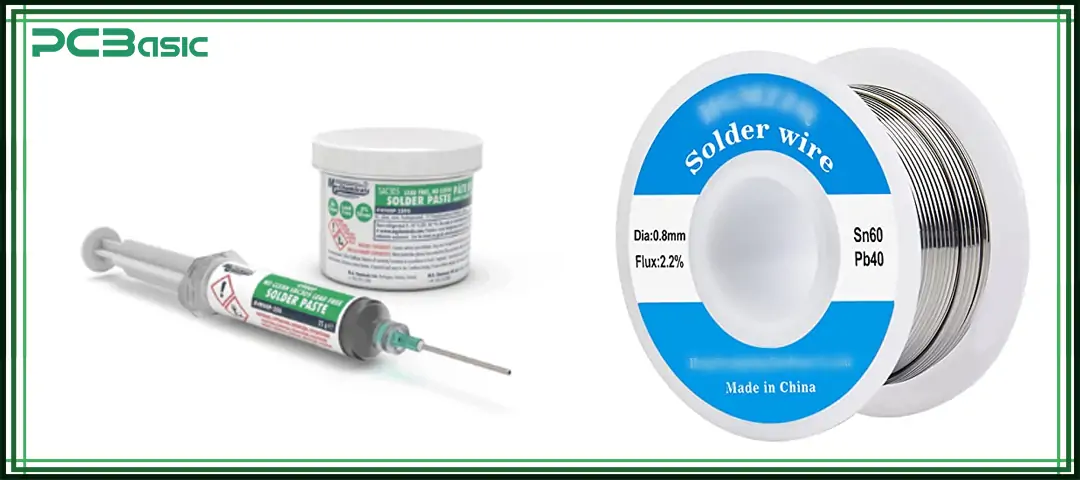
The wire thickness is important. When too thick, you will apply excessive solder to a small joint. It cannot be too thin or you will be feeding wire all your life to get one hole filled.
The sweet spot of general electronics is 0.8mm-1.0mm. It is applicable to through-hole components and larger wires.
You may need 0.5mm for very small phone repairs. You could use 3.0mm on large stained glass work.
Check what is inside the wire. For electronics, you almost always want a rosin core solder. Avoid "acid core" solder at all costs for electrical work. Acid flux is for plumbing (pipes) and will eat through your circuit board over time.
Not all flux is the same.
No-Clean: This flux leaves a clear residue that doesn't need to be washed off. It is very popular for modern repairs.
Water-Soluble: This flux is very active and cleans well, but you MUST wash the board with water afterward, or it will eventually cause corrosion.
Time is money in your projects – and PCBasic gets it. PCBasic is a PCB assembly company that delivers fast, flawless results every time. Our comprehensive PCB assembly services include expert engineering support at every step, ensuring top quality in every board. As a leading PCB assembly manufacturer, we provide a one-stop solution that streamlines your supply chain. Partner with our advanced PCB prototype factory for quick turnarounds and superior results you can trust.
60/40 solder is 60% tin, 40% lead. Melting range 183 to 190°C. Easy to work with and widely available.
63/37 solder is 63% tin, 37% lead. This is the eutectic ratio, which means it transitions from solid to liquid at exactly one temperature, 183°C. There is no plastic range.
50/50 solder is 50% tin, 50% lead. It has a wider melting range and is mostly used in plumbing, not electronics.
63/37 solder is an eutectic alloy. At exactly 183°C, it goes straight from solid to liquid, with no pasty in-between phase. This makes it more predictable and it reduces the risk of cold joints caused by movement during cooling.
Melting point
63/37 melts at a single point, 183°C. 60/40 melts over a short range, 183 to 190°C. In practice, both work at the same iron temperature.
Fluidity
63/37 flows a little more smoothly because it snaps between states faster. 60/40 has a brief window where it is semi-liquid, which can slightly affect how it flows into small gaps.
Strength and reliability
For most electronics work, the joints are similar in strength. 63/37 is preferred in professional assembly because the eutectic behavior reduces cold joint risk. For hobby use, the difference is small.
RoHS compliance
Neither 60/40 nor 63/37 is RoHS compliant. Both contain lead. You cannot use them in commercial products sold in the EU or many other markets.
Application specificity
If you are soldering fine-pitch components or doing precision work where joint consistency matters, 63/37 is a better pick. For general hobby electronics, through-hole work, or repairs, 60/40 is perfectly fine and usually cheaper.

60/40 is a good choice for your electronics and hobby projects. Its plastic range is unique, thus forgiving to beginners and versatile to experts. You can guarantee that your connections will remain strong and conductive over the years by selecting the correct diameter and an excellent rosin core.
What is 60/40 solder?
It is a metal alloy made of 60% tin and 40% lead. It is used to join metals.
What is the melting point of 60/40 solder?
60/40 solder melts at 183°C and becomes fully liquid at $190°C.
Can I use 60/40 solder for electronics?
You will ensure that it has a rosin core. Never use acid core solder on electronics.
Is 60/40 or 63/37 better?
63/37 is technically superior for electronics because it freezes instantly, reducing the risk of bad joints. However, 60/40 is very popular and works well for most tasks.
Is 60/40 solder toxic?
60/40 solder comes with lead. You should always wash your hands after handling it and work in a well-ventilated area to avoid breathing in flux fumes.

Assembly Enquiry
Instant Quote

Phone contact

+86-755-27218592
In addition, we've prepared a Help Center. We recommend checking it before reaching out, as your question and its answer may already be clearly explained there.
Wechat Support

In addition, we've prepared a Help Center. We recommend checking it before reaching out, as your question and its answer may already be clearly explained there.
WhatsApp Support

In addition, we've prepared a Help Center. We recommend checking it before reaching out, as your question and its answer may already be clearly explained there.
