Electronic products are striving to
achieve maximum results while saving space. Whether you are using a mobile
phone, driving a car, or monitoring a patient's heart rate in a hospital, many
of these tasks are based on devices that integrate multiple functions onto a
tiny circuit board. And this is where multilayer PCB design comes into play,
because multilayer PCBs can arrange complex circuits within a limited space.
Does multilayer PCB design affect the
operation of the devices? Why should you consider finding a multilayer PCB
design service for your next project? This article will clarify all these
questions.
We will carefully explain the key points
involved in multilayer PCB manufacturing, the process of multilayer PCB
manufacturing, and the differences between rigid PCB multilayer design and
flexible PCB multilayer design. We will also briefly introduce the ceramic PCB
multilayer design used in high-frequency products. After reading this, you will
understand why multilayer technology is an indispensable foundation in modern
electronic products.
What is a Multilayer PCB?

A multilayer PCB is actually a single
circuit board. It consists of at least three layers of copper foil, which are
stacked one on top of the other and separated by insulating materials between
each layer. After a high-temperature and high-pressure treatment, it changes
into a complete circuit board. A double-sided board has only two layers of
copper, while a multilayer PCB has four layers, six layers, or even more than
fifty layers. These layers are connected through vias - including through
holes, semi-through holes (blind holes), and those hidden in the inner layers
(buried holes).
However advanced the electronic equipment
is, a solid Multilayer PCB design is necessary. To guarantee that the board
does not have any problems, engineers need to follow the multilayer PCB design
guidelines: how wide the lines should be, where the vias should be placed, and
how to control the impedance. There are specific rules. Whether you use a rigid
PCB multilayer design or a flexible PCB multilayer design, the principle is the
same - the more layers, the more lines that can be drawn in a smaller area.
How does the Multilayer PCB
Design Affect Operation?
Multilayer PCB design directly determines
whether the signals can function properly, whether the power supply is stable,
and whether it can resist interference. If the board is not designed properly,
the signals will run together chaotically, the power layer will carry noise by
itself, and the heat will be trapped inside and unable to dissipate.
Eventually, the board will simply be ruined. Conversely, if the multilayer PCB
design is done well, the impedance of the high-speed signals can be controlled,
the return path will be shorter, and the heat will be dissipated along the
grounding plane on the inner layer.
For example, ceramic PCB multilayer
design (ceramic PCB multilayer design) has excellent heat conductivity and is
the most suitable for power-related products. Flexible PCB multilayer design
boards can be bent freely, but the circuits remain continuous. It is
indispensable for the production of wearable devices.
Whether you know how to design a
multilayer PCB or not directly determines whether the prototype you make can
function properly. Therefore, many companies simply hand over the complex
boards to professional multilayer PCB design factories or specialized multilayer
PCB design services for solving.
What Makes Multilayer PCBs Common
in Modern Electronics?
Switching from single-layer boards to
multilayer technology is inevitable. The current equipment demands higher
speed, smaller size and stronger functionality. Multilayer PCBs precisely meet
these requirements as they can accommodate more circuits within one square
inch.
Furthermore, over the years, the adoption
rate of multilayer PCB manufacturing has been high, and the cost has also
decreased. Various improvements in multilayer PCB fabrication now allow for
finer traces, smaller vias, and thinner insulation layers. Moreover, the
multilayer PCB manufacturing process has been continuously advancing, ensuring
higher yield and greater reliability.
Whether it's the motherboard of your
mobile phone or the imaging equipment in the hospital, the density and
performance offered by multilayer technology are beyond what single-layer and
double-layer designs can achieve.
In fields such as aerospace and military,
where reliability is of utmost importance, rigid PCB multilayer design is the
standard. However, in compact consumer electronics, flexible PCB multilayer
design offers a great deal of freedom in design. Even for high-power RF
products, ceramic PCB multilayer design performs exceptionally well due to its
stable dielectric properties.

About PCBasic
Time is money in your projects – and PCBasic gets it. PCBasic is a PCB assembly company that delivers fast, flawless results every time. Our comprehensive PCB assembly services include expert engineering support at every step, ensuring top quality in every board. As a leading PCB assembly manufacturer, we provide a one-stop solution that streamlines your supply chain. Partner with our advanced PCB prototype factory for quick turnarounds and superior results you can trust.
The Pros and Cons of Multilayer PCB
Just like in other engineering fields,
multi-layer PCBs also have their advantages and disadvantages. Before deciding
when to adopt a multi-layer PCB design and when to use a single-layer board, we
need to clearly understand these pros and cons to avoid some unnecessary
troubles.
Pros of
Multilayer PCB
Reduced Form Factor - By stacking the
circuits layer upon layer, a multilayer PCB can replace several single-layer
boards. Consequently, the final product becomes much smaller. The reason why
mobile phones and laptops can be made so thin is mainly because of this.
Lightweight Construction—The weight has decreased as the number of connectors and the wires
attached to them has been reduced. A well-designed multilayer PCB design will
fit everything into a small board.
High-Quality—With
dedicated power and ground layers, multilayer technology inherently has noise
reduction effects, allowing signals to run cleaner. The boards operate more
reliably, especially for high-speed digital circuits.
More Durable—In
the lamination process of multilayer PCB fabrication, the resulting boards are
extremely sturdy. They are more shock-resistant and less prone to breakage
compared to those constructed by connecting several individual boards with
wires.
Less Noisy—The
inner layer itself blocks interference, and because the power layer and the
ground layer are close together, the loop inductance becomes smaller. By
following the multilayer PCB design guidelines, the electromagnetic
interference can be further reduced.
Better Heat Dissipation—The copper skin and vias can conduct the heat generated by the
heating element away. Especially in the ceramic PCB multilayer design, the heat
dissipation is very effective, making it particularly suitable for large-power
LEDs and RF power amplifiers.
Single Connection Point—There is no need to connect wires back and forth between several
boards. A multilayer PCB has a unified interface, which makes installation easy
and maintenance simple.
Cons of
Multilayer PCB
More Expensive—The multilayer PCB manufacturing process requires a large number of
materials, multiple pressing processes, and multiple drilling processes.
Therefore, the cost is higher and much more expensive than that of single-panel
and double-panel PCBs.
Complex Design Process—You need to understand how layers are stacked, how impedance is
controlled, and how vias are managed if you want to learn how to design
multilayer PCBs.
Extended Lead Time—Multilayer PCB fabrication is inherently a slow process. Each
additional layer requires an extra press, an extra drill, and an extra plating.
If you want to rush it, you'll have to pay extra.
Required Domain Expertise—You should not turn over the design of a multilayer PCB to a
newcomer who is just starting out. You need to find someone who truly
understands the multilayer PCB design guidelines and who can handle both signal
and power engineering.
Limited Availability—Not every multilayer PCB design factory can produce boards with
more than 20 layers, or those with blind and buried holes. You need to
specifically seek out multilayer PCB design services if you want to undertake
high-end projects.
How to Make the Layers Stacked in a
Single, Double, and Multilayer PCB?
To understand the advantages of
multilayer technology, first take a look at how different boards are stacked
layer by layer. Then, a comparison will make it clear.
• Single-layer PCB: It's a single sheet of board, with a copper sheet on one side. All
the components and traces are on the same side, and no vias are required.

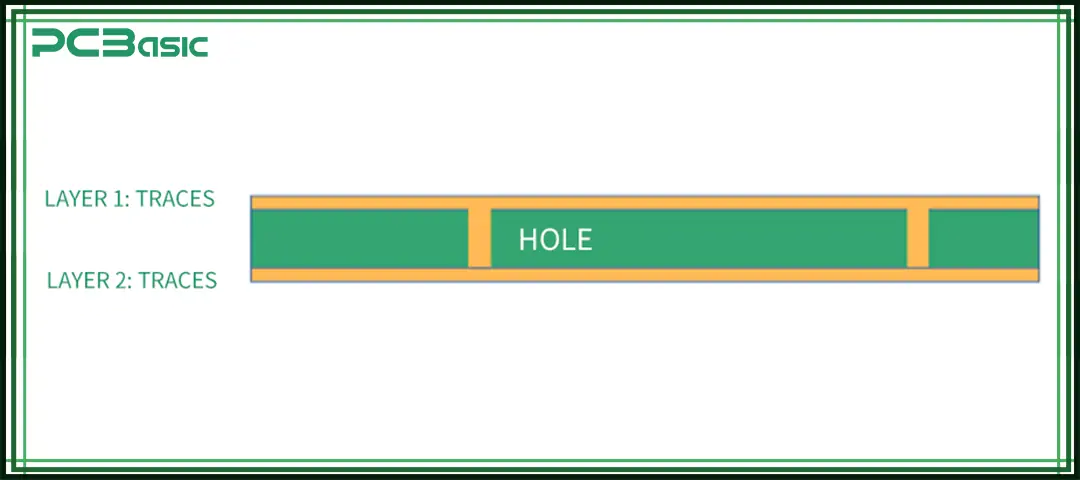
• Double-layer PCB: Both sides of the board are covered with copper sheets. The
components can be placed on both sides. Just drill a through-hole to connect
the two layers.
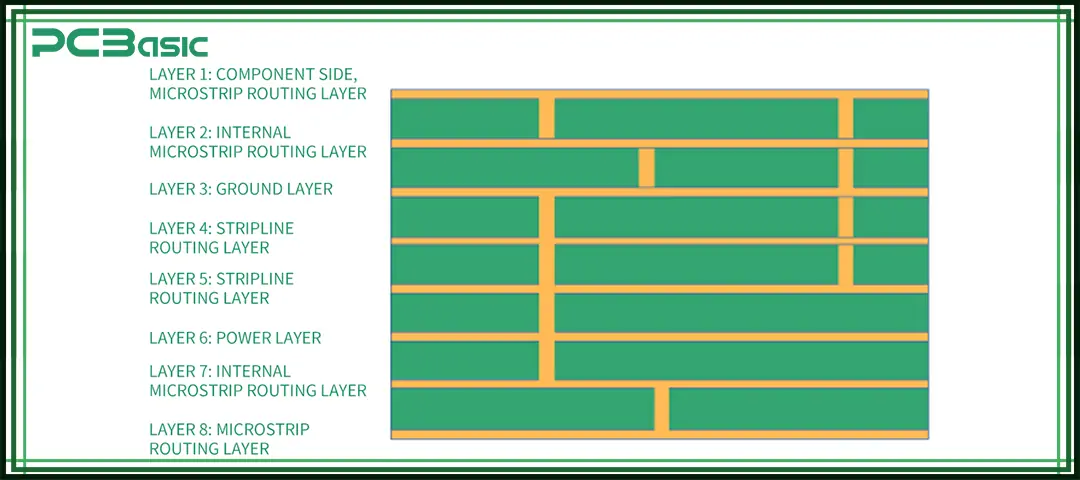
• Multilayer PCB: The copper sheets are stacked together in three or more layers.
The most commonly used 4-layer stacking approach is as follows: the top layer
is for signals, the second layer is grounded, the third layer is connected to
the power supply, and the bottom layer is for signals. For a 6-layer stack, two
more layers are added in the middle, either for signals, or for power supply or
ground.
The multilayer PCB manufacturing process
begins with the core board and the pre-impregnated sheet. First, several layers
of circuits are fabricated inside, and then they are stacked layer by layer
with the pre-impregnated sheet, finally pressed into a single board under high
temperature and pressure. After the pressing process, holes are drilled, copper
is plated, and the layers are connected together. This is the core process of
multilayer PCB fabrication.
When designing flexible PCB multilayers,
instead of using FR4, polyimide should be used. During the lamination process,
adjustments need to be made to ensure that the board can be bent freely. For
ceramic PCB multilayer designs, typically alumina or aluminum nitride is used.
After the circuits are printed, the entire piece is fired together.
If you are thinking about how to design
the stack-up structure of a multilayer PCB, there is a very practical rule in
the multilayer PCB design guidelines: the layers should be symmetrical (for
example, using even-numbered layers), as the board is prone to warping. In
addition, the signal layers must be adjacent to the ground or power supply to
permit the current to have a path to follow.
Ways to Tell Single-Layer and
Multilayer PCBs Apart
How to check whether a board is a
multilayer PCB by just looking at it or through its functions, rather than
identifying it as a single-layer or double-sided board? Here are some tricks
that you can try:
1. Edge Examination - Examine the edge of
the circuit board with a magnifying glass. On the side of a multi-layer PCB, we
can see individual copper wires (each layer), with insulating material
separating each layer. But on a single-layer board, only one layer of copper
can be seen.
2. Vias—If you see some holes that do not
run all the way from the top layer to the bottom layer (these are buried
holes), or some holes that drill downwards from the top layer but stop halfway
and do not reach the bottom layer (these are blind holes), then this is a
multi-layer PCB.
3. Component Density—On a small circuit
board, if hundreds of components are placed and the wiring is dense and
intricate, this is a multilayer PCB.
4. Light Test——Use a powerful flashlight
to shine from beneath the board upwards. The light from a single-layer board
can pass through directly. On a multilayer PCB, there are several layers of
copper sheets inside, and the light is blocked.
5. Documentation—The most reliable way is
to directly refer to the design documents of the board, or to inquire with the
multilayer PCB design factory that produces this board.
It is greatly helpful for you to
understand the differences when you need to reverse-engineer and analyze a
product, or when choosing between rigid multilayer PCB design and other
technologies, or when determining which solution is more appropriate.
Where Multilayer PCBs Are Used
Multilayer technology can be applied in
many scenarios. Here are some of the main areas:
• Consumer Electronics——Smartphones,
tablets, laptops, smartwatches - all of these can only be accommodated in such
a small space through flexible PCB multilayer design or rigid PCB multilayer
design.

• Telecommunications—The
server motherboard, network switch, and base station all use multilayer PCBs.
Moreover, impedance control is required to ensure they can handle high-speed
data transmission.

• Automotive—The engine
control unit, ADAS (Advanced Driver Assistance Systems), and the in-vehicle
entertainment system all rely on a robust multilayer PCB design, which must be
able to withstand vibrations as well as high and low temperatures.

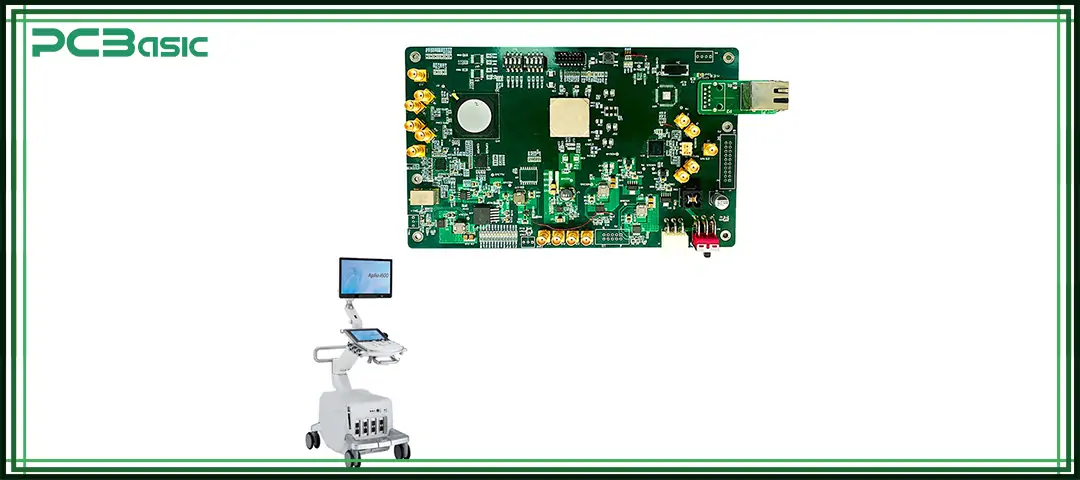
• Medical Devices—Cardiac
pacemakers, defibrillators, and imaging equipment all require highly reliable
multilayer PCB manufacturing to ensure the safety of patients.
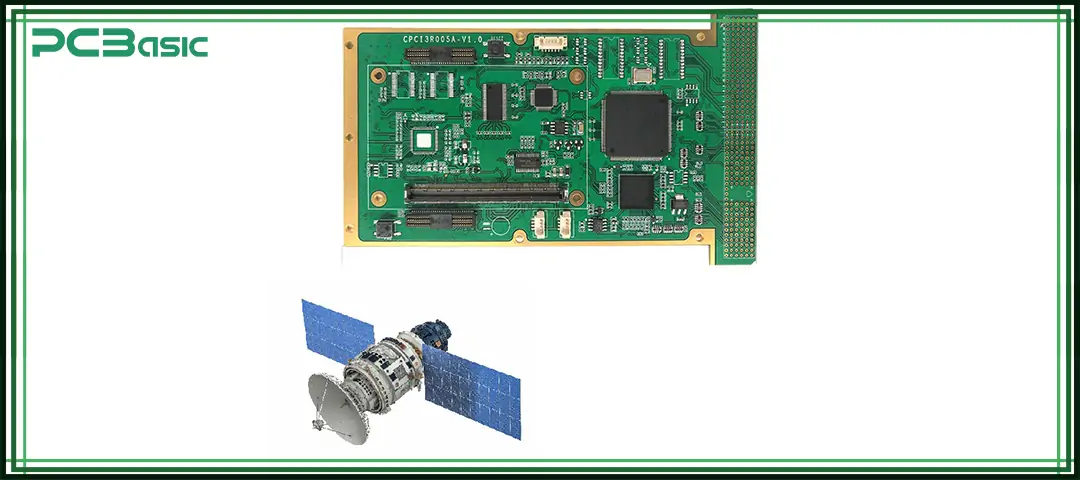
• Aerospace and Defense—Avionics,
radar systems, and satellite communications all employ ceramic PCB multilayer
design because it offers excellent heat conductivity and low signal loss.
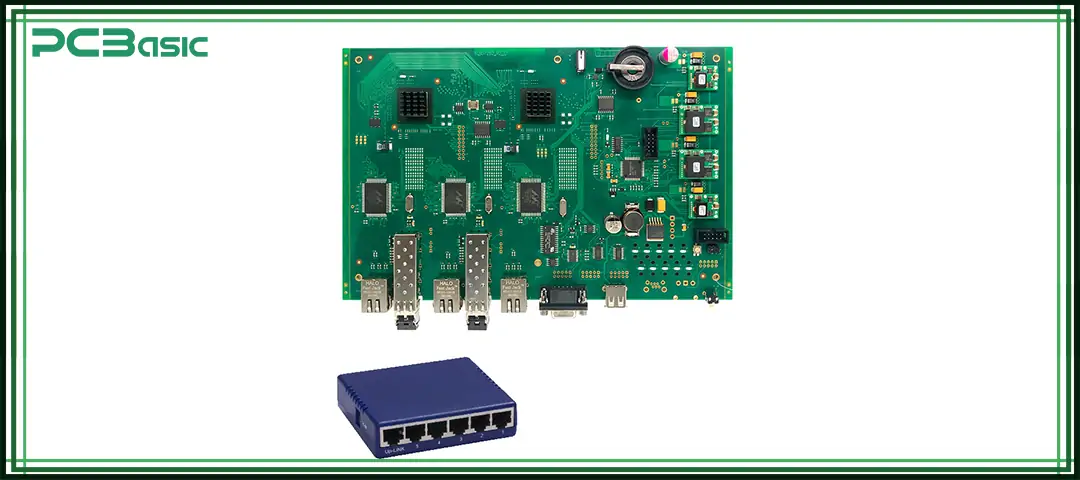
• Industrial Control—PLC
(Programmable Logic Controller), robots, and power equipment employ multilayer
technology mainly for noise reduction.
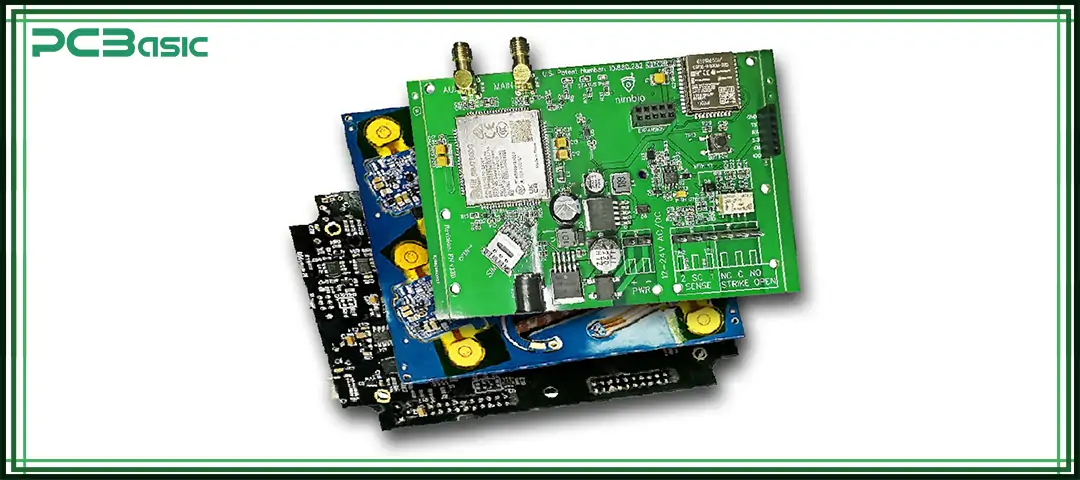
• RF and Microwave—High-frequency
circuits prefer to use ceramic PCB multilayer design because it has a stable
dielectric constant and low loss.
In these fields, it is necessary to seek
reliable multi-layer PCB design manufacturers for cooperation, or to use
professional multi-layer PCB design services to reduce errors in the production
process and achieve the expected results.
Conclusion
Multilayer PCB design holds a significant
position in modern electronic products. From the manufacturing process of
multilayer PCBs to the final assembly, every step requires precision and rich
experience to support it.

We have already understood what
multilayer PCBs are, how they have an influence on circuit operation, and why
they are so widely used nowadays. Additionally, we have also introduced the
application fields of these circuit boards —from consumer products to aerospace
systems, covering a wide range.
Whether you need a rigid PCB multilayer
design, a flexible PCB multilayer design, or a ceramic PCB multilayer design,
the first step is to understand how to design a multilayer PCB correctly.
Follow the verified multilayer PCB design guidelines, and you will save time
and money.
It is a good investment to seek out a
professional multilayer PCB design service or a reliable multilayer PCB design
factory if your team lacks sufficient experience. Because electronic products
continue to become much smaller and run faster, multilayer technology will
become increasingly important.