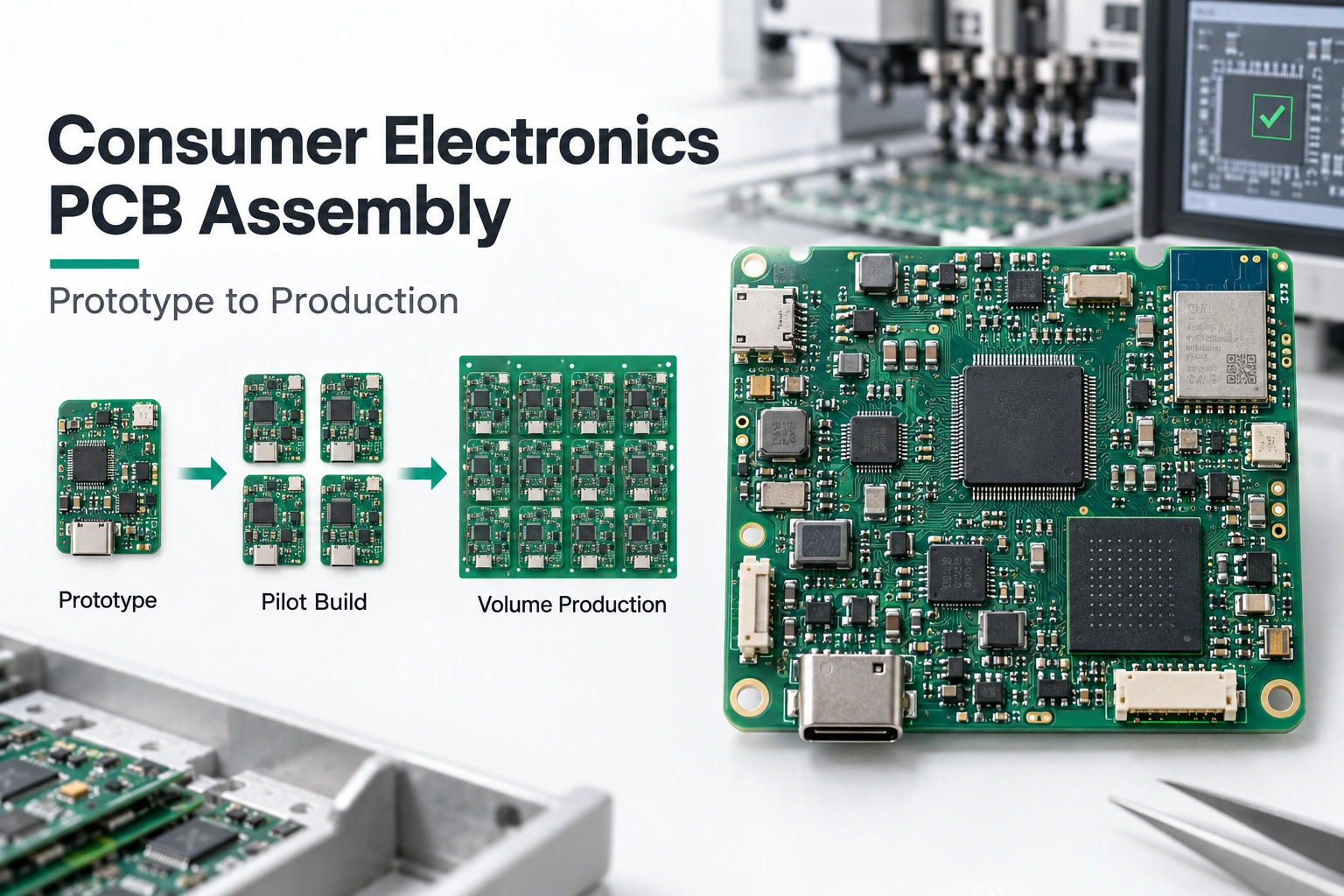
In modern electronic manufacturing, the SMD resistor is one of the most important and widely used components. A printed circuit board (PCB) may contain dozens, hundreds, or even thousands of SMD resistors. These tiny components such as controlling current, voltage division, and stabilizing electronic signals, play a vital role in circuits.
With the development of Surface Mount Technology (SMT), SMD resistors have gradually replaced the traditional through-hole resistors and have become the standard components in most electronic products. Compared with traditional resistors, chip resistors can help engineers design smaller circuits, improve production efficiency, and support automated manufacturing processes.
However, many engineers and beginners in electronics often encounter the following problems:
• What is an SMD resistor?
• How do resistor markings work?
• How to understand the resistor code marked on the resistor?
• What are the common sizes of SMD resistors?
• How do engineers calculate the resistor value?
• What is the best method for identifying resistors on a PCB?
This comprehensive guide will give you a hand to gain a comprehensive understanding of SMD resistors, including their structure, SMD resistor code, package sizes, testing methods, and practical tips for selecting the appropriate resistors in actual electronic design.
What is an SMD Resistor?
SMD resistor (Surface-Mount Device Resistor) is a passive electronic component that is designed to be directly placed onto the surface of a printed circuit board (PCB). Unlike traditional plug-in resistors that require pins to be inserted into PCB holes, SMD resistors are directly soldered onto the PCB pads.
Due to this structural design, the chip resistor can be automatically mounted by using the pick-and-place machine in the SMT production line.
A typical SMD resistor usually consists of the following key components:
• Ceramic substrate
• Resistive film layer
• Metal terminals
• Protective coating
Among them, the resistor film layer determines the resistance value of the resistor, while the metal terminal electrodes enable the surface mount resistor (SMD resistor) to establish an electrical connection with the PCB.
Because of their small size and stable performance, SMD resistors are now extensively used in almost all modern electronic devices, including smartphones, computers, industrial control equipment, and automotive electronic systems.

SMD Resistor Marking Codes Explained
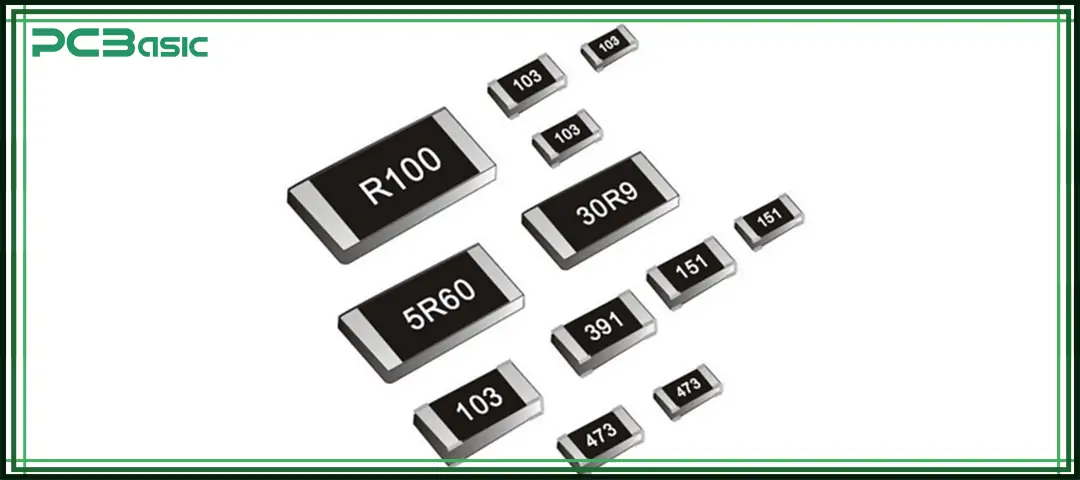
An important part of understanding SMD resistors (Surface Mount Device Resistors) is to learn how to read the resistor code marked on their surface.
Unlike traditional resistors that use color-coded labels, surface-mount resistors (chip resistors) typically use numerical resistor markings to indicate their resistor values.
For engineers and technicians working in the field of electronic components, understanding the SMD resistor code is of quite significant.
Three-Digit Resistor Code
The most common resistor number code system uses three digits to represent.
The encoding rules are as follows:
• The first two digits = significant figures
• The third digit = multiplier (multiple)
For example:
103
According to the rules of resistor code:
10 × 10³ = 10,000 Ω
This indicates that the resistance value (resistor value) is 10kΩ.
Another example: 472
47 × 10² = 4700 Ω
This indicates that the resistance value of this SMD resistor is 4.7kΩ.
Understanding this SMD code is an important step to correctly read resistors.
Four-Digit SMD Resistor Code
High-precision SMD resistors typically use a four-digit resistor number code.
The coding rules are as follows:
• The first three digits = significant figures
• The fourth digit = multiplier (multiple)
Example: 1002
100 × 10² = 10,000 Ω
Therefore, the resistor value is 10kΩ.
This more precise SMD resistor code is typically used in precision circuits where precise control of the resistance value is required.
The "R" in resistor markings (Using "R" in Resistor Markings)
Sometimes you may come across the letter "R" in resistor markings.
This indicates that in the SMD resistor code, "R" is used to represent the decimal point.
Example:
4.7Ω
Another example:
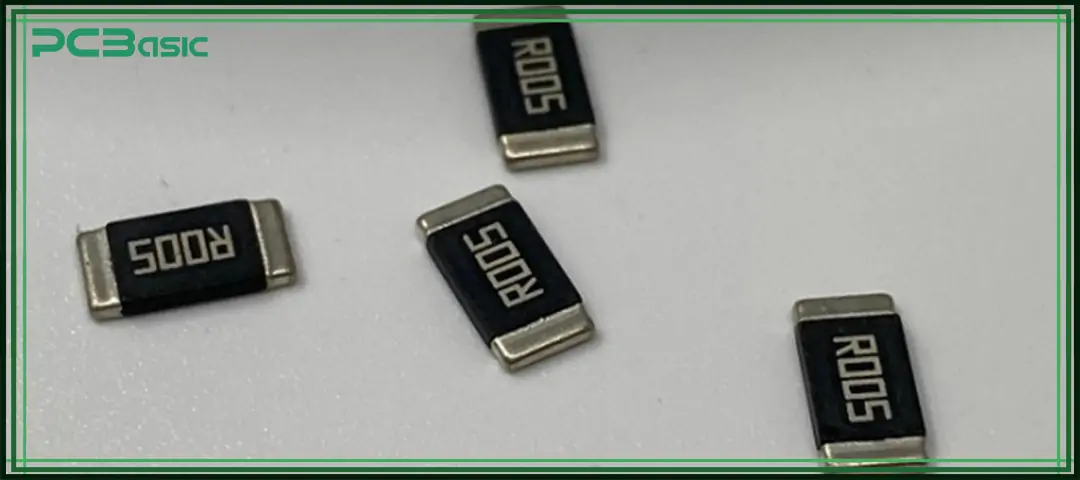
R22
Show:
0.22Ω
This resistor code is commonly employed for low-resistance s chip resistors.
Understanding these rules makes it much easier to identify resistors during PCB repair or circuit design processes.
SMD Resistor Size Codes and Packages
Apart from resistor code, engineers also need to be familiar with the sizes of SMD resistors.
The package size of SMD resistors directly influences their power rating, heat dissipation performance, and PCB layout density.
Most SMD resistors are represented by a four-digit code for their size.
For example:
0603
Its meaning is:
Length: 0.06 inches
Width: 0.03 inches
This is one of the most common sizes of SMD resistors (SMD resistor sizes) in consumer electronics.
Here are some common sizes of SMD resistors:
0201 - Ultra-small circuit
0402 - High-density electronic devices
0603 - General circuits
0805 - Suitable for hand soldering
1206 - Higher-power circuits
2512 - Power and power electronic circuits
Smaller SMD resistor sizes are typically used in smartphones and wearable devices, while larger chip resistor packages are mostly applied in power circuits.
For engineers who need to design high-density and compact PCB layouts, understanding SMD resistor sizes is critical.
Types of SMD Resistor
Different application scenarios require different types of SMD resistors (SMD Resistor).
The most common types include:
Thick Film SMD Resistor
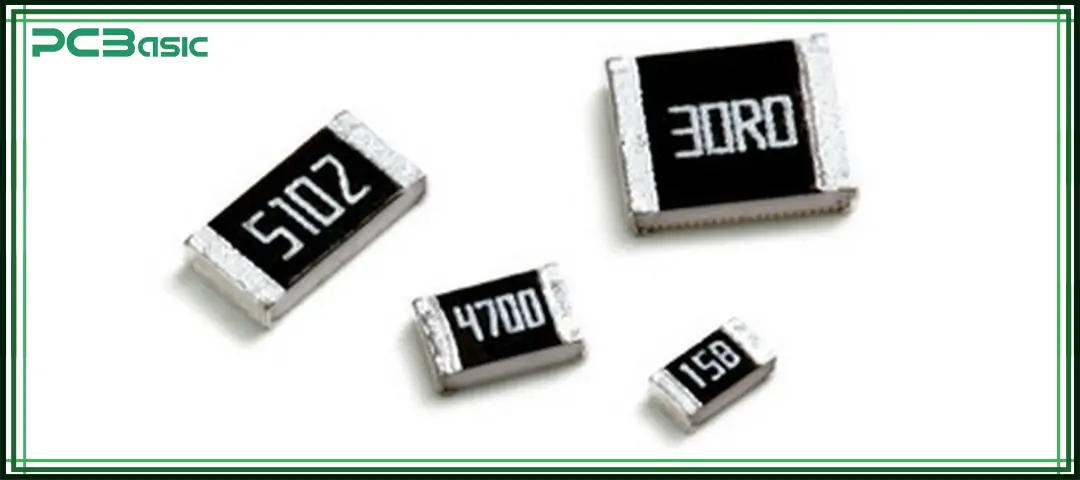
The thick-film SMD resistor is the most widely used type of chip resistor.
It is made by printing resistive paste on a ceramic substrate and then sintering it at a high heat.
Advantages:
• Low cost
• Wide range of resistor values
• Suitable for general electronic circuits
Because of these advantages, thick film SMD resistors dominate in consumer electronic products.
Thin Film SMD Resistor
The accuracy of thin-film SMD resistors is usually higher than that of thick-film resistors.
They are manufactured by using vacuum deposition technology, forming a very stable resistive film layer on the substrate.
Some of their typical features include:
• High accuracy of resistance value
• Low temperature coefficient
• Better stability
Thin film chip resistors are commonly applied in electronic medical devices, measuring instruments, high-precision analog circuits and so on.
Metal Element SMD Resistor
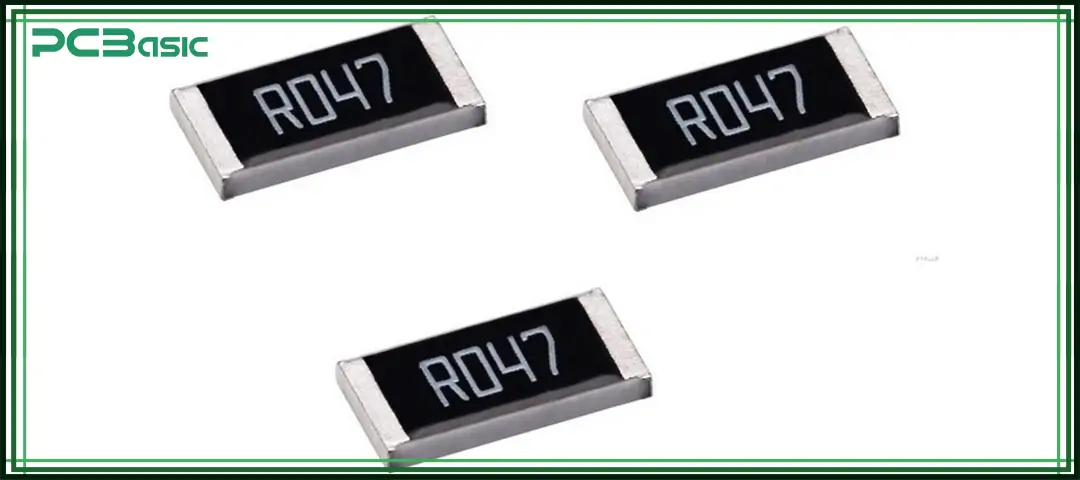
Metal Element Resistors are a kind of SMD resistors specifically designed for current detection.
These resistors typically have very low resistor values and high-power ratings.
They are usually applied in the following scenarios:
-
battery management systems
About PCBasic
Time is money in your projects – and PCBasic gets it. PCBasic is a PCB assembly company that delivers fast, flawless results every time. Our comprehensive PCB assembly services include expert engineering support at every step, ensuring top quality in every board. As a leading PCB assembly manufacturer, we provide a one-stop solution that streamlines your supply chain. Partner with our advanced PCB prototype factory for quick turnarounds and superior results you can trust.
Importance of SMD Resistor
SMD resistors (SMD Resistor) are one of the most fundamental components in electronic circuits.
Without SMD resistors, many circuits would not function properly.
The reasons why SMD resistors are crucial include:
Current Control
The chip resistor can limit the current in the circuit, thereby protecting sensitive components such as LEDs and microcontrollers.
Voltage Division
Two SMD resistors can form a voltage divider, thus generating a specific voltage level.
Signal Conditioning
By exactly selecting the resistor value, it is likely to stabilize the signal level in the analog circuit.
Impedance Matching
In high-frequency circuits, SMD resistors can assist in impedance matching, thereby preventing signal reflection.
Due to these crucial functions, during the circuit design process, accurately identifying resistors using resistor number codes is important.
SMD Resistor Application
SMD resistors are used in almost all modern electronic equipment.
Typical applications include:
Consumer Electronics
Smartphones, tablets, laptops and various smart devices all heavily rely on SMD resistors.
The smaller sizes of SMD resistors allow engineers to design circuits with smaller sizes and higher component densities.
Automotive Electronics
-
Modern automobiles employ hundreds of chip resistors across various systems, such as:
-
Engine Control Unit (ECU)
Industrial Equipment
In industrial control systems, SMD resistors are used for signal processing and power regulation.
Medical Devices
High-precision SMD resistors are widely used in medical monitoring equipment and diagnostic instruments.
How to Identify SMD Resistor?
Correctly identifying resistors is vital when repairing electronic devices or assembling PCBs.
There are several methods for identifying SMD resistors.
Reading the Resistor Code
The simplest method is to read the surface-marked SMD resistor code on the component.
By understanding the resistor number code, engineers can quickly determine the resistor value.
Using an SMD Resistor Calculator
The SMD resistor calculator is a very convenient tool that can convert the SMD resistor code into the actual resistance value (resistor value).
For example, if the resistance identifier is 103, the SMD resistor calculator (SMD resistor calculator) will display its resistance value as 10kΩ.
This makes it much easier for beginners to learn how to read resistors.
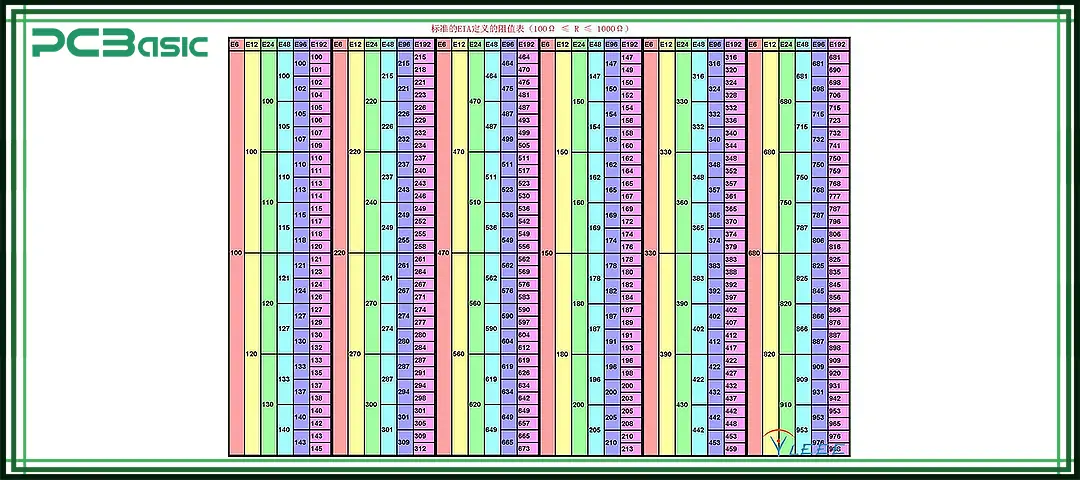
Checking Component Datasheets
For very small SMD resistors, sometimes the surface of the resistors does not have any markings printed on it.
In these cases, engineers usually need to depend on packaging labels or component data sheets to confirm the resistor specifications.
Testing Methods of SMD Resistor
Testing SMD resistors could make sure that the component has the correct resistor value and can function properly.
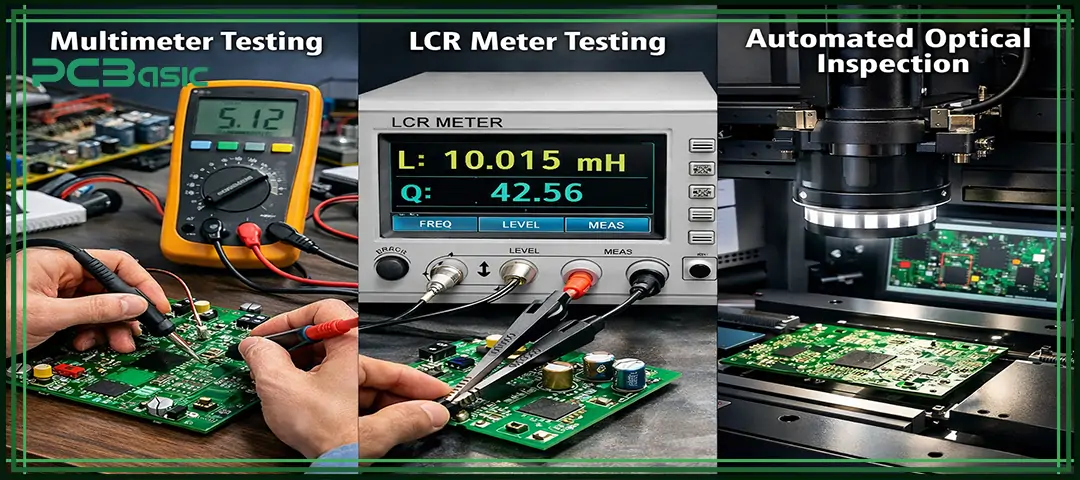
Multimeter Testing
Digital multimeters are the most commonly used tools for measuring SMD resistors.
Steps:
1. Set the multimeter to the resistance measurement mode (Ω setting).
2. Place the probes on the two ends of the surface-mount resistor (chip resistor).
3. Compare the measured value with the calculated resistor value based on the resistor code.
LCR Meter Testing
An LCR meter can be used when a more precise test is required
It can measure:
• Resistance
• Capacitance
• Inductance
This method is particularly suitable for the testing of high-precision SMD resistors.
Automated Optical Inspection (AOI)
During the SMT manufacturing process, the equipment will automatically identify the resistor markings by using the automatic optical inspection (AOI) system to ensure that the correct surface mount device (SMD) resistor code is used during the assembly process.
How to Select the Right SMD Resistor
Choosing the appropriate SMD resistor is of vital importance for the reliability of the circuit.
Engineers usually need to consider various key parameters.
Package Size
Select the appropriate size of SMD resistors according to the PCB space and power requirements.
Resistance Value
Choose the appropriate resistor value through standard series such as E24 or E96.
Tolerance
The tolerance determines the accuracy requirement of the resistor value.
Precision circuits commonly require smaller tolerance values.
Power Rating
The chip resistor must be able to withstand the power dissipation in the circuit.
Temperature Stability
The temperature coefficient can influence the stability of SMD resistors under different environmental temperatures.

Conclusion
SMD resistors (SMD Resistor) are one of the most crucial components in modern electronic products.
From smartphones to industrial control systems, SMD resistors play a crucial part in controlling current, stabilizing signals, and achieving compact PCB designs.
Knowing about SMD resistor codes, resistor markings, SMD resistor sizes, and testing methods can help engineers correctly select and use each SMD resistor (chip resistor) in electronic circuits.
By learning how to read resistors, using SMD resistor calculators, and mastering the methods of resistor identification, engineers can design more reliable and efficient electronic systems.
As electronic devices continue to become smaller and more powerful, the importance of SMD resistors will continue to increase.