Nowadays, electronic devices are becoming smaller and smaller; however, their performance is getting stronger and stronger. The
requirements for heat dissipation and stability are also increasing. Traditional PCB materials, such as FR-4, sometimes cannot meet
the requirements of heat dissipation and long-term stable operation in
high-temperature environments or high-power applications. At this time, ceramic
PCB (ceramic PCB) becomes a more suitable solution.
Ceramic PCB (ceramic PCB) has exceptional thermal conductivity and electrical insulation performance,
and it can also maintain stable operation in
high-temperature or complex environments. Compared with ordinary circuit
boards, ceramic circuit boards can withstand higher temperatures, have smaller
dimensional changes, and maintain good signal stability in high-frequency
circuits.
Thus, many industries - such as automotive
electronics, aerospace, LED lighting, medical equipment and power electronics -
have gradually started to utilize ceramic PCB
substrates to strengthen the
reliability and performance of their products. In these applications, choosing
an experienced ceramic PCB manufacturer becomes greatly important.
In this article, we will introduce what a ceramic PCB
is, the common materials used for ceramic substrate PCB, as well as the
advantages, limitations and main applications of this technology. Simultaneously,
we will also explore in which fields ceramic circuit boards are most used.
What is the
Meaning of Ceramic PCB?
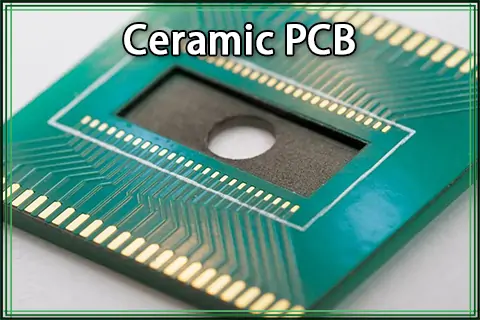
Ceramic PCB (ceramic circuit board) is a kind of circuit board that uses ceramic materials as its substrate. Unlike ordinary PCBs that use glass fiber materials, ceramic PCB substrates (ceramic PCB
base) are typically made of ceramic materials with excellent thermal
conductivity, such as aluminum oxide or aluminum nitride PCB materials.
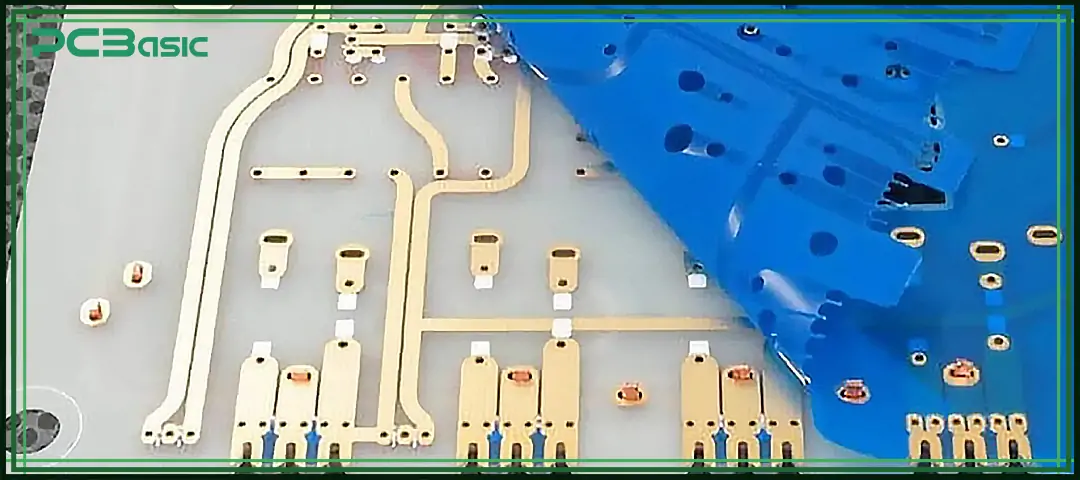
In a common ceramic circuit board, it is
necessary to fix the copper lines on the surface of the ceramic PCB substrate.
To ensure a strong bond between the copper layer and the ceramic, some
specialized production processes are usually carried
out, such as:
•
Direct Bonded Copper(DBC)
•
Active Metal Brazing(AMB)
•Direct
Plated Copper(DPC)
•Thin-film
metallization
•Thick-film
printing
Through these processes, the copper layer can be stably attached to
the ceramic PCB substrate, hence forming a reliable ceramic circuit board.
Unlike traditional PCBs that use organic
materials, ceramic PCBs (ceramic circuit boards) have outstanding heat-conducting properties. The heat generated by electronic
components can be conducted and diffused more quickly on the ceramic circuit
board, thereby reducing local overheating and elevating the overall stability of the equipment.
Common materials for ceramic PCB
substrates include:
•
Aluminum oxide,Al₂O₃
•
PCB(aluminum nitride PCB)
•
Beryllium oxide(BeO)
•Silicon
carbide(SiC)
These materials vary in terms of
thermal conductivity, electrical performance and mechanical strength. Usually,
professional ceramic PCB manufacturers (ceramic PCB manufacturers) will assist
engineers in selecting the appropriate ceramic substrate PCB materials based on
the product's usage environment and performance requirements.
Due to their excellent heat dissipation
capabilities and reliability, ceramic PCBs (ceramic PCBs) have become a common
solution in many high-power and high-reliability electronic products.
Common Ceramic PCB Materials
When
designing ceramic PCBs, choosing the appropriate materials is of great
importance. Different ceramic PCB substrate materials vary in terms of thermal
conductivity, mechanical strength, and cost.
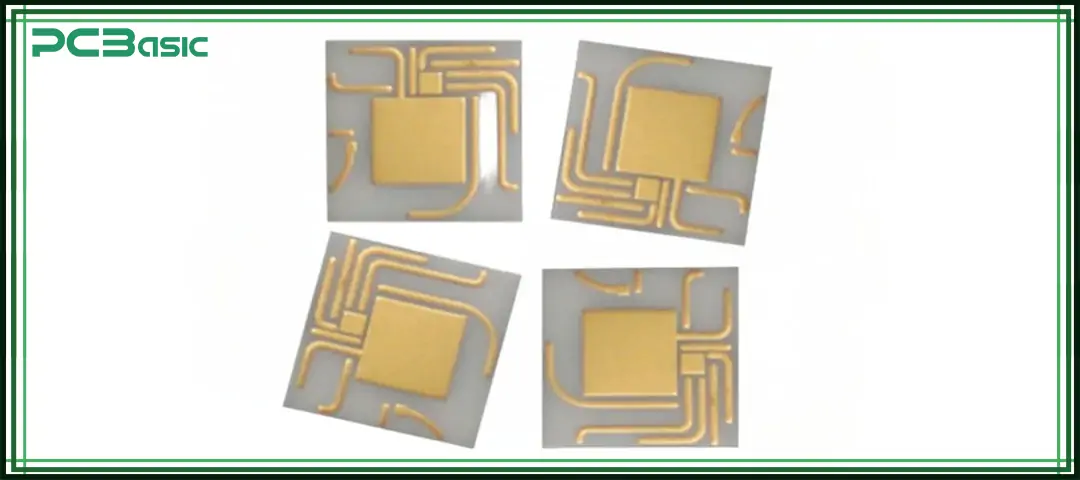
Aluminum Nitride PCB
In the production of high-performance
ceramic PCBs (ceramic PCBs), one commonly used material is aluminum nitride
PCB.
The thermal conductivity of aluminum
nitride PCB is extremely well, with the thermal conductivity generally
ranging from 170 W/mK to over 230 W/mK. Thus, when the circuit generates a large amount of heat during
operation, using an aluminum nitride PCB can disperse the heat more quickly.
Aluminum nitride PCB (aluminum nitride PCB) has the following
merits:
• Excellent
heat dissipation capacity
• Low thermal
expansion coefficient
• Good
electrical insulation performance
• Good
mechanical strength
Due to these characteristics, aluminum nitride PCB (aluminum
nitride PCB) is widely used in power modules, automotive electronics and
high-power LED devices.
Many high-power electronic products use
aluminum nitride PCBs to help control temperature and make
sure more stable operation of the devices. Hence, for products with high heat dissipation requirements, experienced
ceramic PCB manufacturers normally
recommend using aluminum nitride PCB (aluminum nitride PCB) materials.
Aluminum Oxide Ceramic PCB
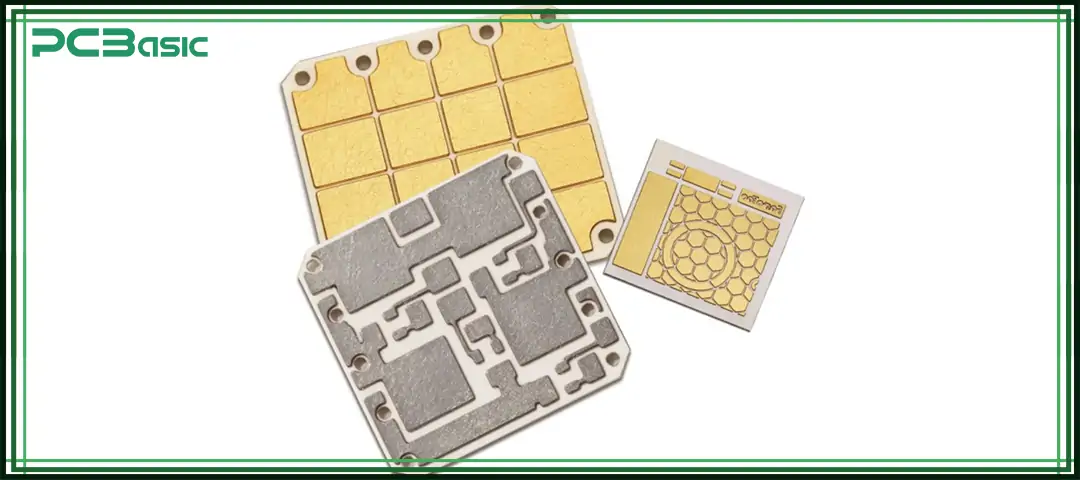
Another common material for ceramic PCB
substrates (ceramic PCB base) is aluminum oxide (Al₂O₃),
also known as alumina. Compared with aluminum nitride PCB, the
thermal conductivity of aluminum oxide is lower, commonly ranging from 15 to 35 W/mK. However, aluminum oxide has excellent
electrical insulation properties and is cheaper.
Therefore,
in many projects where cost control is critical, alumina is a typically used material when manufacturing
ceramic circuit boards.
Common
applications of alumina ceramic substrate PCBs (PCBs with ceramic substrates)
include:
• Consumer electronics
• Communication equipment
• Automotive sensors
• LED lighting modules
Due
to its mature production process and relatively low cost, many ceramic PCB
manufacturers will produce this type of alumina ceramic PCB in large
quantities.

Beryllium Oxide Ceramic PCB
Beryllium oxide is also a highly
performing ceramic PCB substrate material. It has exceedingly strong heat conductivity, and its thermal conductivity can
sometimes be over 300 W/mK.
Although this material performs well in certain ceramic circuit
board applications, during the production process, beryllium oxide material may
pose certain harm to human health; it is not widely used.
Hence, many ceramic PCB manufacturers usually
prefer to use aluminum oxide or aluminum nitride PCBs when producing ceramic
PCBs.
Properties of Common Ceramic
Substrate Material
Engineers choose ceramic PCBs over
regular circuit boards mainly because the ceramic PCB substrates possess
several clear performance merits.
High Thermal Conductivity
One of the most significant features of ceramic PCBs is their outstanding
heat dissipation capability. For example:
• Alumina
ceramic substrate PCB (ceramic substrate PCB): 15–35 W/mK
• Aluminum
nitride PCB: 170–230 W/mK
Compared with traditional FR-4 circuit boards, this type has much
better heat conductivity.
In ceramic circuit boards, heat can be
efficiently conducted away through the ceramic PCB substrate, leading
to lower and more stable operating
temperatures for electronic components.
Low Thermal Expansion
The thermal expansion coefficient of
ceramic PCB substrates is very close to that of many semiconductor materials.
As a result, when the temperature changes, the stress on the solder joints will
be smaller, and the circuit board will be more reliable.
Therefore, in many electronic devices
with high reliability requirements, ceramic PCBs are often used.
Excellent Electrical Insulation
Ceramic PCB also has excellent electrical
insulation properties. Ceramic circuit boards can stand high voltages without experiencing electrical breakdown.
This is particularly vital in power electronic devices and automotive electronic systems.
Chemical Stability
Ceramic PCB substrates have excellent
resistance to moisture, chemicals and environmental changes. Therefore,
equipment using ceramic PCBs will maintain more stable performance during
long-term operation.

Application of Ceramic PCB
Because of
their excellent performance, ceramic PCBs are now being increasingly used in
some high-demand electronic industries.
Power Modules
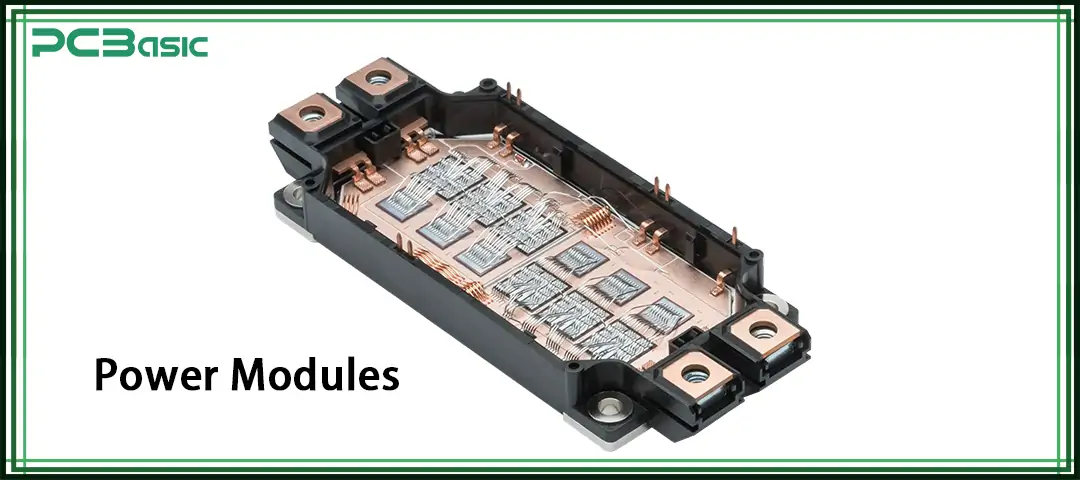
One of the most common applications of
ceramic PCBs is in power modules.
Power devices like IGBTs generate a lot of heat during operation
and require good heat dissipation capabilities. Using ceramic circuit boards
can help the heat dissipate more quickly and also maintain good electrical
insulation.
In these applications, aluminum nitride
PCB (aluminum nitride printed circuit board) is usually used as the material
for the ceramic PCB substrate.
Automotive Electronics
In electric vehicles, many systems utilize ceramic PCB, such as:
• Battery
management systems
• Power
inverters
• Motor
controllers
• Voltage
sensors
Automotive electronics typically operate in high-temperature and
vibration environments, hence requiring stable and durable ceramic PCB
substrates.

LED Lighting
High-power LEDs generate a lot of heat
during operation. Using ceramic circuit boards can help dissipate the heat more effectively. Nowadays, many LED products use aluminum
nitride PCBs as the ceramic PCB substrate.

Aerospace and Defense
Aerospace
equipment needs to operate in extremely complex and harsh environments. Ceramic
PCBs can offer stable and reliable performance, and are therefore frequently used in radar, satellites and
avionics.

Communication Electronics
In radio frequency and microwave
equipment, ceramic PCB substrates are also commonly used. This is because ceramic circuit boards can provide more
stable signal transmission and reduce signal loss.

The Advantage of Ceramic PCB
The engineer chose to use ceramic PCBs
(ceramic circuit boards) mainly because they perform better than ordinary
circuit boards in many aspects.
Superior Heat Dissipation
The thermal conductivity of ceramic PCB
substrates is better than that of FR-4 or metal substrates, allowing heat to
dissipate more quickly.
In this way, even when the electronic
devices are operating at high power levels, they can still keep a stable operation.
High Temperature Resistance
Ceramic circuit boards can run at higher temperatures than ordinary PCBs.
Therefore, ceramic PCBs are well-suited
for use in high-temperature environments such as industrial equipment.
Excellent Electrical Performance
Ceramic PCBs (ceramic printed circuit
boards) have stable electrical properties, which permit them to maintain remarkable
signal performance even in high-frequency circuits.
Long Service Life
Ceramic PCB substrates are not prone to
corrosion or aging, so ceramic PCBs (ceramic printed circuit boards) can
typically be used for a longer period of time.
Compact Design
Because ceramic PCBs have impressive heat dissipation capabilities, in many cases, they can reduce the
volume of the heat dissipation structure, making the design of electronic
devices more compact.
About PCBasic
Time is money in your projects – and PCBasic gets it. PCBasic is a PCB assembly company that delivers fast, flawless results every time. Our comprehensive PCB assembly services include expert engineering support at every step, ensuring top quality in every board. As a leading PCB assembly manufacturer, we provide a one-stop solution that streamlines your supply chain. Partner with our advanced PCB prototype factory for quick turnarounds and superior results you can trust.
Limitations and Challenges of Ceramic PCB
Although ceramic PCBs have many
advantages, there are also some points that need to be considered.
Fragility
Ceramic PCB substrates are more brittle
than ordinary glass fiber boards. If handled or processed carelessly, larger
ceramic circuit boards may occur
cracks.
Higher Manufacturing Cost
Producing ceramic PCBs requires some
special processes, such as sintering, laser drilling and metallization
treatment. Compared with
ordinary PCBs, these processes result in higher costs.
Size Limitations
Because ceramic PCB substrates are
relatively brittle, manufacturing and processing large-sized ceramic circuit
boards will be more difficult.
Complex Manufacturing Process
To produce ceramic PCBs stably,
appropriate equipment and experience are required. Therefore, experienced
ceramic PCB manufacturers are usually chosen for production.
Various Categories of Ceramic PCB
The common manufacturing processes for
ceramic PCB currently include the following types.
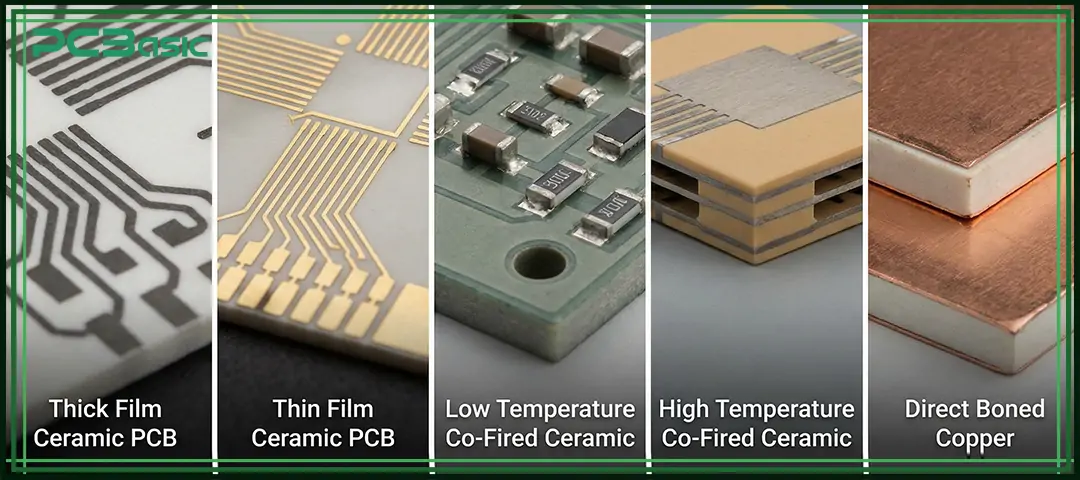
Thick Film Ceramic PCB
Thick-film ceramic PCB (ceramic PCB) is produced by using screen
printing to apply conductive paste onto the surface of the ceramic PCB
substrate, and the circuit is formed through high-temperature sintering.
This method has a relatively low cost, so
it is very common in the production of many ceramic circuit boards.
Thin Film Ceramic PCB
Thin-film ceramic circuit boards are
typically manufactured using vacuum deposition or sputtering techniques, which
form very thin and exact metal traces on the surface of ceramic
PCB substrates.
This process allows the creation of more precise circuits.
LTCC(Low Temperature Co-Fired Ceramic)
LTCC technology (ceramic PCB) can fuse multilayer ceramic PCBs
together at relatively low temperatures.
This technology is typically used in electronic communication
devices.
HTCC(High Temperature Co-Fired Ceramic)
HTCC technology (ceramic PCB) refers to sintering ceramic PCB
substrates at temperatures above 1500°C, obtaining highly strong ceramic
circuit boards.
Direct Bonded Copper
DBC ceramic PCB (ceramic PCB) is produced by a
high-temperature process, where the copper foil is directly bonded onto the
ceramic PCB substrate.
This type of ceramic circuit board is usually found
in power electronic equipment.
Conclusion
Ceramic PCB (ceramic circuit board) is a kind of circuit board used in high-power and high-reliability
electronic devices. After using ceramic PCB substrates, the circuit board can
better dissipate heat, maintain good electrical insulation, and reach
a longer service life.
Common materials include aluminum nitride PCB (aluminum nitride
PCB). Ceramic circuit boards made from these materials usually perform more
stably in high-temperature or high-power environments compared with traditional
PCBs.
Although the production process of ceramic PCBs is more complex
than that of ordinary PCBs, these advantages are highly valuable in many
industries, such as automotive electronics, aerospace, and high-power LED
lighting.
If you collaborate with experienced ceramic PCB manufacturers, it
will be much easier to select the appropriate ceramic substrate PCB materials
and manufacturing processes, hence enabling the project to be completed smoothly.
FAQs
What is a ceramic PCB used for?
Ceramic PCB (ceramic printed circuit board) is
commonly used in applications such as power electronic equipment, automotive
electronics, LED lighting, radio frequency communication devices, and aerospace
electronics.
Is ceramic PCB better than FR-4?
In high-power or high-temperature environments,
ceramic circuit boards are usually more suitable than FR-4 as they offer better
heat dissipation and more stable electrical insulation performance.
What is the best material for a ceramic PCB?
The most common materials used for ceramic PCB
substrates are alumina and aluminum nitride PCBs.
Why are ceramic PCBs expensive?
Ceramic PCB requires specific manufacturing processes and high-performance materials,
which will also increase the cost of
production.
Can ceramic PCBs be multilayer?
Yes, using LTCC or HTCC technologies enables the
design of multilayer ceramic PCBs (ceramic PCBs).