Table
of Contents
1. What Does IATF 16949 Mean for PCB Assembly?
2. How IATF 16949 Requirements Translate into Automotive PCB
Assembly
3. Automotive Core Tools in PCB Assembly
4. Traceability and Quality Records in
Automotive PCBA Manufacturing
5. How to Evaluate an IATF 16949 PCB Assembly
Manufacturer
6. Conclusion
7. FAQs
An automotive OEM rejects a lot of control
boards based on documentation, not defects. One missing traceability document
makes an otherwise simple audit stop a production line cold. Examples such as
this one help explain the need for IATF 16949 PCB assembly to be in a separate
class, as distinct from electronics manufacturing in general.
Automotive electronics manufacturing comes with
repercussions that consumer electronics manufacturing does not have to deal
with, as an issue in a sensor board or engine control unit can mean a
difference in safety rather than simply customer service. IATF 16949 PCB assembly is performed under a
quality management system tailored specifically to the needs of automotive
manufacturing.
Automotive recalls related to electronics have
increased constantly. There are more recalls due to production process issues
rather than in the circuit design area. This process is now practiced in a much
wider chain, so even a small PCBA may be subject to IATF 16949-related customer
and supplier requirements.
This article will cover the IATF 16949 meaning
from the perspective of its application in a PCB assembly line, the ways of its
implementation in manufacturing process decisions, key tools used by automotive
suppliers, and the criteria you should take into consideration when choosing an
IATF 16949-capable manufacturer.
What Does
IATF 16949 Mean for PCB Assembly?
IATF 16949 is a quality management system
standard aligned with ISO 9001:2015, but designed for use in the automotive
industry. In the case of a printed circuit board assembly process, that
difference is significant.
IATF 16949 and the Automotive Quality Management System
The IATF 16949 quality management system
requires that a manufacturer demonstrate control over each stage of
manufacturing, and not just the finished product. The supplier management,
process validation and corrective actions documentation must be retained in
accordance with applicable requirements so that an auditor can review it when
needed.
The framework applied for automotive printed
circuit boards manufacturing makes the quality part of each step of
manufacturing from the inspection of components to the shipment of the finished
product. A supplier running on this scheme would regard a defect as a reason to
analyze the process, not just the unit.
Why
Certification Does Not Automatically Mean PCBA Capability
The certificate indicates that a quality
management system is in place and has passed the audit. However, it doesn’t
indicate whether or not the manufacturer has mastered fine-pitch placement, mixed technology
assembly, or the particular process that controls the specific design of a
board.
Some automotive electronics manufacturers are
certified under IATF 16949 for basic wire harness or mechanical assembly, with
little knowledge about complex PCB assembly. It is equally important to understand
what is written in the certificate scope, and not only to look at the logo. The
fact that the two suppliers have the same certificate does not mean anything.
How IATF 16949 Requirements Translate into
Automotive PCB Assembly
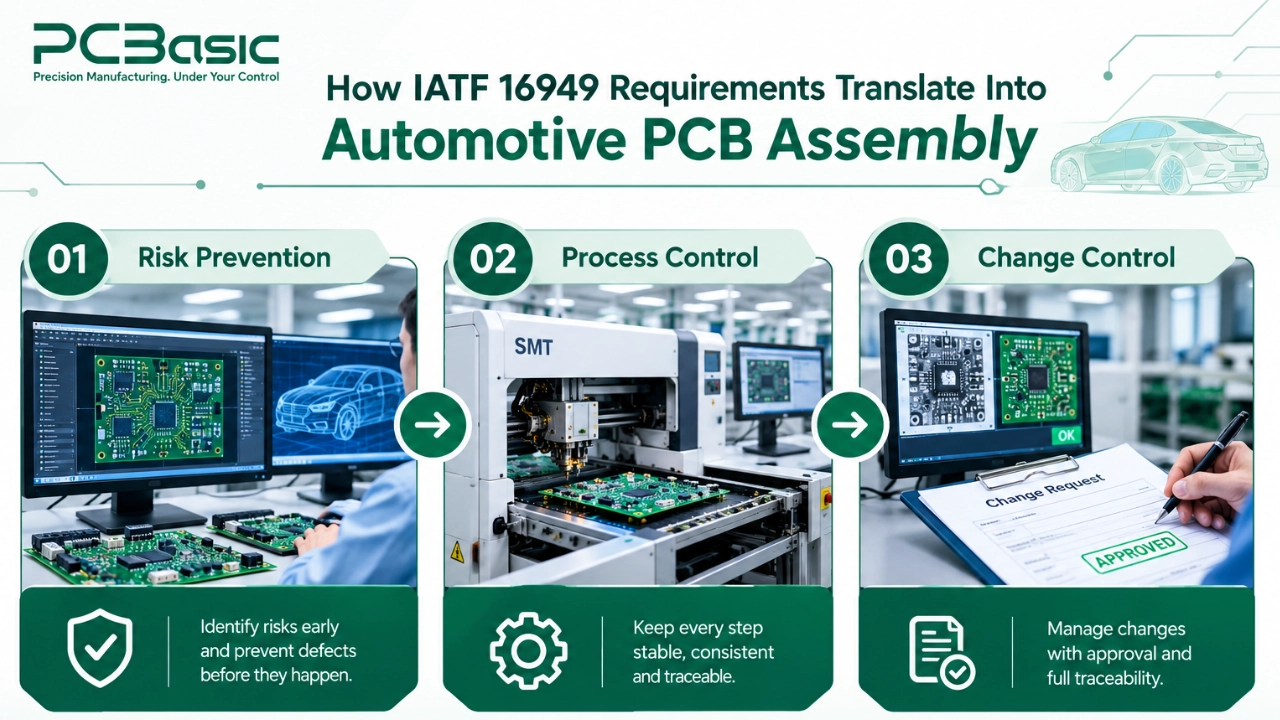
Automotive PCB assembly translates broad quality
requirements into specific, everyday production decisions rather than abstract
policy statements.
Risk
Prevention Before Production
The IATF 16949 requirements demand risk analysis
from the onset, even before a board makes its way into the assembly process.
Risk assessment is done for the design and process to determine any risk
associated with the fine pitch component, thermal pad, or connector to have a
control for the particular risk.
The early work identifies issues when they can
be easily corrected, long before they become a problem on the customer's
vehicle. The cost of reworking a design assumption after tooling is much higher
than identifying it in writing. An experienced supplier with this process will
be able to see a marginal footprint or underrated connector during the early
design conversations long before the customer's engineering team does.
Process
Control During PCB Assembly
Meeting IATF 16949 requirements during automotive
PCB assembly means monitoring key process parameters, not just inspecting
finished boards. A manufacturer typically selects inspection and test methods
based on the specific risks a board design presents.
Solder paste inspection, automated optical
inspection, X-Ray inspection, in circuit test, and PCBA functional
testing are some of the common methods that are used by automotive
suppliers but are not specified in IATF 16949. The requirement of IATF 16949 is
that any method chosen should indeed control the risk that it aims to.
The difference is relevant because two different
automotive boards with two different failure mechanisms may need two different
approaches to inspection, even within the same certification. For instance, a high-density
PCB having BGA or QFN solder joints hidden beneath components may need X-ray
inspection.
Change
Control and Corrective Action
Once a process has been qualified, according to
IATF 16949, relevant modifications must be controlled through a documented
change process, including substitutions of components, suppliers of solder
paste, or reflow profiles. The corrective action plan for a nonconformity must
deal with the underlying cause of the problem, not just the trigger for the
problem.
This practice ensures that there are no
undocumented changes made that will eventually lead to a failure in the field.

Automotive Core Tools in PCB
Assembly
Automotive PCB assembly relies on a specific set
of quality tools that IATF 16949 references and automotive OEMs expect
suppliers to use fluently.
APQP,
PFMEA, and Control Plan
The Advanced Product Quality Planning process
describes the way a newly-designed board is to be transferred from the design
phase to the production launch, whereas the Process Failure Mode and Effects
Analysis process defines potential problems associated with the assembly
operation and the degree of their significance.
The control plan which is developed based on the
results of such an analysis establishes the sequence of inspections and tests
associated with the risks found during the risk assessment process.
SPC
and MSA
Statistical process control involves monitoring
critical parameters such as solder paste amount or reflow temperature in order
to identify any shift that would lead to defects. If the process remains in
statistical control, unexpected process shifts are easier to detect, although
statistical control alone does not guarantee zero defects.
Measurement systems analysis evaluates whether
the measurement system will yield sufficiently reliable results since,
otherwise, even a good process will yield incorrect results if the gauge used
for measuring is inaccurate. Without performing MSA, one could chase a process
problem that is really a measurement problem.
PPAP
and Production Approval
The Production Part Approval Process
necessitates the proof, through documentation, that the proposed new or revised
automotive PCB assembly process will be able to produce products that meet all
specifications consistently prior to production ramp-up.
By skipping this procedure, the designer’s
bench-proven design becomes a production line of rejected parts. Moreover, the
PPAP documentation enables the OEM to have a benchmark for comparison when
there is any quality deviation in the future because it documents exactly what
“right” looks like at the beginning of the program.
Traceability and Quality Records in
Automotive PCBA Manufacturing
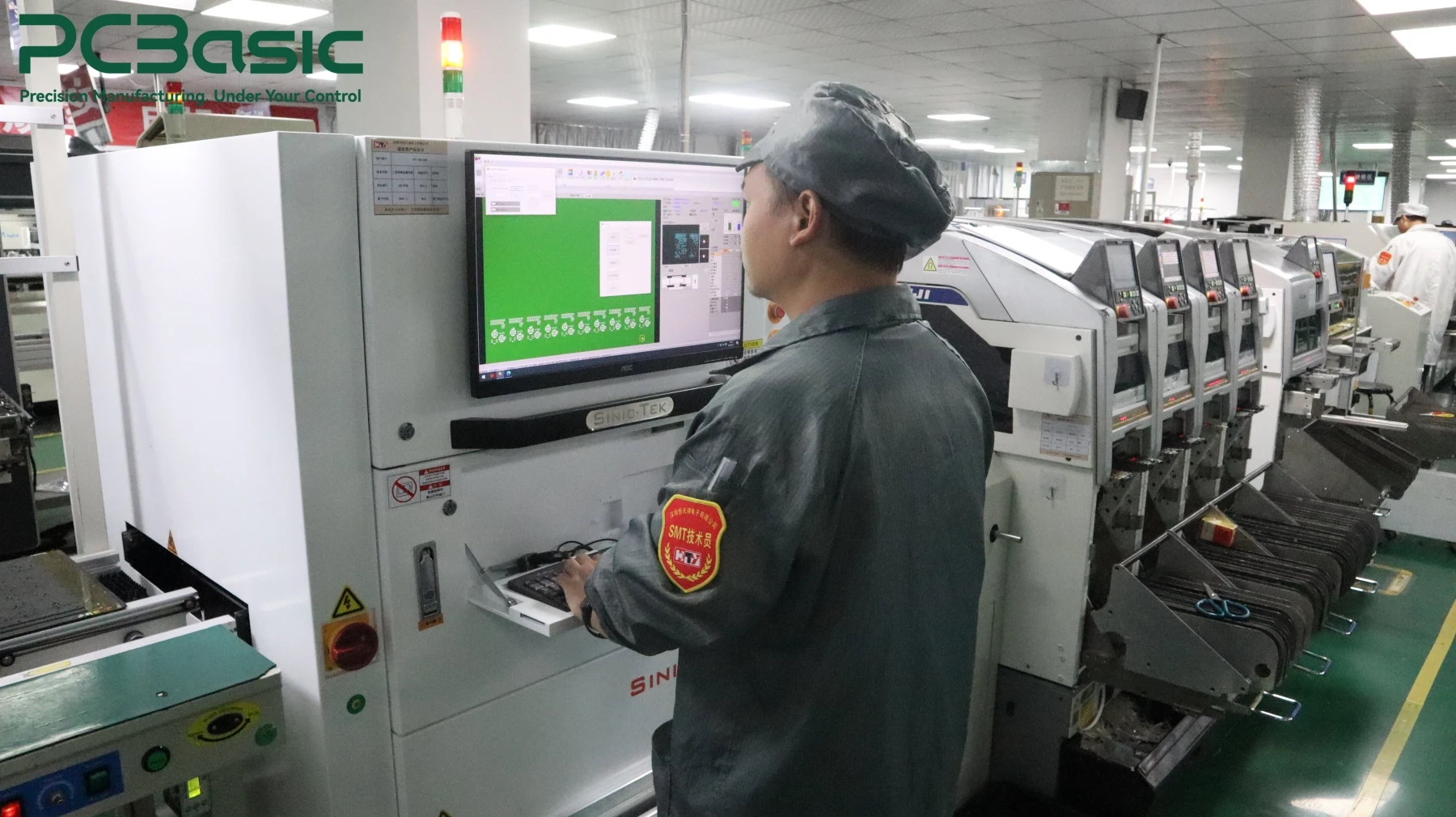
Automotive PCBA manufacturing depends on
traceability that most consumer electronics production never needs to build.
From
Component Lot to Finished PCBA
Automotive PCB traceability can connect a
completed board with its relevant lot numbers and components, along with
applicable equipment, process, operator, and testing records, and the outcomes
of the testing process. The retention of this information may be long-term,
often for years, depending on customer, regulatory, and product requirements.
Why
Traceability Matters When a Defect Is Found
Automotive PCB traceability lets manufacturers
identify the production lot involved in the defect at hand, which can help
avoid an unnecessarily broad recall. PCBasic makes this record-keeping practice
part of every automotive PCB assembly job, so that a customer can receive
precise information regarding a field issue.
This precision protects both the OEM’s
reputation and its relationship with the supplier since a controlled response
demonstrates that the manufacturer has its processes under control. The
inability of the supplier to provide an exact list of lots and only give a
vague time frame turns this issue into a more complicated one.
How
to Evaluate an IATF 16949 PCB Assembly Manufacturer
Choosing an IATF 16949 PCB assembly manufacturer
takes more scrutiny than checking a certification database.
Verify
the Certification Scope
The IATF 16949 certification will have a clearly
defined scope in terms of processes and products. In other words, an IATF 16949
certificate issued to a PCB
assembly manufacturing facility doing simple through-hole assemblies will
not qualify that firm for HD fine pitch automotive boards, even under the same
certificate number.
Asking to view the actual scope statement, and
not just the certificate cover page, prevents the costly experience mid-way
through a project. A short discussion about previous projects with a similar
degree of complexity will yield much more information than a certificate ever
would.
Requesting a sample control plan or PFMEA from a
past automotive program, with customer names redacted, gives a much clearer
picture than any marketing brochure could.

Look
Beyond the Certificate
An automotive electronics manufacturer who is
worth the long-term investment will be able to lead you through a real PFMEA,
provide you with SPC data from an equivalent board and explain their corrective
action processes to you, instead of just speaking about the latter in abstract
terms.
The IATF 16949 certificate should be viewed as a
base of automotive manufacturing expertise, not as a replacement for
verification of their technical capabilities. An automotive EMS company, which
has both certification and process data, is the one who is worth the
relationship.
And a small pilot production run prior to the
main production will also uncover problems that would otherwise remain
unnoticed.
Conclusion
The IATF 16949 PCB assembly is more about
whether the risk management, process control, and traceability are really
implemented in production processes than the certificate on the wall. The automotive
PCB assembly manufacturer that implements these requirements as a discipline,
and not just for audit purposes, is one that helps reduce quality risks that
could contribute to a vehicle recall.
PCBasic develops automotive PCB assembly applications using this very approach from
APQP to PPAP to total lot traceability, thus that helps reduce quality risks
that could contribute to a vehicle recall. If your next automotive electronics
application requires a manufacturing partner that documents everything, feel
free to reach out.
FAQs
Q1: What is IATF 16949 PCB assembly?
It is a printed circuit board assembly carried
out under a quality management system created expressly for the automotive
industry, which includes risk prevention, process control, and traceability
that go beyond general ISO 9001 standards.
Q2: Does IATF 16949 require specific tests like AOI or X-ray
inspection?
No. The IATF 16949 mandates that the supplier
needs to manage the risks involved by the board design. The specific types of
inspection and tests that will be done to manage these risks will be decided
during process planning and manufacturing.
Q3: Why does automotive PCB assembly need more traceability than
consumer electronics?
A vehicle's expected service life often runs a
decade or more, so a manufacturer needs to trace any finished board back to its
component lots and production data years after it shipped, not just during a
warranty window.
Q4: Is an IATF 16949 certificate enough to guarantee PCBA quality?
A certificate confirms a quality management
system passed an audit, but it does not guarantee capability for a specific
board's complexity. Checking the certification scope and asking for real
process data matters just as much.
Q5: What should an OEM ask an automotive PCB assembly manufacturer
before awarding a program?
Ask about their APQP and PFMEA process for a
comparable board, their PPAP documentation, and how their traceability system
handles a field defect investigation.