
Global high-mix volume high-speed PCBA manufacturer
9:00 -18:00, Mon. - Fri. (GMT+8)
9:00 -12:00, Sat. (GMT+8)
(Except Chinese public holidays)





HomePage > Blog > Knowledge Base > Electronic Component Sourcing for PCBA: How to Choose the Model and Verify the Parts
Send the same BOM to two assemblers and the quotes can differ by a wide margin in both price and delivery date. The assembly charge alone may not explain the gap. Part of the difference sits in how the components are bought: which sourcing model applies, which channels the parts come through, and how much of the buying risk the quote quietly leaves with you. Electronic component sourcing affects cost, lead time, and part authenticity before the first board reaches the SMT line, and it is one part of a PCBA order the buyer can still influence at the quote stage.
Three decisions carry most of that control. The first is the model: who buys the parts. The second is the channel discipline behind the purchase: authorized sources and no substitution without your confirmation. The third is the BOM itself, because an incomplete BOM can lead to questions, re-quotes, and delays. The sections below work through the model choice first, then the failure points, then the checks to run before the assembler buys a single part.
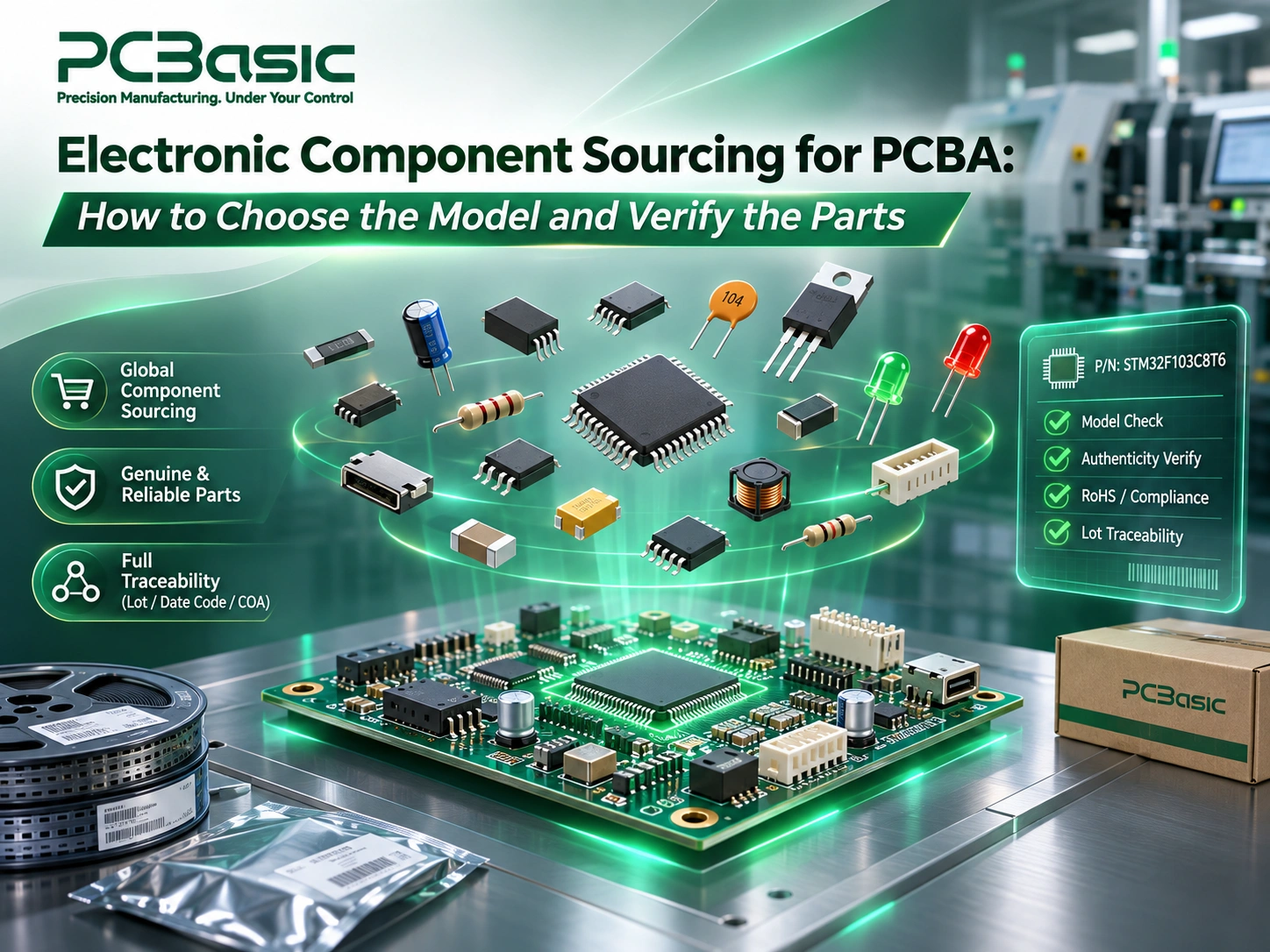
PCBasic offers four electronic component sourcing models, and the right choice depends on where your parts, your pricing, and your risk already sit. Under turnkey procurement, the assembler purchases every component on the BOM. A full turnkey PCBA order suits buyers who hold no component stock and want one accountable party for parts and assembly; the parts come from original manufacturers or authorized distributors, and every component is confirmed with you before purchase. Under partial turnkey, you supply the parts you already hold — an allocated microcontroller, a connector bought under your own pricing — and the assembler purchases the remainder.
Under kitted or consigned sourcing, you supply all components and the assembler handles assembly; the consigned PCB assembly route keeps your negotiated pricing intact, and it typically leaves you responsible for shortages, shipping, and the condition of the parts you supply, subject to the contract. Under customer-designated sourcing, the assembler buys on your behalf from suppliers you specify. That model fits projects that must follow an approved-vendor list, with one boundary stated on the service page: quality stability cannot be guaranteed for components that come from unauthorized channels.
Choose the model per board, not per company. A mature product with stable demand and your own distributor agreements may use consigned sourcing for years, while a new board with forty untested line items may be better suited to a turnkey PCBA order until its BOM settles. What matters is that the model is named in the quotation, because the model helps determine who is responsible for resolving a shortage when one arises. The turnkey PCB assembly services page shows how the full model combines fabrication, sourcing, and assembly under one order.
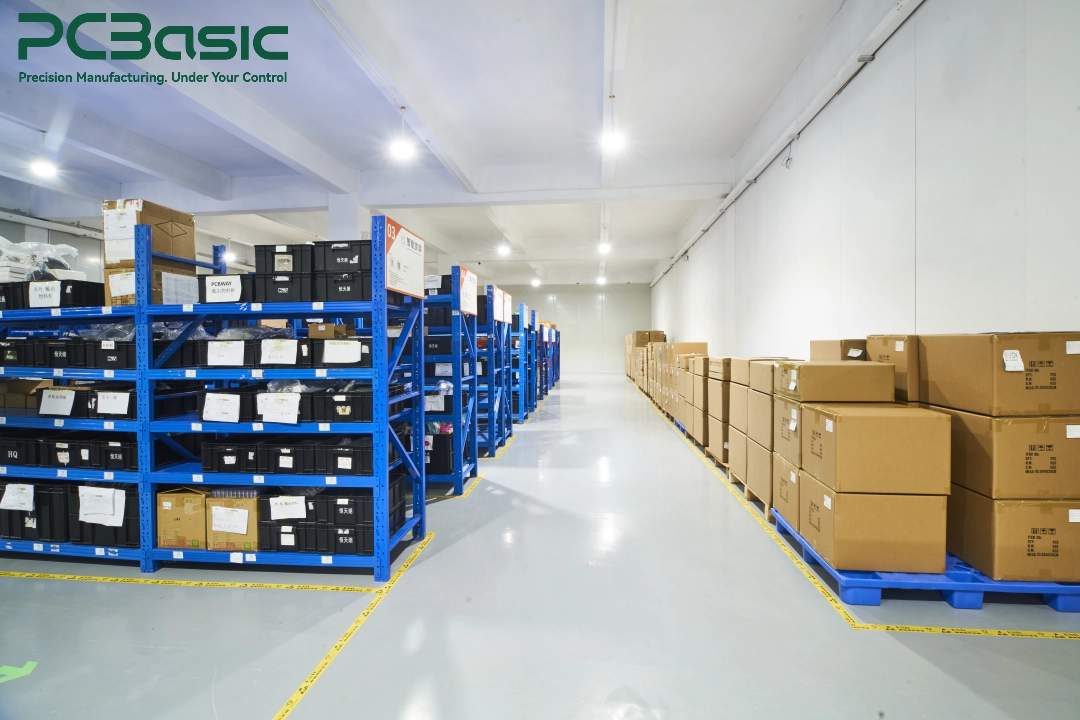
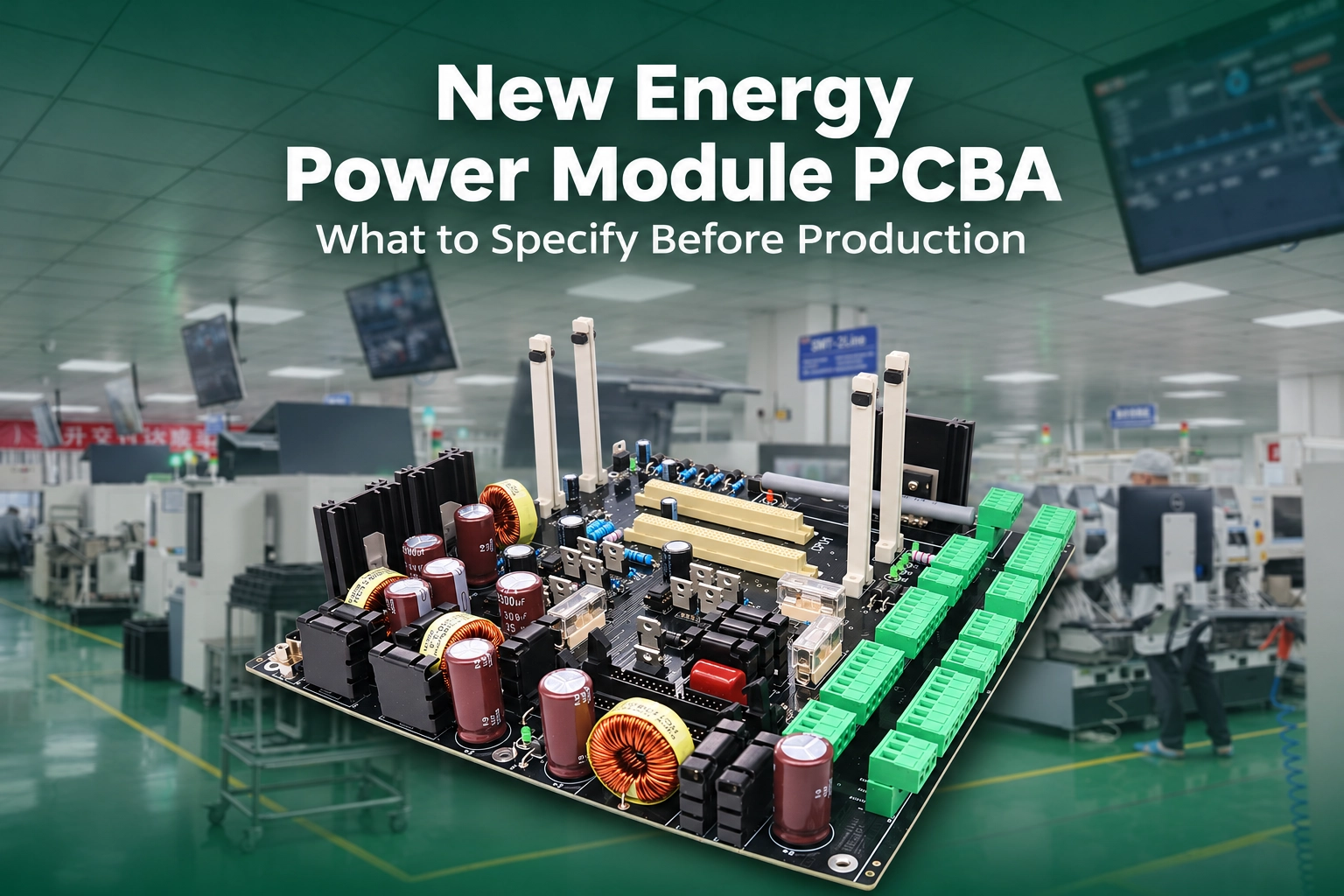
The first failure is availability drift. A part that was listed as in stock at the quote stage can be allocated to other orders by the time your order is released, and an electronic component shortage may go unnoticed at the quote stage — it can become apparent when the purchase order is placed. Long-lead parts can set the real schedule: in new-energy PCBA projects, special parts such as SiC and GaN power devices and high-voltage capacitors can have limited procurement channels and long lead times, so two line items can decide the delivery date of a two-hundred-line BOM.
The second failure is buying on price alone. Parts sourced through open-market channels can be remarked, pulled from old boards, or stored beyond supplier-specified shelf-life limits or exposed beyond their allowable floor life, and none of that is visible on a quotation line. The problem may surface later — at functional test, or in the field — where the cost of addressing it can be higher. This is why channel discipline, not unit price, is the first thing to verify in PCB component sourcing: a cheap part that stops a production run can become the most expensive part on the BOM.
The third failure is the silent substitution. When a specified part runs short, an assembler under schedule pressure may fit a “compatible” alternative — same footprint, different tolerance, dielectric, or timing grade. The board that arrives is then not the board you approved, and the difference may only appear under certain load or temperature conditions. Substitution is sometimes the right answer to a shortage; it requires customer approval, which can be given in advance.
The fourth failure is condition, and it is the easiest to miss because the part number is correct. Components carry date codes, some have moisture-sensitivity limits, and poor storage can degrade solderability. A reel that sat open in a warehouse, or consigned stock that has been stored improperly on your own shelf for two years, can reach the line in a state that increases the risk of soldering defects. The check belongs at incoming inspection: verify packaging integrity and applicable date-code requirements, and check the moisture barrier bag and humidity indicator card where applicable. If drying is required, follow the applicable component handling instructions before reflow.
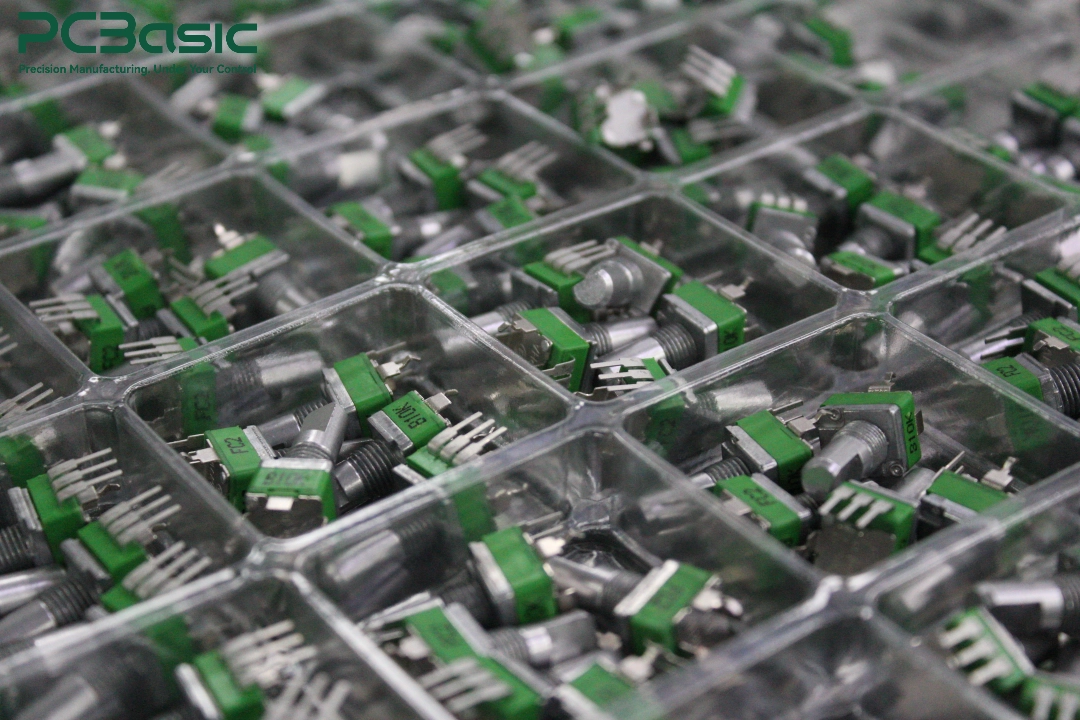
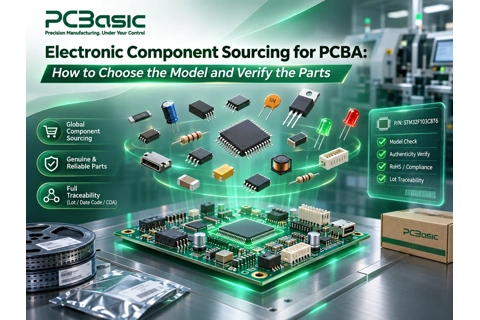
Treat electronic component procurement as part of the assembly contract, and verify it with the same care as the assembly process itself. Start with channels. At PCBasic, standard procurement uses original manufacturers, authorized distributors, and established local suppliers, supported by a central warehouse that holds commonly used components in stock; that stock lets R&D and small- to medium-batch customers use available common components without purchasing full reels for each build. Ask any assembler which type of supplier will provide each critical part on your BOM, and treat an unnamed channel as an unresolved risk.
Second, fix the substitution rule in writing before purchase. PCBasic's stated rule is that no component is replaced or substituted without the customer's confirmation, and approvals belong in a change record with an owner and an effective date. Third, check how the BOM is verified before purchasing and what happens when the parts arrive: BOM validation, incoming quality control (IQC), and MES-supported traceability from material intake to shipment. Ask which incoming checks and traceability records will cover your order before production starts.
Finally, allow for realistic procurement lead times. Component procurement at PCBasic typically takes about five to seven working days, depending on the parts and sourcing channels, and can take longer when customs clearance is slow or a special part has a long supplier lead time. A quote that assumes every part is on a shelf is a quote that will move. The component sourcing service page lists the four models and the quotation inputs; the checklist below turns the checks in this section into questions you can send with the BOM.
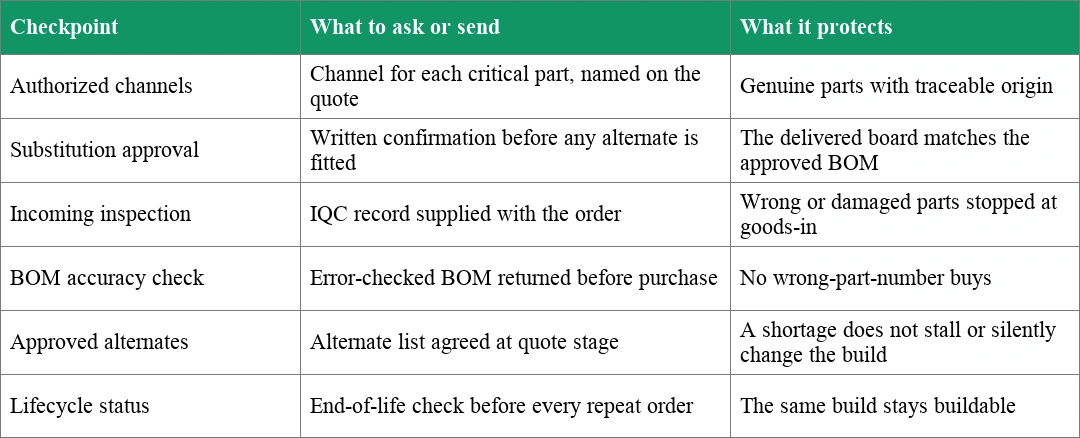
A sourcing quote is only as firm as the BOM behind it. PCBasic asks for four types of information in a sourcing BOM: the component manufacturer and part number, the package type and specification, the quantity per board and the corresponding reference designators, and applicable material requirements or technical parameters. Each field removes a guess. The manufacturer part number pins the exact part instead of a description that fits five variants. The package field helps verify that the specified part comes in the required package. Quantity and designators let the buyer estimate component cost per board and spot a mismatch between the BOM and the placement files before money is spent.
Two additions decide whether the quote survives contact with the market. The first is allowing for attrition: purchase or consignment quantities should include extra components to cover losses during handling and placement, or the run may stop short of the target quantity. The second is an approved-alternates column, agreed at the quote stage while there is time to check electrical and physical compatibility. An alternate approved on paper in advance is a sourcing tool; the same part proposed mid-shortage is a schedule risk. PCBasic supports one-click BOM import and fast quotation. Submit complete fields so the quotation can be based on the specified parts and quantities.
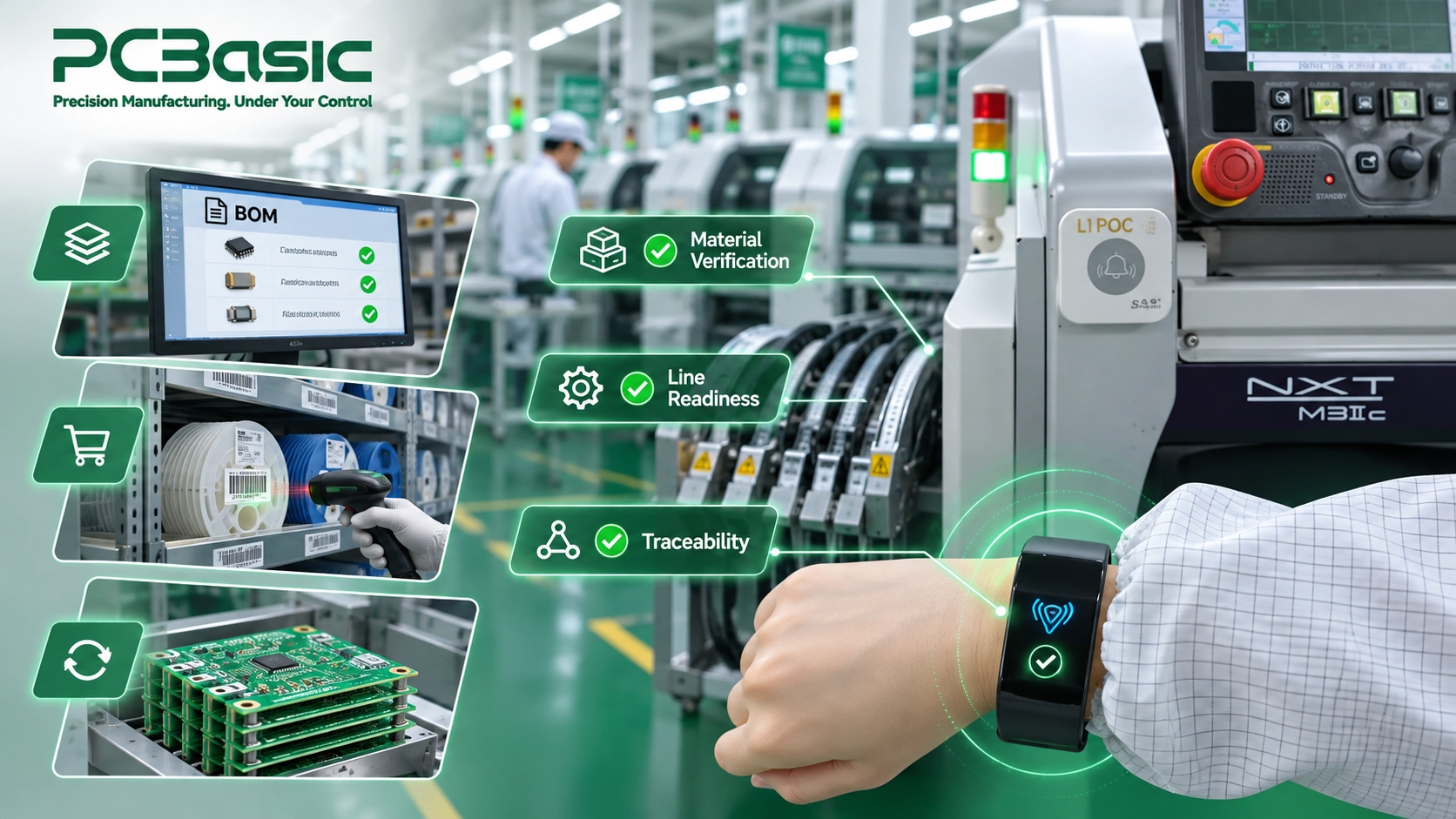
A tested prototype can show that a board works under the tested conditions; it does not prove the board can be built again. Between the first run and the repeat order, manufacturers may issue end-of-life notices, distributors may run down stock, and the allocation that favored your small order may disappear. On a repeat order, electronic component procurement starts under different market conditions than it did for the first build, and the BOM that was straightforward to quote in spring can present sourcing problems by autumn.
The controls are routine rather than dramatic. Ask for a lifecycle and availability check on the BOM before the repeat purchase, so you can plan and budget for an electronic component shortage or an end-of-life notice before placing the order. Keep the approved-alternates list current, with each substitution recorded — what changed, who approved it, and when it takes effect — so the board's configuration history is a document, not a memory. The warehouse stock of common components helps cover routine demand; special-order and single-sourced parts are where the lifecycle check is most valuable. Run the check when the repeat order is forecast, not when the purchase order is due: an end-of-life part with a last-time-buy window requires a decision before the supplier’s deadline, and missing that deadline can force a board revision. The reorder request is simple: the current BOM revision, the quantity, and a request for the exception list — changed parts and at-risk parts — before you approve the purchase.
The price and delivery gap between two assembly quotes can reflect differences in component sourcing. The model helps allocate risk, the channels affect confidence that the parts are what the BOM specifies, and the BOM's completeness helps reduce the risk of delays after ordering. Send PCBasic your complete BOM — manufacturer part numbers, designators, package details, per-board quantities, and the alternates you have approved — together with your Gerber files, pick-and-place files, assembly requirements, and target quantity, and ask for the sourcing model and procurement schedule to be stated in the quotation.
Q1: Is turnkey sourcing always more expensive than consigning the parts myself?
A1: Not necessarily. An assembler's distributor pricing and stocked common components can offset the sourcing margin, while consigning keeps your own pricing but typically leaves you responsible for shortages, freight, and the condition of the parts you supply. Compare the two on total landed cost and on who carries the shortage risk, not on the assembly charge alone.
Q2: Can PCBasic buy components from a supplier I designate?
A2: Yes. Customer-designated sourcing is one of the four models: PCBasic purchases on your behalf from the suppliers you specify. The limitation concerns quality — PCBasic states that it cannot guarantee consistent quality for components that come from unauthorized channels.
Q3: How long does component procurement take before assembly can start?
A3: At PCBasic, the typical procurement estimate is about five to seven working days, depending on the parts on the BOM. It can take longer when customs clearance is slow or when a special component has a long supplier lead time. Note that PCBasic does not sell components separately; procurement is part of a PCB manufacturing and assembly project.

Assembly Enquiry
Instant Quote
Phone contact

+86-755-27218592
In addition, we've prepared a Help Center. We recommend checking it before reaching out, as your question and its answer may already be clearly explained there.
Wechat Support

In addition, we've prepared a Help Center. We recommend checking it before reaching out, as your question and its answer may already be clearly explained there.
WhatsApp Support

In addition, we've prepared a Help Center. We recommend checking it before reaching out, as your question and its answer may already be clearly explained there.
