
Global high-mix volume high-speed PCBA manufacturer
9:00 -18:00, Mon. - Fri. (GMT+8)
9:00 -12:00, Sat. (GMT+8)
(Except Chinese public holidays)





HomePage > Blog > Knowledge Base > Peelable Solder Mask in PCB Manufacturing
In the modern PCB manufacturing and assembly process, effectively protecting the crucial areas on the circuit board at different stages is an important factor to ensure product quality and production yield. With the continuous development of electronic products towards high integration, miniaturization and high reliability, complex situations such as mixed processes, fine-pitch pads and multiple surface finishes coexisting have begun to emerge in large numbers in PCB design. This also puts forward higher requirements for production methods in the manufacturing process. Against this backdrop, the role of the solder mask is no longer merely a simple insulating protection, but has gradually expanded to become an important component of process control and quality assurance.
Among the many solder mask solutions, peelable solder mask, as a temporary protection method, is widely used in PCB manufacturing and PCB assembly due to its flexibility and reliability. This article will introduce the practical application of peelable solder mask in PCB manufacturing, systematically explaining its basic concept, typical application scenarios, process flow, and advantages over traditional masking methods. Combined with design and production experience, it will summarize the key points that need to be focused on in practical application.
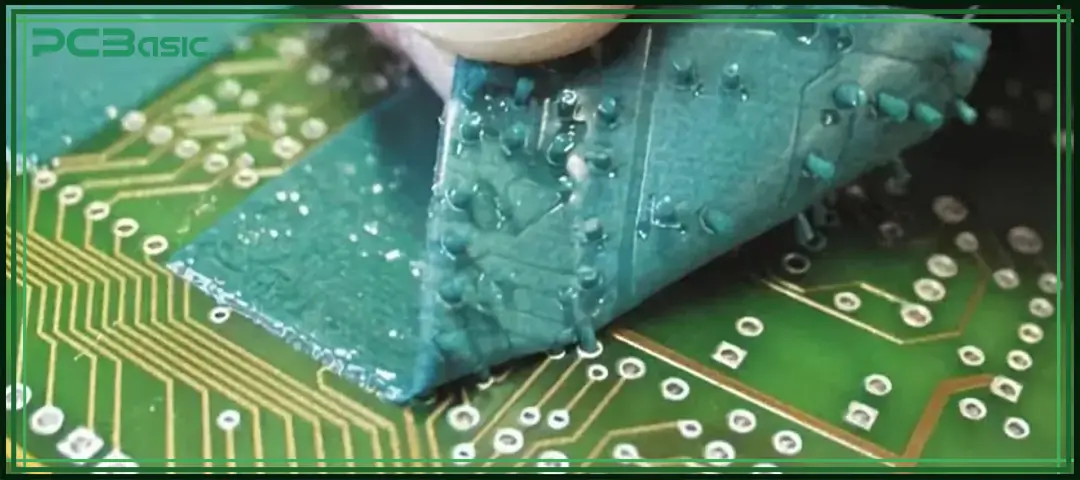
A peelable solder mask is a temporary solder mask coating that only covers the designated areas of a PCB that need protection. During the PCB manufacturing and PCB assembly processes, its function is to prevent solder from flowing into areas that do not need to be soldered, while also avoiding contamination or damage to these areas during chemical processes or high-temperature operations.
In terms of classification, the peelable solder mask is also a type of solder mask, but it is completely different from the traditional solder mask in terms of application and service life. The traditional solder mask layer is permanent and usually green. Other colors can also be selected as needed. It remains on the circuit board throughout its entire service life. However, a peelable solder mask works only in the production process and is removed as a whole after soldering or surface finishing is completed.
In practical applications, peelable solder masks are also often referred to as:
• Removable solder masks
• Strippable solder masks
• Blue masks
During the production process, a peelable solder mask is usually applied by screen printing and then cured to ensure it has sufficient strength and heat resistance, capable of withstanding the high-temperature environment brought by wave soldering, reflow soldering and lead-free assembly, while also ensuring clean removal and no residue in the subsequent process.

The more complex the PCB structure is, the higher the demand for protecting only specific areas rather than the entire circuit board during the production process. This is also the main reason why peelable solder mask is widely used in PCB manufacturing and PCBA assembly.
During wave soldering and reflow soldering, the solder is in a molten state and can easily flow into areas that do not need to be soldered. Peelable solder masks form a temporary physical barrier during assembly, ensuring that critical areas remain clean and free of solder until the final assembly is completed.
During the PCB manufacturing process, surface finishing techniques such as ENIG, immersion silver, immersion tin, and HASL all involve chemical solutions. If not protected, some functional areas are easily affected in these processes. Peelable solder mask is often used to protect carbon ink contacts, hard gold fingers, bondable gold pads, and areas on the same PCB that require different surface finishes.
Compared with permanent solder masks, peelable solder masks can be applied and removed as needed, achieving local isolation without affecting the final structure and functionality of the circuit board, making it particularly practical in PCB projects with multiple surface finishes and complex processes.

A peelable solder mask offers great flexibility and is suitable for a wide range of PCB and PCBA applications, especially when selective protection of local areas is required.
Common applications include:
• Pads and holes reserved for manual soldering after SMT and THT
• Thermally sensitive components that cannot withstand full soldering cycles
• Mixed-technology boards combining SMT, THT, and hand assembly
• PCBs with multiple surface finishes on a single board
• Complex geometries where traditional masking tape is impractical
In the above-mentioned applications, the removable solder mask not only provides reliable process protection but also does not restrict subsequent assembly processes, achieving a balance between protective effect and production flexibility.

The application of a peelable solder mask is a stable and repeatable process that can be directly integrated into standard PCB manufacturing workflows without additional complexity.
In actual production, peelable solder mask is usually applied by screen printing. PCB manufacturers will separately produce a peelable solder mask layer based on the Gerber file to clearly identify which pads, holes or areas need protection.
After the screen printing is completed, the removable solder mask needs to be baked and cured. Appropriate curing conditions can ensure that it has sufficient adhesion during the soldering process, can withstand high temperatures, and does not affect subsequent peeling.
After the PCB assembly or surface finishing is completed, the peelable solder mask can be removed manually or with equipment. A well-designed peelable solder mask can usually be peeled off at one time from the reserved handle position without leaving residue or debris, saving time and reducing the risk of damage to the circuit board.
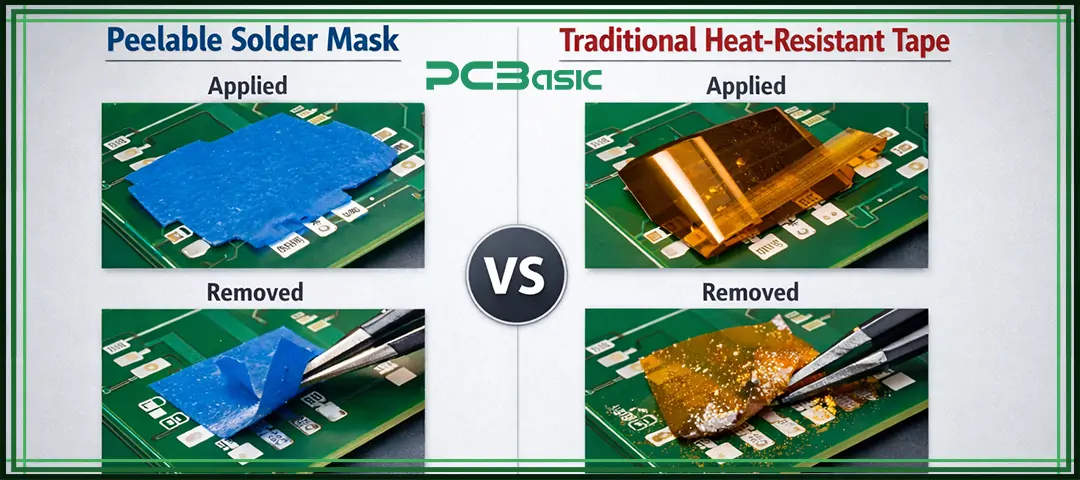
Before peelable solder masks were widely used, heat-resistant tapes like Kapton were a common temporary masking method. Although tape is still useful in some special projects, in actual production, it has obvious limitations.
The main differences between the two are reflected in the following aspects:
|
Item |
Heat-Resistant Tape |
Peelable Solder Mask |
|
Efficiency |
Manual application, low efficiency |
Screen printed, easy to automate |
|
Cost |
Higher labor costs |
Lower cost in batch production |
|
Precision |
Limited accuracy for complex shapes |
High accuracy for complex layouts |
|
Removal |
Leaves residue, needs cleaning |
Clean peel, no residue |
Therefore, in most mass production-level PCB projects, peelable solder masks have gradually replaced traditional heat-resistant tape and become a more stable and efficient masking solution.
Time is money in your projects – and PCBasic gets it. PCBasic is a PCB assembly company that delivers fast, flawless results every time. Our comprehensive PCB assembly services include expert engineering support at every step, ensuring top quality in every board. As a leading PCB assembly manufacturer, we provide a one-stop solution that streamlines your supply chain. Partner with our advanced PCB prototype factory for quick turnarounds and superior results you can trust.
The peelable solder mask uses special materials to meet the process requirements in actual PCB production.
It can withstand the high temperatures required for lead-free soldering and is not prone to warping or falling off during processing. The coating has sufficient thickness and strength to stably protect the areas that need to be covered. After the process is completed, the peelable solder mask can be directly peeled off. The process is clean, with no residual glue and no chips falling off.
Compared with the common permanent solder masks, peelable solder masks can maintain reliability during the production process without affecting subsequent processes, and are more suitable for temporary protection.
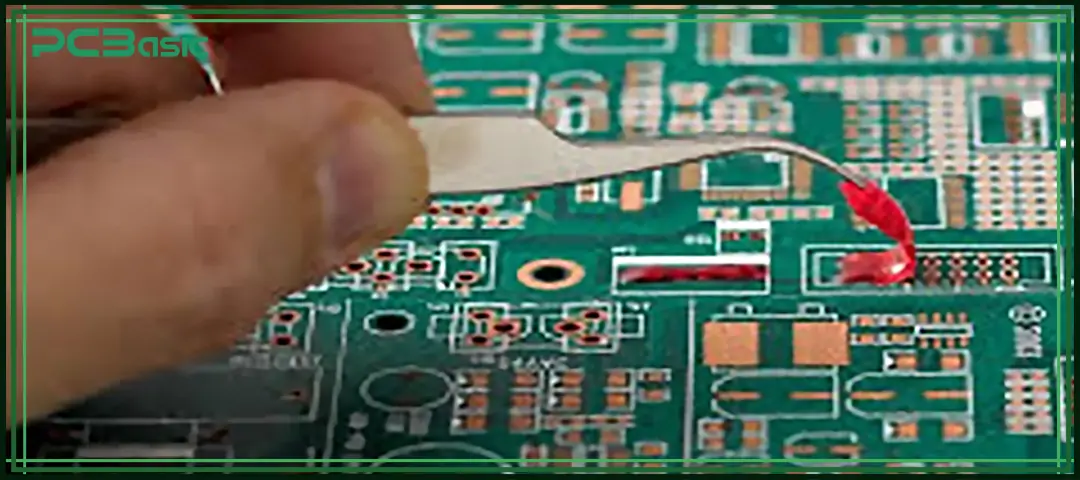
Peelable solder masks are particularly suitable for use in the following situations:
• Selective protection is required during soldering or finishing
• Boards involve secondary or manual assembly steps
• Multiple surface finishes coexist on the same PCB
• Production volumes justify automated masking
• Cleanliness and process consistency are critical
In these scenarios, peelable solder mask can provide a stable and reliable protection solution, which helps to improve production yield, reduce labor costs, and enhance overall manufacturing efficiency.

With the continuous development of PCB design and assembly processes, the demand for more advanced solder mask solutions is becoming increasingly evident. Among many solder mask techniques, peelable solder mask plays a crucial role in protecting critical areas during manufacturing without restricting the flexibility of subsequent assembly processes.
With its high-precision, automated and non-residue protection method, peelable solder mask has gradually become an ideal alternative to traditional heat-resistant tapes. When designed and applied properly, it can bring about significant improvements in product quality, production costs and manufacturing efficiency.
For modern PCB manufacturing and PCBA assembly, peelable solder mask is no longer a niche process but a mature and reliable process solution that can better support the increasingly complex design and performance requirements of current electronic products.
Assembly Enquiry
Instant Quote


Phone contact

+86-755-27218592
In addition, we've prepared a Help Center. We recommend checking it before reaching out, as your question and its answer may already be clearly explained there.
Wechat Support

In addition, we've prepared a Help Center. We recommend checking it before reaching out, as your question and its answer may already be clearly explained there.
WhatsApp Support

In addition, we've prepared a Help Center. We recommend checking it before reaching out, as your question and its answer may already be clearly explained there.
