In modern manufacturing, mechanical assembly is the key stage to truly turn individual components into finished products. Whether it is consumer electronics, aerospace structural parts, or highly integrated electromechanical systems, whether the final product is stable, durable and reliable all directly depend on the accuracy and execution quality of the mechanical assembly process.
Assembly is not merely putting parts together; it involves careful considerations of dimensional tolerances, structural strength, joining methods, and long-term operating environments. In many projects, mechanical assembly also needs to be combined with the electronic and electrical parts to form complete mechanical assemblies and electromechanical assemblies. Especially in fields such as automated equipment, robots, and control systems, this integration is even more common.
From the early assembly method relying on manual operation to today's use of automated equipment, precision tooling and quality traceability systems, mechanical assembly has evolved into a mature and systematic engineering process.
This article will focus on the core questions of what mechanical assembly is, from its definition to the development process, from the basic principles to the actual process, and then to the industry application, comprehensively introducing the important role of mechanical assembly in today's manufacturing system.
What Is Mechanical Assembly?
Simply put, mechanical assembly is the process of assembling individual components together to make a product that can function properly.
These components may be structural parts such as gears, shafts, housings, screws, and bearings. In many products, mechanical assembly is also combined with electromechanical components to form complete electromechanical systems such as motors, actuators, control modules and automated equipment.
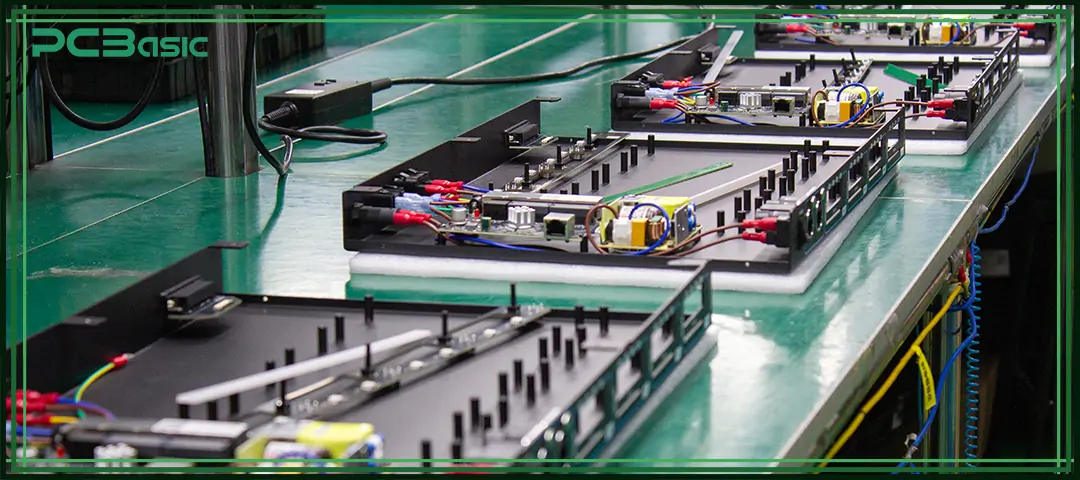
In the PCB industry, mechanical assembly is often also referred to as box build assembly or structural assembly, and it belongs to the system-level assembly stage after PCBA.
When conducting mechanical assembly, the mechanical assembler needs to understand dimensional tolerances, fastening methods, assembly sequences and safety standards to ensure that the products are assembled accurately, stably and can be used for a long time.
In practical manufacturing, electromechanical assembly is an advanced form based on mechanical assembly. It combines mechanical structures with electrical components, such as adding PCBs, wires, sensors and control units, and ultimately forms complete electromechanical assemblies. This type of assembly is very common in robotics, automation equipment and industrial control systems.

Different Types of Mechanical Assemblies
Based on how the parts are connected, mechanical assemblies can generally be divided into several common types.
1. Threaded Fastener Assemblies
Threaded fasteners such as bolts, nuts and screws are the most common connection methods in mechanical assembly. This method allows for disassembly at any time, facilitating maintenance and replacement of parts.
2. Non-Threaded Fasteners
Pins, rivets, washers, retaining rings and adhesives all belong to non-threaded connections. This type of approach is mostly used for permanent or semi-permanent mechanical assembly. For instance, riveting is often used for structural fixation, while adhesive bonding is suitable for scenarios where it is inconvenient to drill holes or where screws are not desired.
3. Thermal Joining and Welding
Welding, brazing and soldering all belong to high-temperature joining methods. Welding melts the base metals and joins them together, while soldering usually uses filler metal to connect electromechanical components.
4. Electromechanical Assembly
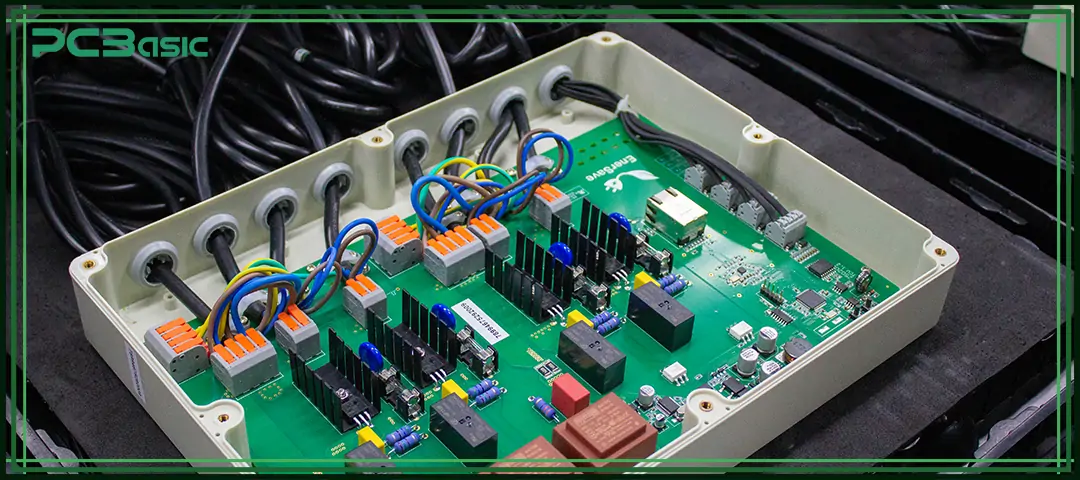
Electromechanical assembly is the process of adding electrical elements such as wiring, PCBs, motors, and sensors to mechanical structures and ultimately, complete electromechanical assemblies are formed.
Why does Mechanical Assembly Matter?
Why is mechanical assembly so important? The answer is simple: without the correct mechanical assembly, the product cannot function properly.
Mechanical assembly mainly ensures that the product structure is strong, components are accurately aligned, operation is safe, and the product can run stably for a long time.
In electromechanical systems, the electromechanical assembly is more crucial. It not only needs to assemble the structure properly, but also ensure reliable electrical connections, proper torque values, and safe insulation.
If mechanical assembly is not done properly, problems such as misalignment, loosening due to vibration, electrical failure and safety risks may occur.
Therefore, many companies place strong emphasis on training mechanical assemblers and establishing strict quality management processes to ensure that both mechanical assemblies and electromechanical assemblies can operate stably and reliably.
The Fundamental Principles of Mechanical Assembly
Materials and Components
When the materials are selected correctly, the mechanical assembly will be stable and reliable. Metals, plastics, composites and ceramics all perform differently under conditions of force, temperature and vibration.
Dimensional Tolerances
Precision control is critical in mechanical assembly. Tolerance determines the allowable variation in part dimensions. If the tolerance is too large, mechanical assemblies may be loose or wear out quickly. If the tolerance is too small, the parts may not fit in.
Assembly Techniques
Common mechanical assembly methods include:
• Bolting
• Press-fitting
• Riveting
• Adhesive bonding
• Welding
Electromechanical assembly also involves cable routing, soldering, PCB installation, and wire harness fastening.
Automation and Control
During mechanical assembly and electromechanical assembly processes, sensors can detect torque and position in real time.
Automation can improve production speed, stability and consistency. But even with automated equipment, experienced mechanical assemblers are still very important.
Sustainability and the Circular Economy
We should also consider environmental protection when doing mechanical assembly. If detachable structures are considered in the design, mechanical assemblies and electromechanical assemblies are easier to maintain and recycle in the later stage.
About PCBasic
Time is money in your projects – and PCBasic gets it. PCBasic is a PCB assembly company that delivers fast, flawless results every time. Our comprehensive PCB assembly services include expert engineering support at every step, ensuring top quality in every board. As a leading PCB assembly manufacturer, we provide a one-stop solution that streamlines your supply chain. Partner with our advanced PCB prototype factory for quick turnarounds and superior results you can trust.
Mechanical Assembly Stages
A complete mechanical assembly process is generally carried out in steps:
1. Cleaning and Preparation
First, clean the parts thoroughly and check for burrs or defects. If necessary, add lubricant oil or protective coating.
2. Alignment and Preliminary Fastening
Align the parts with tooling or fixtures, and then fix them with temporary fasteners to prevent movement.
3. Permanent Fastening
According to the drawings and specifications, permanently fix the parts using bolts, rivets, welding, or adhesive bonding.
4. Torque Inspection
Use calibrated tools to check the torque of mechanical assemblies to ensure that the tightness is appropriate.
5. Functional Testing
In an electromechanical assembly, electrical tests are also carried out to confirm that the electromechanical components are working properly.
6. Final Inspection
Finally, conduct a comprehensive final check to confirm that the structure is firm and the operation is normal.
Every step of mechanical assembly should be recorded clearly for the convenience of later traceability and quality management.
Applications of Mechanical Assembly
Mechanical assembly is widely used in the manufacturing of various products. Common applications include:
• Automotive manufacturing
• Aerospace systems
• Industrial automation
• Consumer electronics
• Medical devices
• Telecommunications
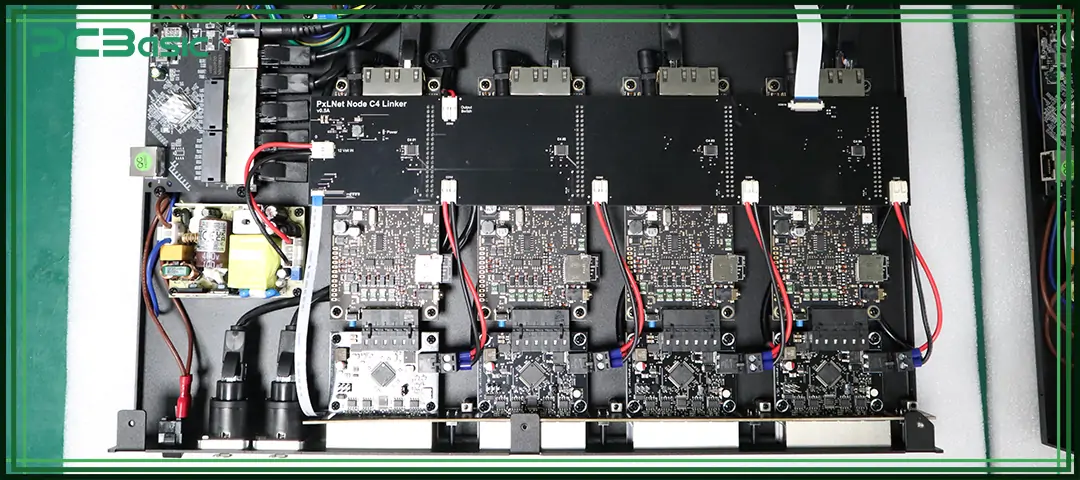
In robots and automated equipment, electromechanical systems usually rely on high-precision electromechanical assembly, such as motor modules, control units, transmission mechanisms, etc.
Whether it is the power system, structural modules, or intelligent control modules, stable and reliable mechanical assemblies are the basis for the normal operation of these products.
Mechanical Assembly Services from PCBasic
After the PCBA is completed, the product still needs to undergo mechanical assembly before it can truly become a complete machine product that can be shipped.
PCBasic is not only a PCB assembly manufacturer, but it also provides complete mechanical assembly and electromechanical assembly services to help customers combine circuit boards, structural and electrical components into complete equipment.
In terms of mechanical assembly, PCBasic can finish:
• Mounting the PCB inside the chassis or enclosure
• Wire harness fabrication and cable routing
• Installation of switches, power modules, cooling fans, and other components
• Assembly of panels, connectors, and display modules
• Screw fastening and structural fixation of the complete unit
• Power-on testing and burn-in testing of the finished product
By combining mechanical assemblies and electromechanical assemblies, PCBasic can complete the entire assembly process from structural installation to electrical connection.

Conclusion
Understanding mechanical assembly is very important for those engaged in manufacturing. From the Industrial Revolution to today's automated factories, mechanical assembly has been advancing, but the core has not changed. Whether it is assembling gears and shafts or integrating complex electromechanical systems, the key lies in accurate, stable installation and controllable quality.
Whether it is mechanical assemblies or electromechanical assemblies, they all rely on appropriate materials, reasonable tolerance fits and complete testing procedures.
In the future, products will become increasingly intelligent, and the proportion of electromechanical assembly will also increase. But no matter how technology develops, the foundation of all equipment is always mechanical assembly.
FAQs about Mechanical Assembly
1. What is mechanical assembly?
Mechanical assembly is the process of joining individual components into a functional product or system.
2. What does a mechanical assembler do?
A mechanical assembler aligns, fastens, and tests components to ensure reliable mechanical assemblies.
3. What is the difference between mechanical assembly and electromechanical assembly?
Mechanical assembly focuses on structural parts, while electromechanical assembly integrates electrical systems and electromechanical components into mechanical structures.
4. Why is mechanical assembly important?
Without proper mechanical assembly, products cannot function safely or reliably.
5. Where is an electromechanical assembly used?
It is widely used in robotics, automation, industrial control panels, and advanced electromechanical systems.